Induction's Rise: Gas-Free Kitchens Redefine Modern Design
As a remodeling contractor, I observe more homeowners transitioning from gas to induction cooking than any other kitchen evolution in recent years. What began as a preference among environmentally aware clients has evolved into a widespread design essential. Induction cooktops surpass mere alternatives; they establish the benchmark for secure, effective, and enduring kitchens.
This evolution extends beyond aesthetics or innovation. It centers on superior performance, health benefits, and regulatory adherence. Certain areas now restrict or prohibit new gas connections in homes, compelling remodel planners to anticipate these changes. For those contemplating kitchen updates, grasping this progression prevents expensive modifications down the line.
Why Gas-Free Kitchens Gain Prominence
Gas stoves dominated professional kitchens for years, offering immediate heat, visible flame adjustment, and a perception of elite capability. Yet practical factors propel the industry forward, transcending fleeting fashions.
-
Indoor Air Quality Issues
Gas stoves emit nitrogen dioxide, carbon monoxide, and fine particles into the atmosphere. Without robust ventilation, these contaminants persist. I enter numerous kitchens where residents report persistent smells or discomfort post-cooking on gas. Many discover these effects stem not solely from meals but from combustion residues. -
Efficiency and Accuracy
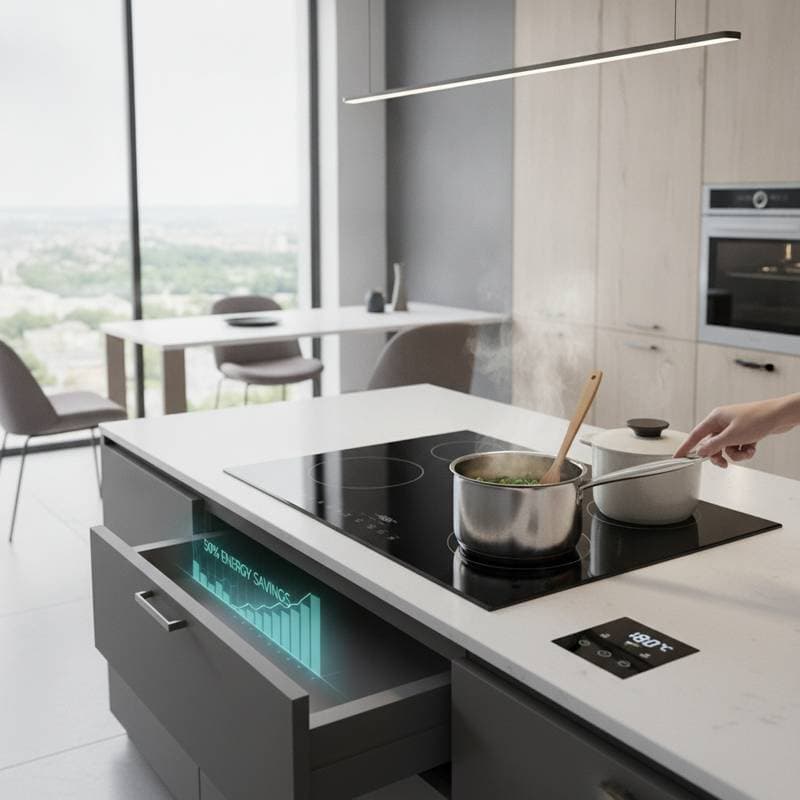
Induction cooktops employ electromagnetic fields to warm pots directly. Energy avoids dissipation into surrounding air or the cooking surface. Consequently, boiling accelerates, temperatures stabilize, and adjustments occur instantaneously. Clients become persuaded during remodel demonstrations in mere moments. -
Safety and Upkeep
Absent open flames, induction surfaces remain cooler, minimizing scald hazards. Spatters wipe away effortlessly without hardening. Families with children or demanding routines benefit substantially from these attributes. -
Upcoming Regulations and Energy Standards
Construction codes and efficiency norms intensify. Select municipalities and regions already limit new gas installations in residences. Forward-thinking remodelers consider longevity. Committing to gas infrastructure vulnerable to future bans proves imprudent.
Frequent Homeowner Oversights
A prevalent error involves presuming induction installation mirrors a straightforward gas replacement. Electrical and layout factors demand prior attention.
-
Electrical Demand and Circuit Limits
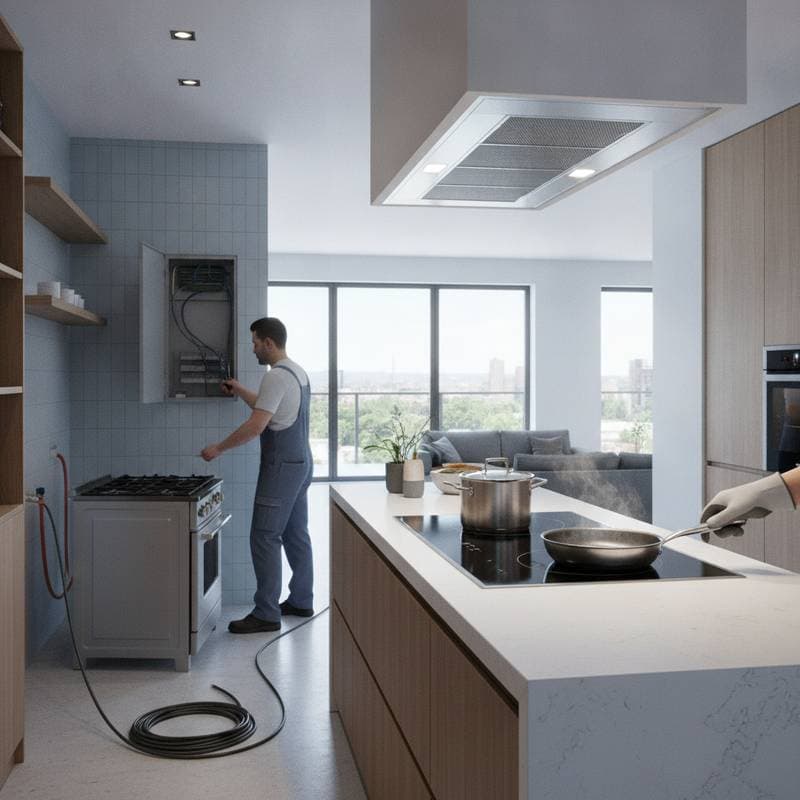
Induction units necessitate dedicated 240-volt lines, akin to electric ovens. Older residences often lack sufficient panel capacity. Engage an electrician to evaluate your service before appliance selection. Panel enhancements range from hundreds to thousands of dollars based on existing infrastructure. -
Cookware Suitability
Induction functions exclusively with ferrous materials. Cast iron, magnetic stainless steel, and certain enameled vessels perform adequately, whereas aluminum or copper fail. Individuals frequently neglect this, necessitating widespread pot replacements. Verify current items using a refrigerator magnet prior to conversion. -
Ventilation Needs
Combustion absence does not eliminate ventilation's role. Meals produce steam, fats, and aromas regardless. An exterior-venting range hood proves optimal. Recirculating or downdraft systems risk gradual residue accumulation. -
Countertop Dimensions and Arrangement
Induction models differ dimensionally from gas counterparts. For substitutions in established counters, precise measurements prove essential. Full countertop renewal often streamlines the process over awkward adaptations.
Induction's Impact on Kitchen Layout
Induction influences appliance choices and broader elements like arrangement, airflow, and operational flow.
-
Sleek Profiles and Simplicity
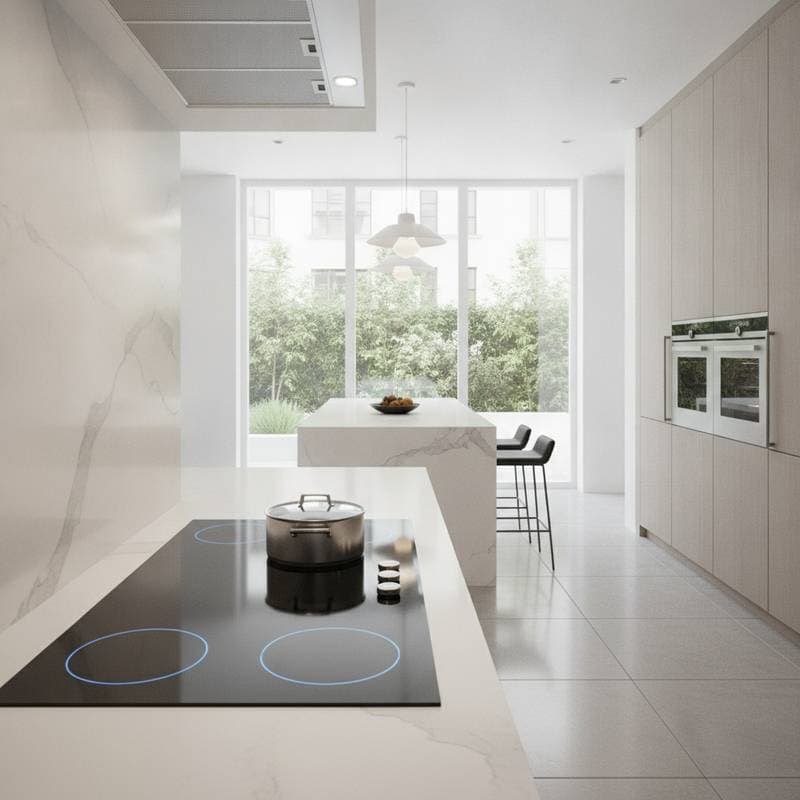
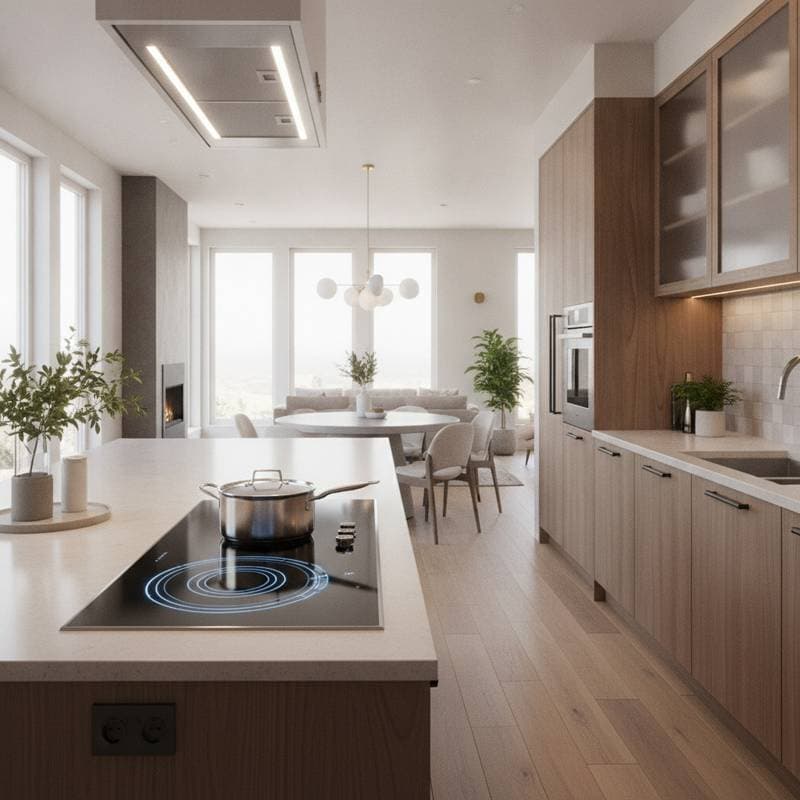
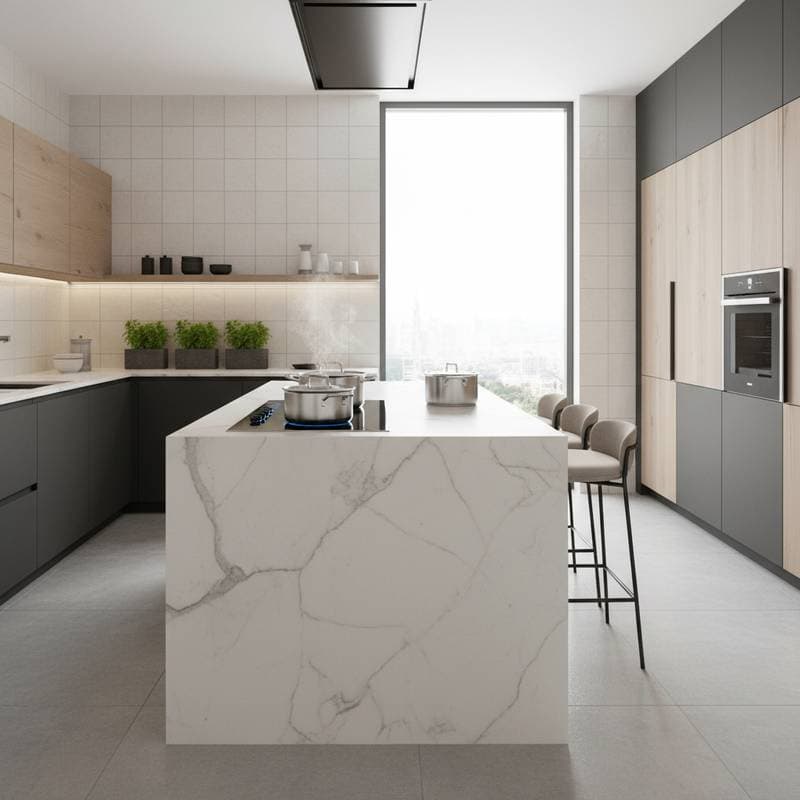
Induction tops integrate almost seamlessly with counters, suiting contemporary and hybrid kitchen aesthetics. Devoid of protruding grills or dials, the surface appears refined and straightforward to preserve. -
Enhanced Operational Flow
The relatively temperate surface serves as auxiliary preparation area when idle. Compact spaces gain versatility from this trait. I incorporate induction adjacent to butcher blocks in designs, forging fluid prep-to-cook transitions. -
Embedded Innovations
Contemporary induction appliances feature intelligent interfaces, heat detectors, and network integration. Though not universally utilized, these elements signal industry trajectories. Precision enthusiasts appreciate the reliable outcomes they deliver. -
Energy Strategy and Eco-Integration
Induction aligns seamlessly with photovoltaic or low-consumption dwellings. As residences adopt electric warmth and green power grids, fully electric kitchens yield logical and economic advantages.
Persistent Contractor and Client Confusions
Contractors encounter challenges from aligned misconceptions. These recurring scenarios highlight key pitfalls.
-
Presuming Electricians Manage All Aspects
Kitchen specialists may liaise with electricians, yet explicit guidance remains vital. Verify accountability for panel modifications, approvals, and checks. Ambiguity invites timeline extensions or budget excesses. -
Disregarding Appliance Delivery Delays
Certain induction variants require weeks for procurement. Initiate orders promptly and cross-check specifications pre-manufacturing. Countertop teams occasionally rework due to post-installation appliance alterations. -
Undervaluing Hood Performance
Induction eliminates combustion emissions, yet ventilation must suit cooking habits. Frequent or intense sessions demand hoods rated at minimum 350 cubic feet per minute. -
Anticipating Gas-Equivalent Response Sans Control Familiarity
Induction reacts swiftly yet diverges from gas dynamics. Settings offer exact, steady regulation. Dedicate time to mastering your unit's mechanics. Adaptation reveals superior manageability over gas for most.
Financial Considerations
Induction tops command higher initial prices than gas or standard electric options. Efficiency compensates through reduced consumption and extended durability with minimal servicing. Gas line omission further trims setup expenses in fresh constructions or extensive overhauls.
In practice, mid-tier gas versus equivalent induction expenditures converge when factoring hoods, piping, and sustained savings. Long-term residents witness investment returns within years.
Steps for Seamless Induction Adoption
For impending remodels or builds, these measures facilitate efficient induction integration.
-
Conduct Power Evaluation
Electricians should inspect panel output and breaker availability before appliance choices. -
Select Cookware in Advance
Magnet-test present vessels. Substitute selectively to minimize excess. -
Design Adequate Airflow
Electric methods still benefit from strong venting for purity and longevity. -
Align Trades Effectively
Ensure contractors, electricians, and fabricators collaborate closely. Trade misalignments spawn primary expense spikes. -
Master the System
Post-setup, consult manuals and trial settings. Vendor guides simplify acclimation.
Realizing Lasting Kitchen Advantages
Opt for electric configurations in forthcoming remodels to avert future adjustments. Induction propels kitchen evolution toward efficiency, security, and sophistication, enhancing daily living and property appeal.