Gas Stove Bans in 12 States Accelerate Induction Adoption
Gas stove regulations are now active in 12 states. Homeowners and renters are adopting induction cooking to meet new standards while gaining improvements in air quality, cooking speed, and kitchen layout options. This transition supports both regulatory compliance and practical upgrades in daily use.
Regulatory Drivers and Market Response
Environmental data and indoor air quality research prompted the state level restrictions on new gas installations. The policies target reductions in nitrogen dioxide and carbon monoxide. Households affected by the rules are evaluating induction as a direct replacement that maintains cooking performance.
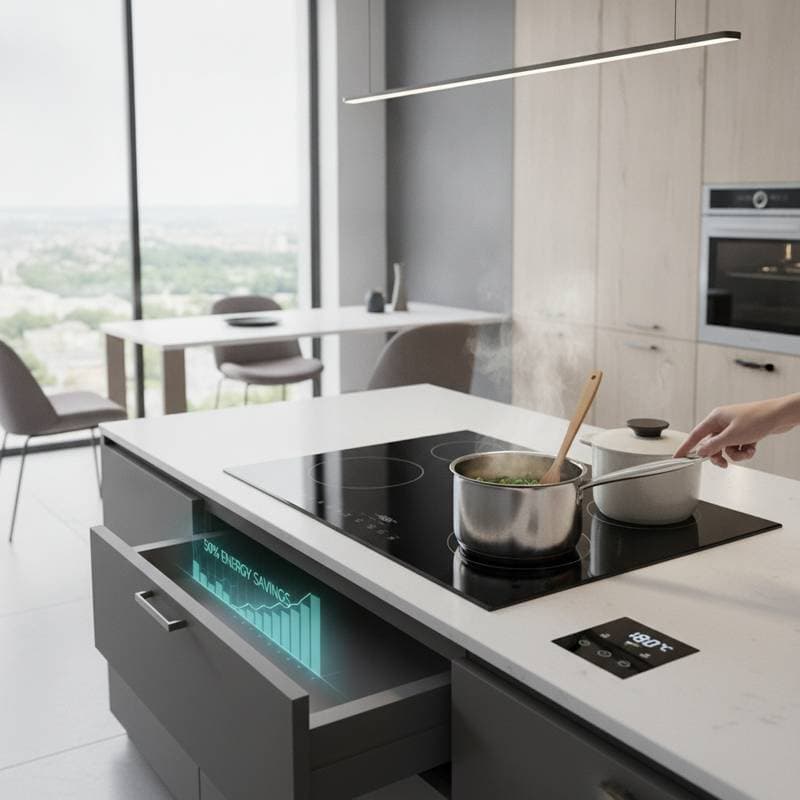
Induction technology transfers energy through magnetic fields directly to compatible cookware. This method produces rapid temperature changes and keeps the cooktop surface cool outside the pan contact area. Users report shorter cooking times and simpler surface maintenance compared with open flame systems.
Performance Characteristics
Induction delivers several measurable advantages for residential kitchens:
- Water reaches a boil in roughly half the time required on gas burners.
- The cooktop surface remains safe to touch beyond the cooking zone, reducing burn risk.
- Spills wipe away from the flat glass without the need to remove grates.
- Nearly all input energy converts to heat in the pan rather than escaping into the room.
- Absence of combustion eliminates related airborne pollutants.
Budget Tiers for Equipment Selection
Portable single burner units from manufacturers such as Duxtop operate on standard household outlets and cost less than 150 dollars. These models suit apartments or supplemental cooking stations. Existing magnetic cookware can be verified with a simple magnet test.
Freestanding induction ranges in the 500 to 1500 dollar range from Whirlpool and GE fit standard cabinet openings. Many require only existing 240 volt circuits for installation.
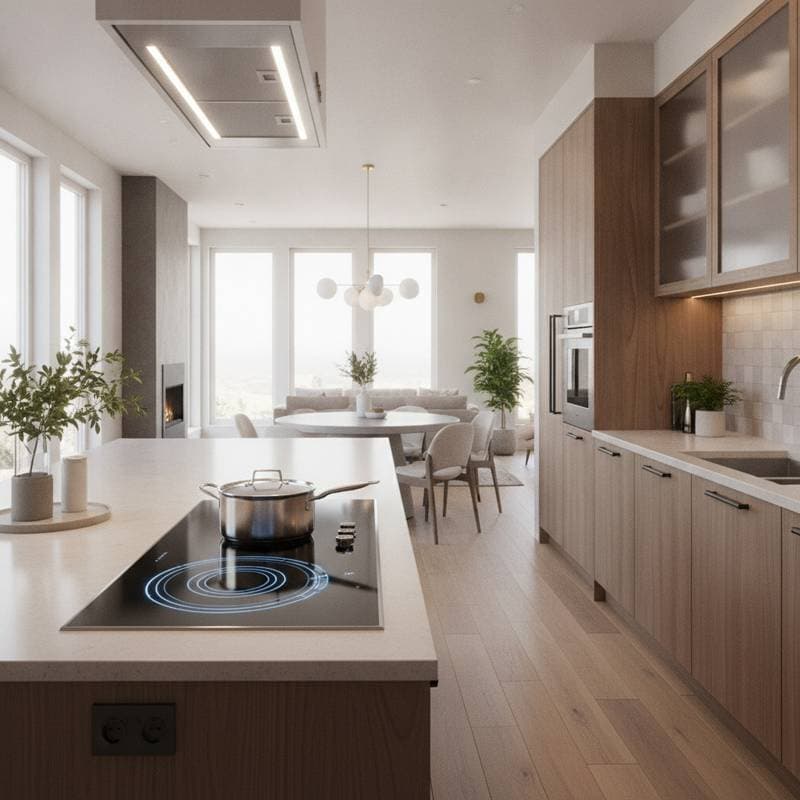
Built in cooktops from Bosch, Miele, and Thermador start above 2000 dollars. These units integrate into custom islands and support features such as pan detection and bridging zones for larger cookware.
Installation Considerations
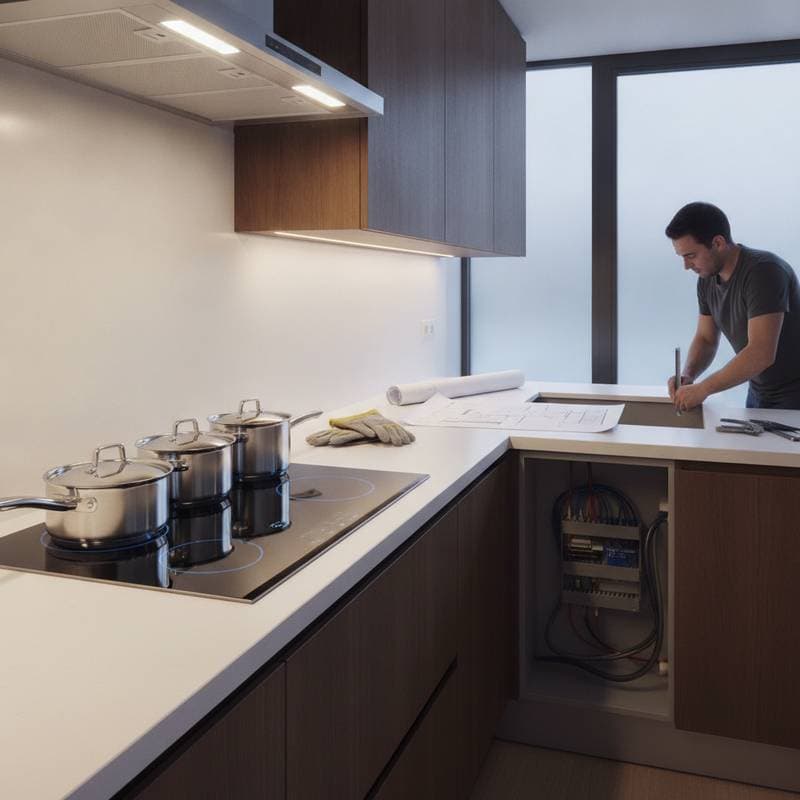
A licensed electrician should confirm panel capacity and run any necessary 240 volt circuit. A plumber can cap and seal the unused gas line. Cast iron, enameled steel, and induction ready stainless steel perform without adapters. Non magnetic pans require an interface disk.
Ventilation needs often decrease because no combustion occurs. Low profile downdraft or under cabinet units can replace larger hoods in many layouts.
Design and Spatial Benefits
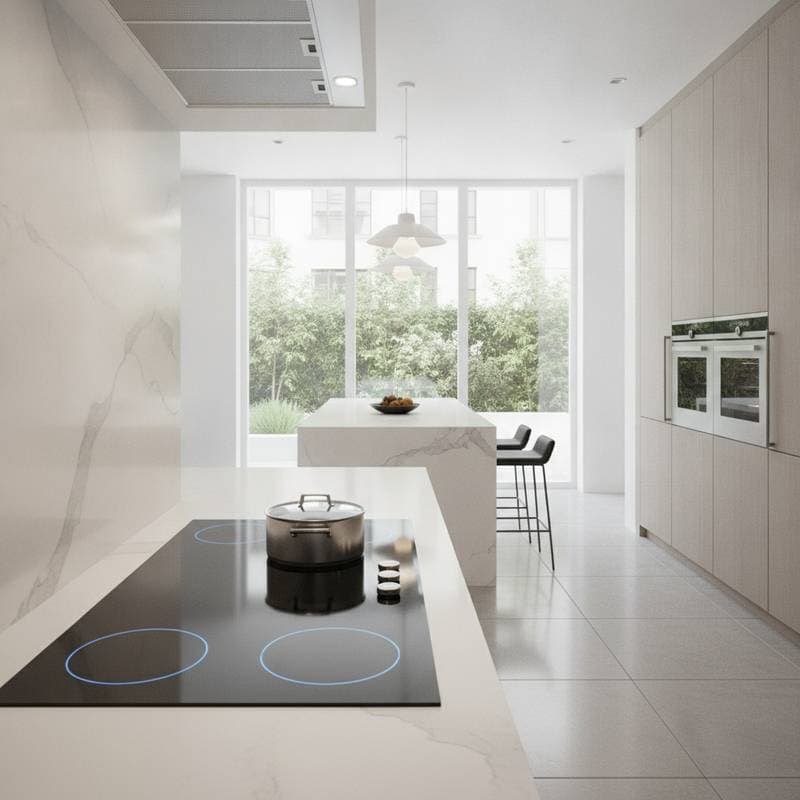
Removal of gas piping and grates allows flush mounting of the cooktop with surrounding countertops. The resulting surface serves as both cooking area and prep space. Smaller kitchens gain usable counter area, and the reflective finish enhances light distribution in compact rooms.
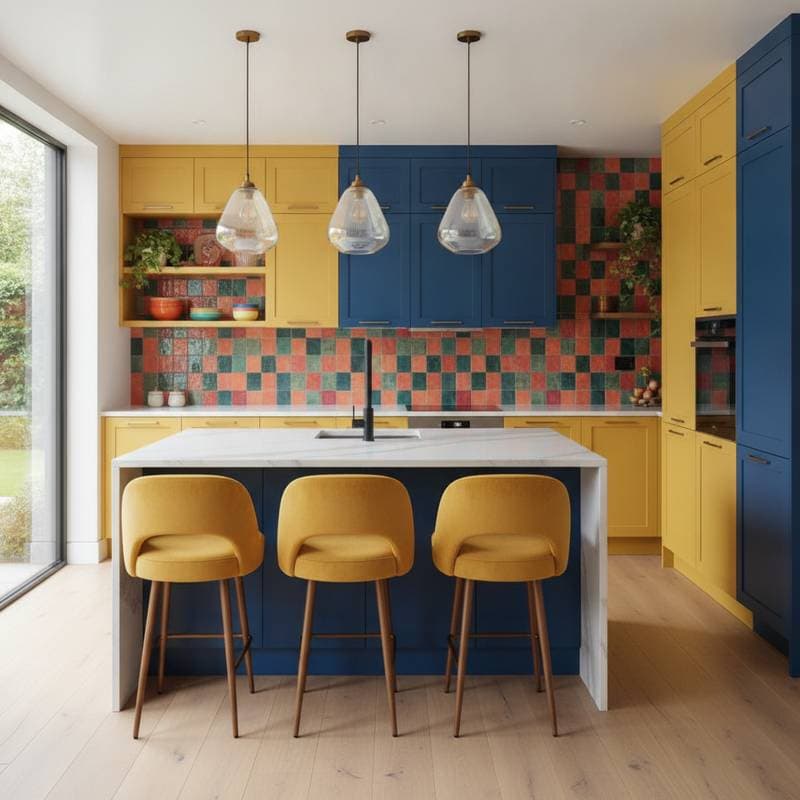
Minimalist and transitional cabinet styles pair readily with the uninterrupted plane. Traditional kitchens maintain visual flow between cooking and dining zones when the cooktop sits level with the countertop.
Health and Efficiency Outcomes
Gas appliances release combustion byproducts even when idle. Induction removes this source entirely. Electricity drawn from an increasingly renewable grid further lowers the lifetime environmental impact relative to continued gas use.
Market Expansion and User Adaptation
Manufacturers now offer modular layouts, portable catering units, and battery supported models. Retailers stock induction compatible cookware at multiple price points, including sets under 100 dollars at major outlets. Most cooks adjust to the absence of a visible flame within one week and retain the new equipment for its precision and ease of cleaning.
Practical Next Steps
Residents in regulated states can begin by testing current cookware with a magnet and pricing portable units for immediate trial. Professional installation of a full range follows once electrical requirements are verified. The resulting kitchen operates with lower energy loss, reduced maintenance, and improved safety margins for households with children or pets.