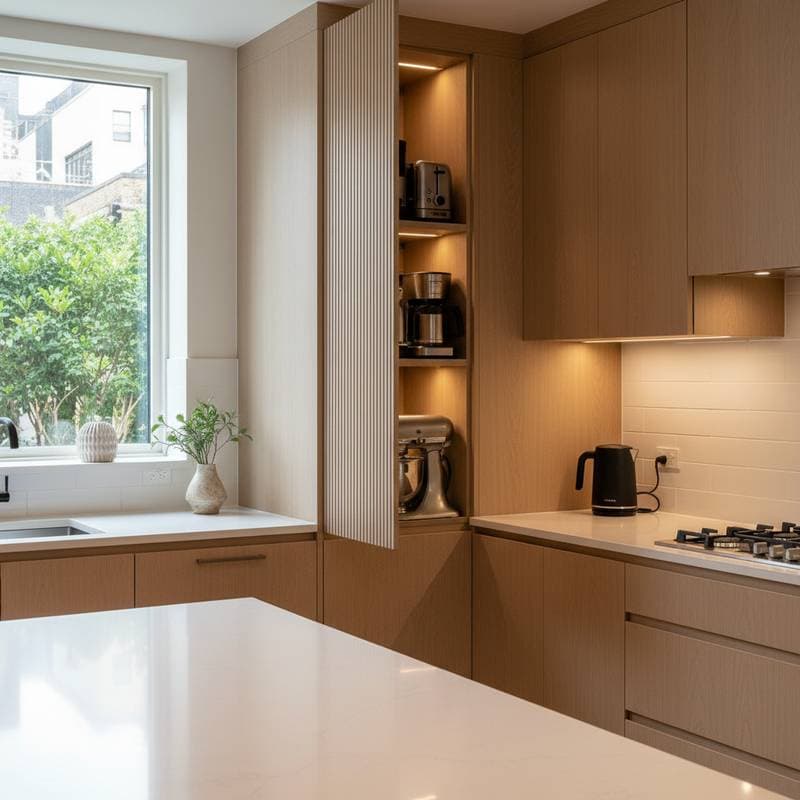
Appliance Garages Resurface: Streamline Kitchens in 2025
Kitchen counters often accumulate toasters, coffee makers, and blenders that disrupt both aesthetics and efficiency. This ongoing conflict between appearance and utility persists until solutions like the appliance garage reemerge. As a contractor experienced in numerous kitchen builds and renovations, I confirm that this element returns with strong justification.
An appliance garage consists of a specialized cabinet or compartment designed to conceal small appliances during periods of inactivity. It preserves counter space while ensuring straightforward retrieval. This overlooked feature now stands as an intelligent method for kitchen organization that balances accessibility and order.
The Hidden Impacts of Counter Clutter
Clutter on counters extends beyond visual disorder. It impairs kitchen operations and accelerates material degradation. Homeowners frequently invest heavily in premium countertops, only to obscure them with appliances and wiring. Such accumulation leads to several issues:
- Accelerated surface deterioration. Exposure to heat and moisture from devices etches finishes and stains materials like stone or laminate.
- Elevated safety concerns. Concentrated cords risk electrical overloads or pose tripping dangers.
- Challenging maintenance. Debris and residues accumulate in hard-to-reach spots behind equipment, complicating thorough cleaning.
- Limited preparation area. Occupied surfaces constrain movement, turning meal preparation into a laborious process.
A thoughtfully constructed appliance garage addresses these challenges by offering a ventilated, concealed storage area positioned near primary work zones.
Factors Driving the Appliance Garage Revival
The growing popularity of appliance garages stems from practical needs rather than mere sentiment. Contemporary kitchens integrate with living areas, rendering clutter perpetually noticeable. Individuals seek serene, streamlined settings yet require immediate access to essential devices.
Key trends fuel this resurgence:
- Minimalist aesthetics. Preferences lean toward unobstructed lines and bare surfaces. Appliance garages achieve this look while preserving usability.
- Advanced storage innovations. Tailored cabinetry incorporates built-in outlets, gentle-closing hinges, and gliding systems, surpassing outdated tambour designs in efficiency.
- Expanded appliance inventories. Devices such as air fryers, espresso makers, and versatile cookers demand additional containment in typical setups.
- Elevated buyer standards. Prospective purchasers value intentional layouts. An appliance garage highlights meticulous planning, enhancing marketability and worth.
In recent projects, clients increasingly specify these units upon observing the tranquility that cleared counters bring to their spaces.
Pitfalls to Avoid in Appliance Garage Installation
The principle behind appliance garages appears straightforward, yet implementation demands precision. Poorly executed versions render the space ineffective. Consider these frequent errors to sidestep:
- Insufficient depth. Countertops measure approximately 24 inches deep, but appliances often require additional clearance for wiring and air circulation. Measure the bulkiest item intended for storage prior to construction.
- Lack of power integration. Extending cords beneath doors undermines the design intent. Position an internal outlet to enable in-place operation.
- Inadequate airflow. Enclosed areas trap heat rapidly. For heat-generating items like toasters, incorporate vents or operate with the door ajar.
- Suboptimal positioning. Place the garage adjacent to usage points. A coffee setup thrives near the sink and fridge, not remotely located.
- Faulty access mechanisms. Traditional roll-up panels frequently stick. Opt for contemporary lift-up, folding, or retractable doors that clear pathways efficiently.
During design consultations, I prioritize client appliance routines and locations to inform the blueprint, ensuring the structure aligns with habits.
Effective Design Configurations
Appliance garages adapt to diverse kitchen architectures and routines. Optimal choices integrate fluidly and support workflow. The following proven setups deliver reliable performance:
- Corner utilization. Corners represent underused zones. An angled or wraparound cabinet maximizes storage for larger items in these niches.
- Vertical lift access. Upward-hinging or split doors provide unobstructed entry without encroaching on aisles. This suits placements beneath overhead cabinets.
- Sliding panel storage. Doors recede into frame sides, fully exposing contents. Such systems excel for grouped appliances, like beverage stations.
- Surface-mounted enclosure. A low-profile unit atop the counter conceals items subtly while maintaining reachability.
- Retractable drawer system. Deep compartments with embedded outlets allow appliances to extend like shelves, simplifying handling.
Customization aligns these with existing cabinetry and decor. The emphasis remains on discreet yet operational storage.
Power and Protection Essentials
Incorporating internal outlets requires professional oversight to comply with regulations. Engage a certified electrician for GFCI-equipped installations that permit easy servicing.
High-temperature devices demand open-air use within the enclosure. Items like toasters or griddles require dissipation space; operate them with doors open and vents clear.
Effective arrangements feature a centralized power module inside, sized for planned loads. This organizes wiring and prevents reliance on external sockets.
Incorporating Appliance Garages in Renovations
In comprehensive kitchen overhauls, embed appliance garages into cabinet schematics for superior integration. For updates to current layouts, repurpose existing uppers or lowers.
Standard integration process includes:
- Evaluate usage patterns. Pinpoint counter-occupying appliances and frequent-access items.
- Precise measurements. Account for device sizes, plus allowances for cables and airflow.
- Cabinet selection. Determine upper, angular, or lower placements based on spatial constraints.
- Wiring coordination. Involve electricians upfront to route power pre-installation.
- Hardware decisions. Select elevation, concealment, or glide options.
- Interior preparation. Apply resilient coatings tolerant of humidity and warmth, such as melamine panels.
Addressing these elements early prevents rework and ensures compliance.
Cost Analysis for Implementation
Expenses vary by cabinet style, finishes, and wiring needs. Basic adaptations start at several hundred dollars, while integrated custom units with enhancements reach thousands.
The investment yields enduring benefits through enhanced daily flow and surface longevity. Organized spaces minimize aggravation and appeal to future owners.
As a professional, I view this as a high-yield enhancement among moderate kitchen modifications, refining utility and visuals with minimal disruption.
Preserving Appliance Garage Performance
Sustained organization maintains an appliance garage's effectiveness. Secure cords methodically and clean interiors routinely. Limit contents to regular-use items; relocate seldom-needed pieces elsewhere.
Inspect electrical features regularly, replacing frayed wires or outlets as needed. Address any condensation or warmth accumulation with added perforations or screens at the rear.
Realize Enhanced Kitchen Efficiency
Observations from various installations reveal that appliance garage inclusions lead to more enjoyable cooking environments and simplified upkeep. For those frustrated by disarray, this addition delivers consistent daily improvements.