AI Scans Transform Kitchen Colors for 2026
Color shapes the emotional atmosphere of a kitchen. It affects how light interacts with counters, how surfaces feel to the touch, and how ingredients look when prepared. Technology now drives a subtle shift in design studios. Artificial intelligence scans surfaces, evaluates shades, and proposes palettes that blend intuition with exactness. Kitchens in 2026 will evolve through this fusion of digital tools and creative vision, moving beyond simple repaints to thoughtful reinterpretations.
1. From Swatches to Scans
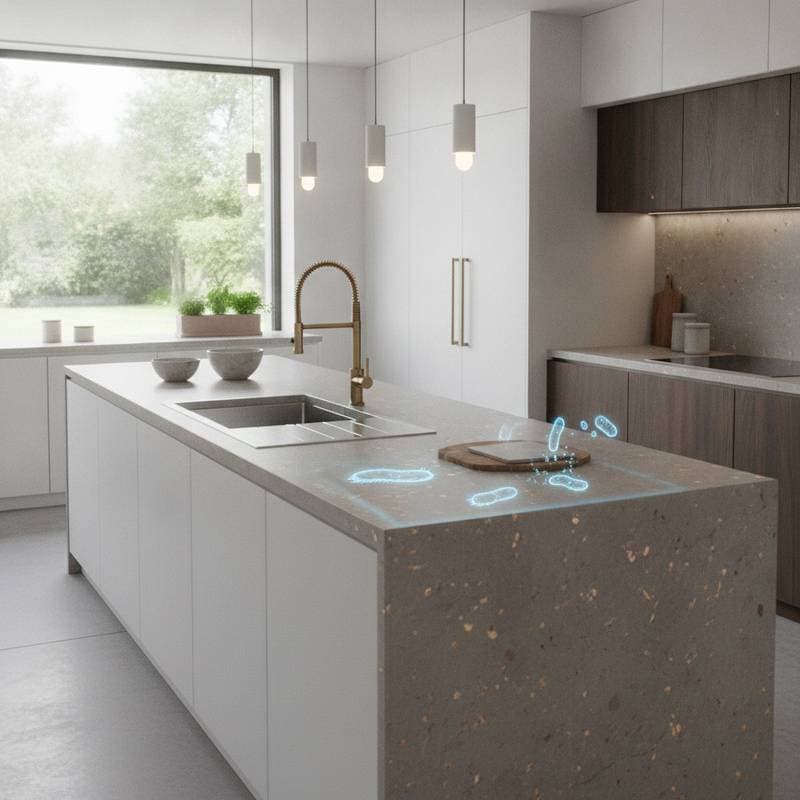
Designers once depended on physical color swatches and gut feelings for selections. They held samples under various lights, crossing fingers that the outcome aligned with their ideas. AI scanning tools eliminate this guesswork with reliable data. Spectral sensors capture precise pigment details from countertops, cabinets, and floors, then calculate matching tones using algorithms.
Consider a honed Calacatta Viola marble slab. A scan reveals its plum veins and warm ivory foundation, generating palettes that capture these elements. Rather than estimating compatible grays, the AI suggests options such as Benjamin Moore’s Balboa Mist or Farrow & Ball’s Purbeck Stone, aligned with the stone’s subtle undertones. This approach shifts from experimentation to assured choices, saving time and resources.
2. The Rise of Digital Color Consultation
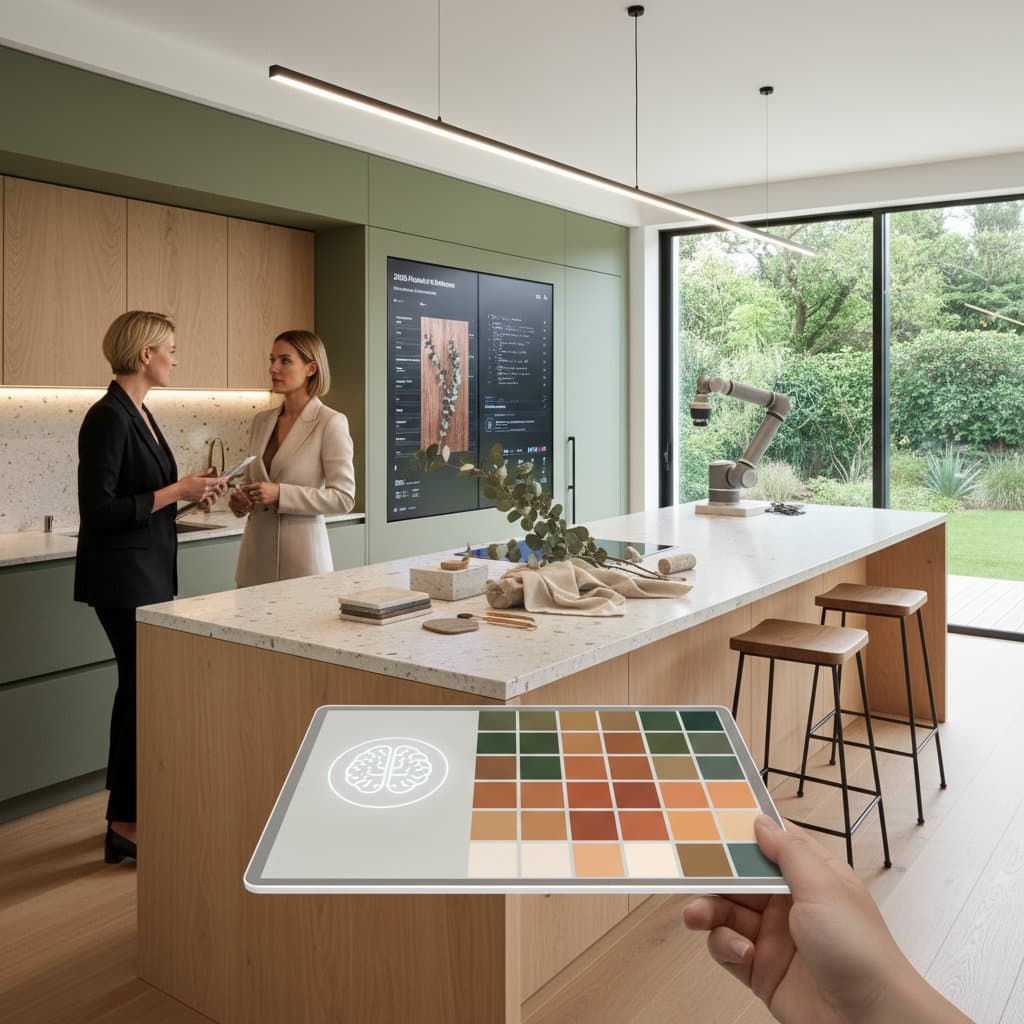
Companies like Backdroppers Studio and Chromatic Intelligence incorporate AI color analysis into their processes. Clients submit photos or real-time scans of their areas, receiving tailored schemes in seconds. These recommendations account for factors including ambient light, surface reflections, and local climate conditions.
Interior designer Elena Varga of Varga Atelier notes that this approach “lets us work with color as a living element rather than a static decision.” She highlights how AI reveals pigment shifts under changing daylight, a detail previously limited to hands-on tests. This virtual method elevates design into a blend of analytics and artistry, accessible to professionals and homeowners alike.
3. Predicting the Future Palette
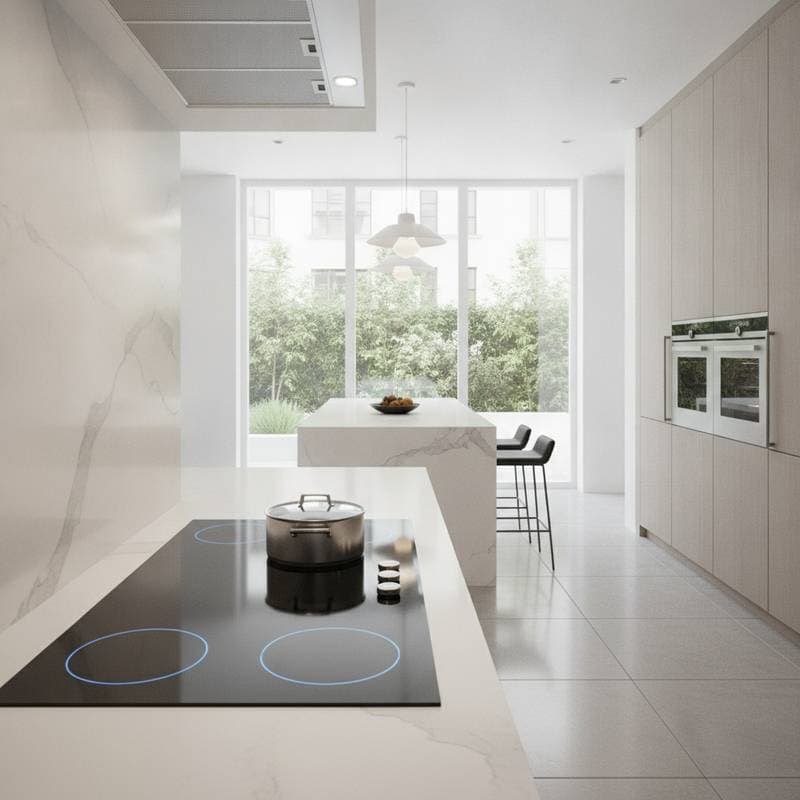
Kitchen trends for 2026 point to a gentle shift from crisp whites to nuanced neutrals with earthy undertones. Anticipate hues like soft clay, graphite-infused olive, and subdued sea glass blue, which succeed the dominant cool grays of recent years. These colors complement finishes such as brushed brass hardware, smoked oak cabinetry, and matte porcelain tiles.
Forecasting algorithms, built on vast datasets of worldwide imagery, track societal and ecological changes. They detect a growing preference for serene, textured environments among homeowners. The resulting palettes promote relaxation and elegance, ideal for kitchens that function as cooking stations and gathering spots.
4. Material Matching with Machine Precision
AI extends beyond paints to synchronize materials seamlessly. Tools like ColorSync Pro evaluate light bounce and surface texture for unified results. Upload an image of a European oak cabinet door, and the system delivers suggestions for countertops that enhance its color and grain.
Possible matches include Caesarstone’s Primordia quartz or Dekton’s Nilium composite, both attuned to the wood’s gentle warmth. Designers value this accuracy, as it prevents expensive errors. When tiles, fixtures, and cabinets align chromatically, the kitchen emerges as a unified design narrative.
5. Lighting Intelligence in Color Testing
Light fundamentally alters color perception in any space. AI tools now integrate light measurement data to model these effects from both artificial sources and daylight. Test how Sherwin-Williams’ Evergreen Fog shifts under LED work lights versus soft morning rays from a north window.
Architect Lucas Marino of Marino Design Works explains that the technology “lets us choreograph light and color together.” In a recent project, he employed AI-programmed LEDs that adjust warmth daily, ensuring surfaces stay visually steady. This creates a kitchen that maintains balance across all times of day.
6. The Human Hand Remains Essential
Technology streamlines workflows, yet the designer’s intuition proves indispensable. AI delivers optimal suggestions, but only humans sense a color’s emotional impact within its setting. Experts draw on experience to adapt data, considering daily routines like cooking or hosting.
Colorist Mila Jensen of Studio Aurelia views this as “a dialogue between the algorithm and the artisan.” She starts with AI palettes and refines saturation or sheen to suit the room’s feel. For instance, a matte wall diffuses light differently than a satin cabinet, and personal insight preserves these nuances for overall harmony.
7. Sustainable Color Innovation
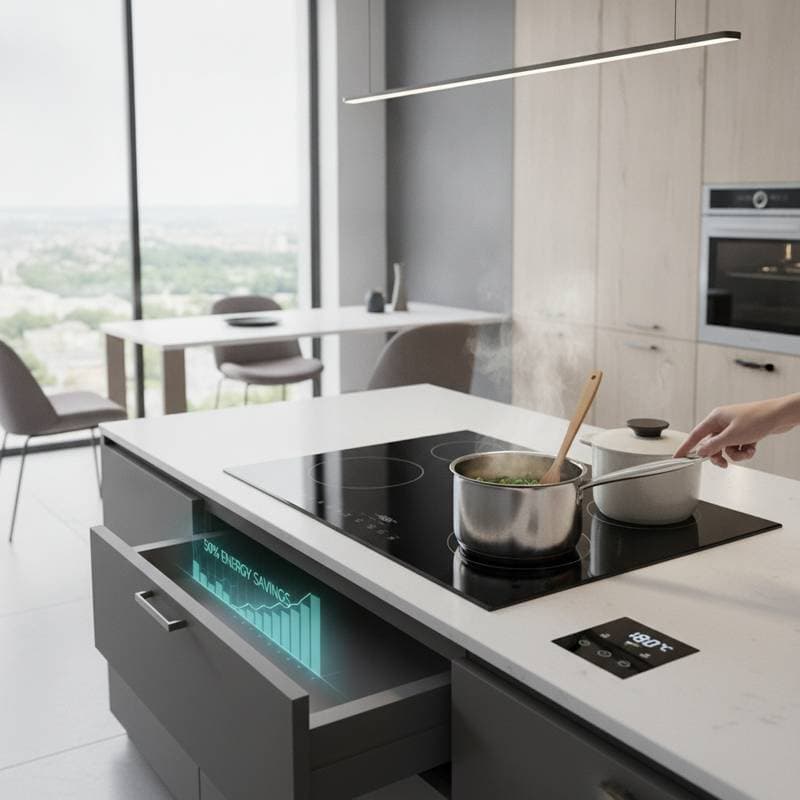
AI scanning advances eco-conscious practices in design. Virtual simulations cut down on physical prototypes and trial applications, minimizing waste. Algorithms predict color fading over time, guiding selections toward durable, low-emission options that retain vibrancy.
This digital efficiency lowers the ecological impact without limiting imagination. Designers select finishes that endure, supporting long-term sustainability in kitchen projects.
Embracing Digitally Curated Kitchens
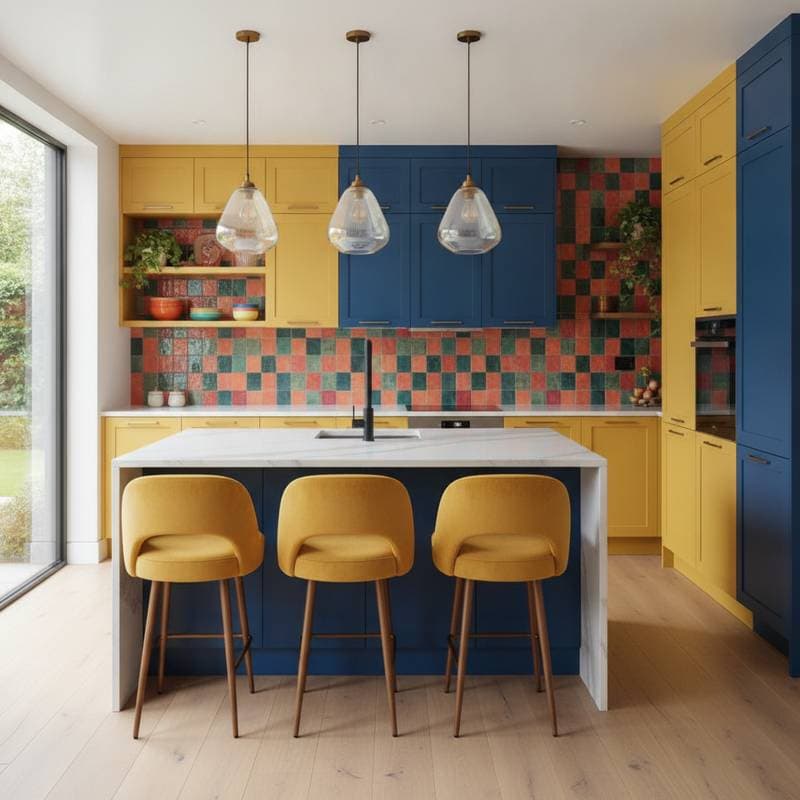
Kitchens increasingly serve multiple roles, from meal prep to social centers. AI color tools enable bold explorations while preserving material cohesion. Homeowners gain assurance in choosing vibrant shades that integrate smoothly.
A digitally informed palette makes every element purposeful. Walls, cabinets, and accents engage in a subtle interplay of shades and finishes. While AI provides the technical foundation, human creativity infuses life into these spaces. This balance elevates the kitchen into a thoughtful extension of daily living.