Why AI Color Tools Are Replacing Interior Designers
Homeowners often face overwhelm when selecting paint colors at a hardware store. Shades appear similar under store lighting, yet transform unexpectedly in home environments. Traditionally, interior designers resolved such challenges, but AI color tools now provide comparable expertise at significantly reduced expense.
These tools empower individuals to make informed color choices independently. The following sections explain the appeal of AI for color selection, the mechanics behind these platforms, and essential considerations for project implementation.
How AI Color Tools Function
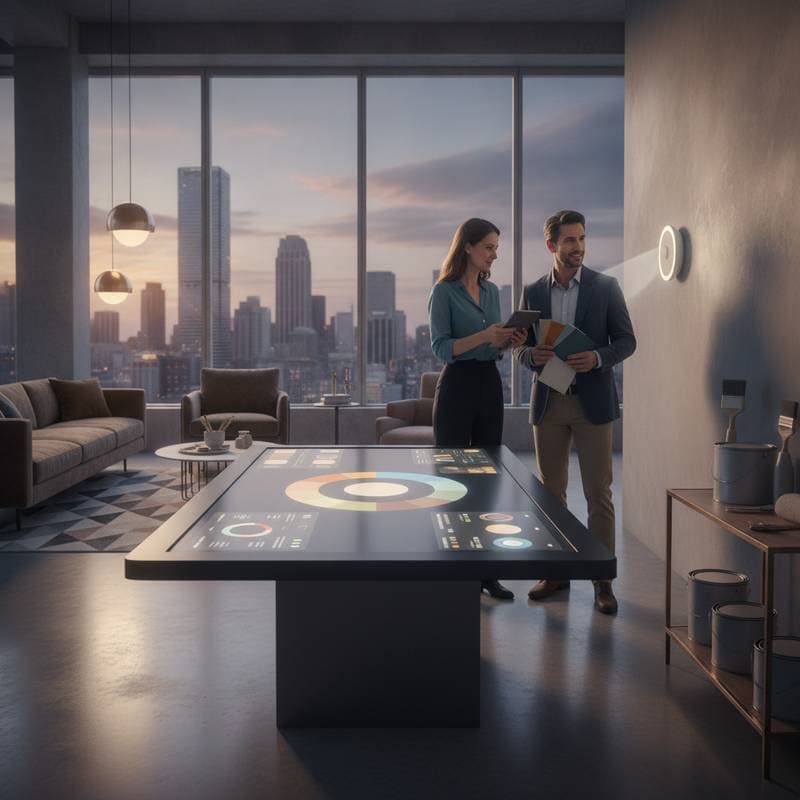
AI-driven design applications and web platforms employ machine learning algorithms trained on vast datasets of actual interior images. These systems discern patterns in color interactions and the impact of lighting on tone and contrast. Upon uploading a room photograph, the tool evaluates dominant hues and proposes complementary palettes aligned with user-specified conditions.
The core processes include three key elements:
-
Visual Analysis: The algorithm identifies objects, surfaces, and light sources within the image. It assesses how ambient and artificial illumination alters color perception and reflection.
-
Color Mapping: By cross-referencing image data against a repository of expert-curated interiors, the tool generates suggestions for shades proven effective in analogous settings, such as room size or orientation.
-
User Customization: Individuals refine outputs by specifying preferences like aesthetic styles (modern, rustic, coastal), desired atmospheres (calming, vibrant, subdued), or hues to incorporate or exclude.
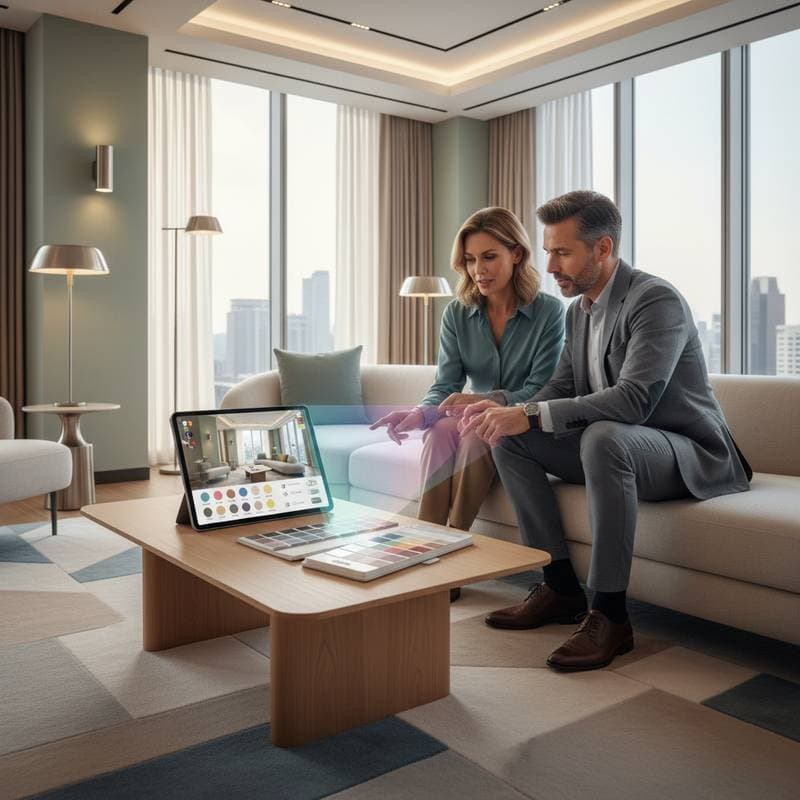
Several platforms offer real-time visualization of modifications. Advanced options simulate diurnal light variations, illustrating palette performance from dawn to dusk, which aids in selecting enduring schemes.
Key Limitations of AI Color Tools
While AI color tools demonstrate remarkable capability, they do not fully supplant human discernment in all situations. Recognizing these boundaries enhances effective utilization.
-
Lighting Fluctuations: Algorithms infer illumination from static images but struggle with dynamic factors like seasonal sunlight shifts or variable fixture intensities.
-
Surface Textures and Finishes: Differences in sheen, such as between glossy and flat paints, affect light diffusion in ways that simulations approximate but rarely replicate precisely.
-
Intricate Room Configurations: Spaces featuring unconventional geometries, ornate moldings, or diverse materials can disrupt accurate color harmonization by the software.
-
Holistic Style Integration: Tools excel at pairwise color compatibility yet may overlook broader coherence with existing decor, architecture, or personal artifacts.
For endeavors involving renovations, bespoke millwork, or luxury materials, consulting a designer remains advisable. In contrast, straightforward color refreshes benefit greatly from AI precision and efficiency.
Cost and Timeline Projections for AI-Guided Projects
When undertaking a repaint or refresh informed by AI recommendations, anticipate the following parameters:
-
Basic DIY Approach: Allocate $50 to $300 for paints, applicators, and preparatory materials. Factor in $10 to $50 for tool usage fees. Completion for a typical room spans 1 to 3 days, including drying intervals.
-
Intermediate Investment: Budget $300 to $800 for premium paints and accessories, supplemented by AI premium features. Engaging local applicators adds $200 to $500, streamlining execution.
-
Elevated Execution: Exceed $1,000 when integrating AI palettes with expert labor, enhanced surfaces, or multi-room applications, yielding professional polish.
AI accelerates ideation from prolonged trial-and-error to concise sessions. Physical application demands consistent effort, yet initial assurance minimizes revisions and waste.
Navigating Regional Regulations and Standards
Color selections seldom necessitate formal approvals, yet homeowners associations or municipal codes may govern exterior applications. Restrictions often target high-visibility hues, solar-reflective properties, or eco-compliant formulations to preserve neighborhood harmony.
Prior to procurement, review applicable bylaws or consult community resources. Many AI platforms incorporate geospatial data to flag prohibitions or highlight locale-specific trends, such as earthy tones in arid regions or crisp whites in coastal zones.
Leveraging these insights prevents disputes and aligns choices with communal expectations, fostering seamless integration.
AI's Evolving Role in Professional Design
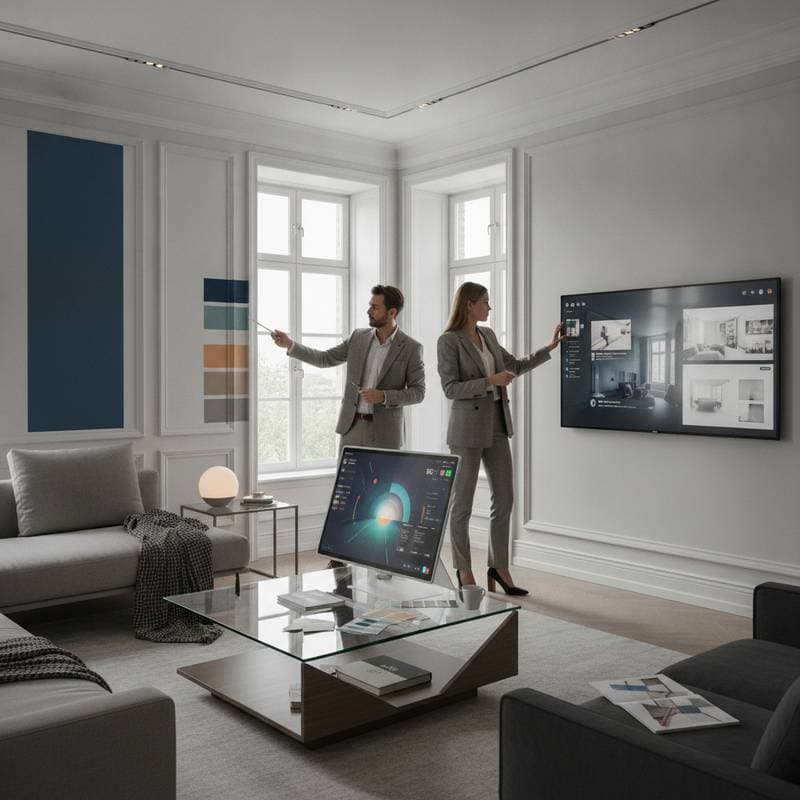
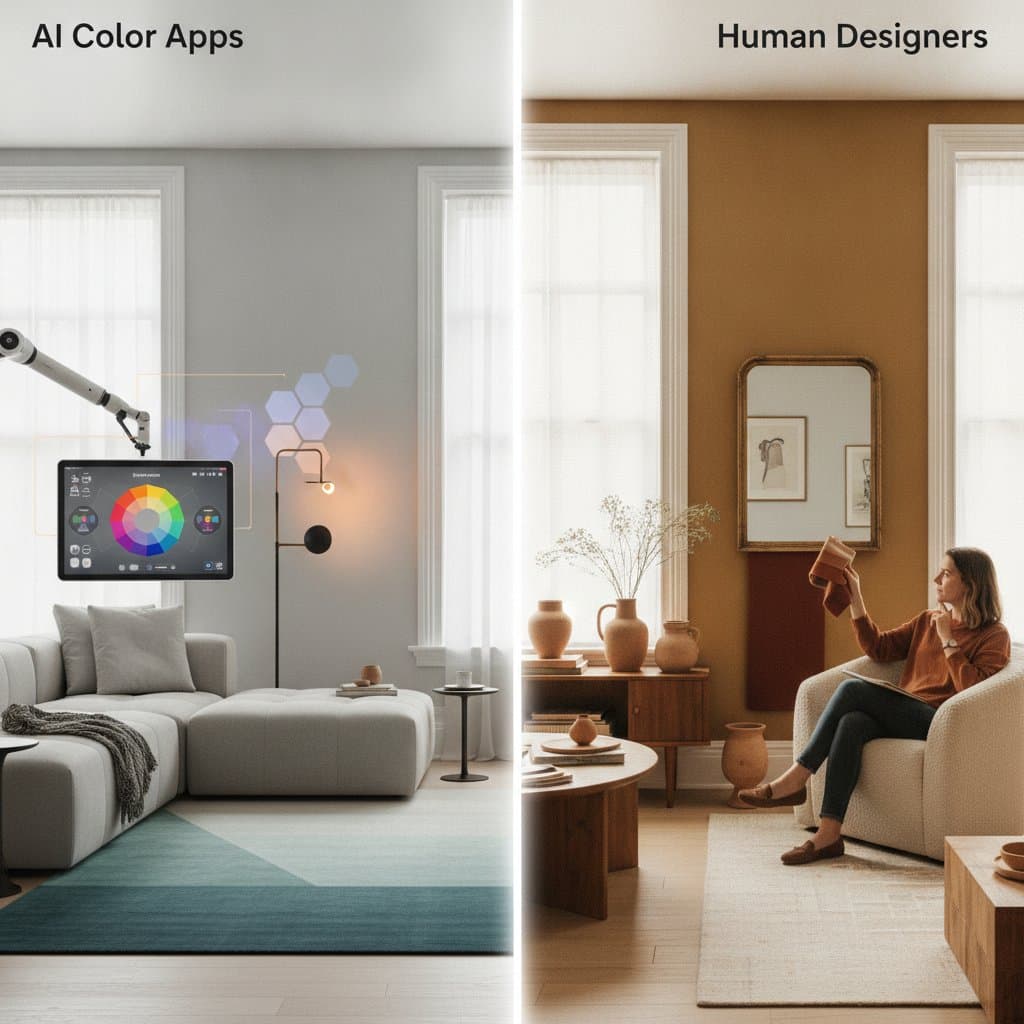
Artificial intelligence augments rather than supplants interior designers. Professionals increasingly integrate AI for rapid ideation and client visualizations, reserving expertise for spatial planning, material selection, and nuanced executions.
This synergy benefits consumers through cost-effective services. Designers may provide AI-enhanced sessions at reduced fees, blending algorithmic accuracy with creative intuition for superior outcomes.
Homeowners gain entry to sophisticated guidance previously out of reach, elevating everyday spaces without prohibitive investment.
Steps to Implement AI Color Recommendations
To initiate a color update, capture room images during peak natural light to maximize accuracy. Select a trusted AI platform, upload visuals, and evaluate the leading palette proposals against your vision.
Procure sample pots of shortlisted shades for on-site testing; apply to inconspicuous areas and observe across light cycles. Proceed to full application once validations confirm suitability, ensuring a transformative yet harmonious result.