How AI Color Tools Are Transforming Home Design
Color shapes the emotion, energy, and personality of any space. It influences how people feel and interact within their environments. For years, professional designers relied on expertise to select palettes for homes, offices, and retail areas. Now, artificial intelligence tools are reshaping this process, offering precision and accessibility that challenge traditional methods.
This evolution does not eliminate human creativity. Instead, it enhances possibilities, democratizes design, and equips individuals with tools for confident decisions. Designers who integrate AI can focus on narrative and emotional depth, while others gain entry to professional results without high costs.
The Emergence of AI in Color Selection
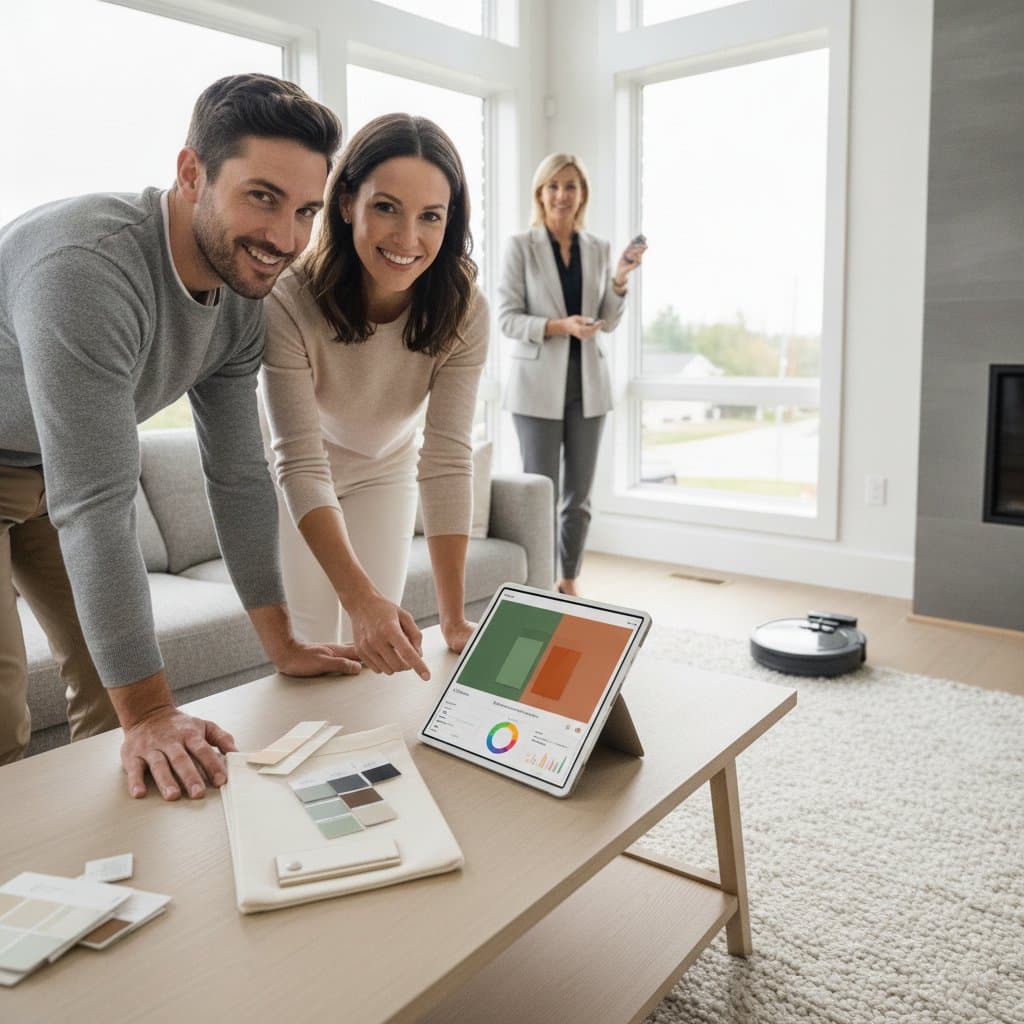
AI color tools function as tireless assistants, processing vast datasets of color pairings, lighting scenarios, and material interactions in moments. They forecast color performance under natural daylight, artificial illumination, or ambient sources. This capability, once exclusive to seasoned professionals, now reaches users via mobile devices or computers.
In television production, color balance proves critical, as even subtle shifts can disrupt visual harmony on screen. AI replicates this analysis by examining images and proposing refinements for balanced outcomes in physical and digital contexts. Such tools provide expert-level insight at users' fingertips.
Pressures on Professional Designers
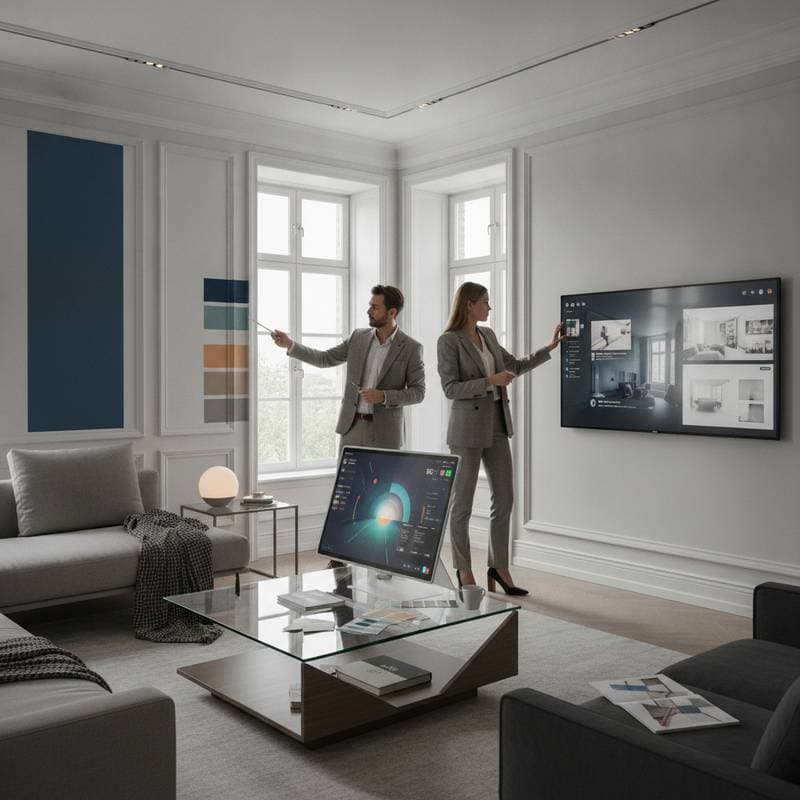
Professionals experience both opportunity and concern with these advancements. Automated systems might reduce demand for routine consultations, yet they excel in data processing, allowing designers to prioritize conceptual elements like mood and client stories. Machines handle calculations; humans infuse significance.
Speed intensifies the challenge. Clients, accustomed to swift makeovers from media, seek similar efficiency. AI generates palettes rapidly, prompting designers to adopt these tools to match expectations and streamline workflows.
Accessibility Across Budget Levels
AI tools break down financial barriers to quality design. Previously, consultations cost hundreds of dollars; today, affordable applications deliver recommendations, previews, and matches. Design becomes inclusive rather than elite.
Consider these options:
- Low budget: Free apps scan rooms and suggest colors aligned with existing elements, linking to suppliers for seamless purchases.
- Moderate budget: Subscription services providepalettes with optional expert input for customization.
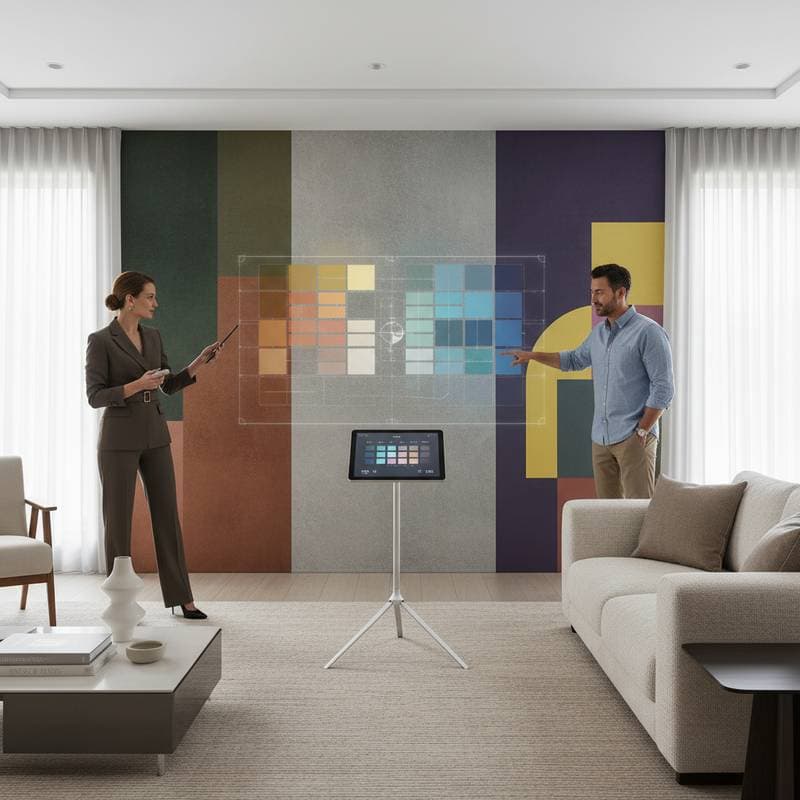
- Premium budget: Pair AI simulations with in-person sessions, where professionals present varied concepts informed by technology.
This tiered approach ensures creativity suits any financial situation.
Algorithms and Color Psychology
These tools draw from extensive archives of design visuals, behavioral data, and psychological studies. They identify how colors affect emotions, focus, and space perception, such as using cool shades to soothe active areas or vibrant tones to invigorate subdued ones. This insight, built from years of human knowledge, delivers immediate guidance.
Additionally, AI assesses material impacts on color, like how matte surfaces diffuse light versus glossy ones. Users avoid errors, such as colors that appear ideal digitally but overwhelm in reality, saving time and resources.
Insights from Media Production
Television design underscores color's role across lighting variables, where cameras expose flaws. Teams once dedicated hours to physical tests; AI now virtualizes this, simulating appearances in media, displays, or publications. The result cuts preparation time and material use while ensuring flawless execution.
Viewers inspired by these transformations seek comparable ease at home. AI enables digital trials, mirroring professional rigor without the logistics.
Business Opportunities in AI Design
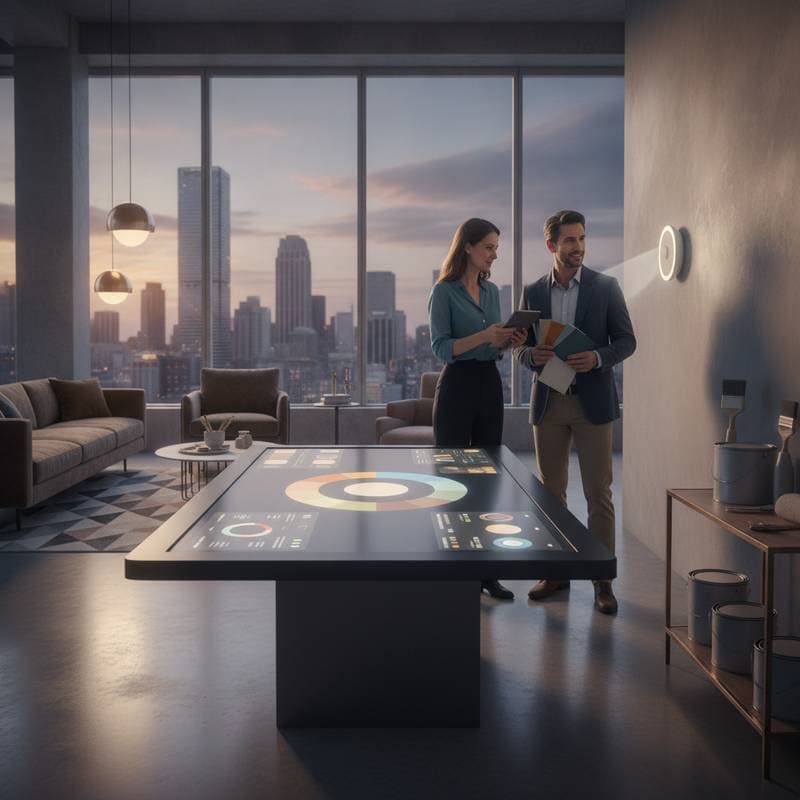
The industry evolves toward integrated platforms blending visualization, retail, and learning. Users scan spaces, build mood boards, and procure supplies in one flow, streamlining from idea to implementation.
Entrepreneurs and designers benefit by developing proprietary collections within these systems. Expertise scales digitally, reaching broader audiences through partnerships rather than individual projects.
The Enduring Value of Human Insight
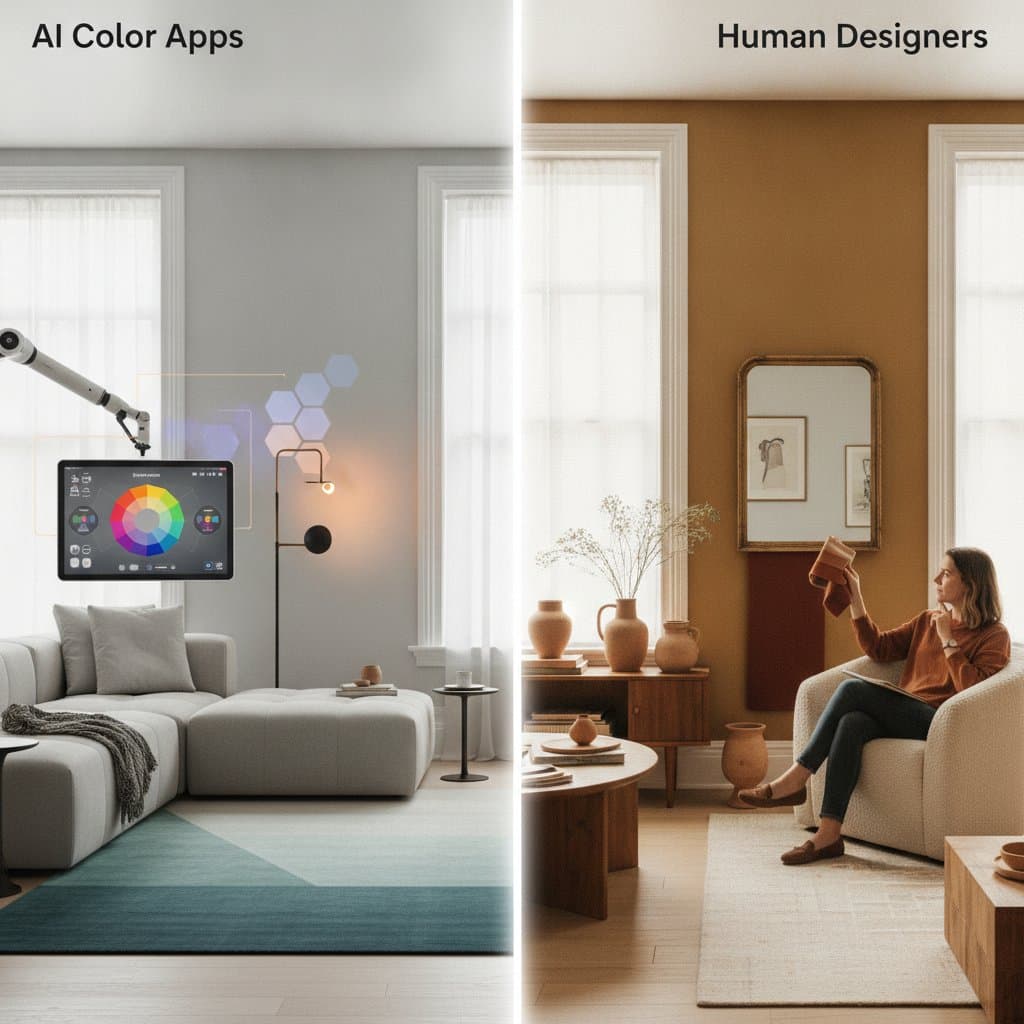
Technology advances, yet emotional resonance demands human input. AI processes visuals but cannot grasp personal narratives, like selecting green for nostalgic reasons. Empathy remains a design cornerstone.
View AI as an ally: leverage it for efficiency, then layer in artistry. This synergy produces designs that blend precision with profound connection.
Empowering Homeowners as Creators
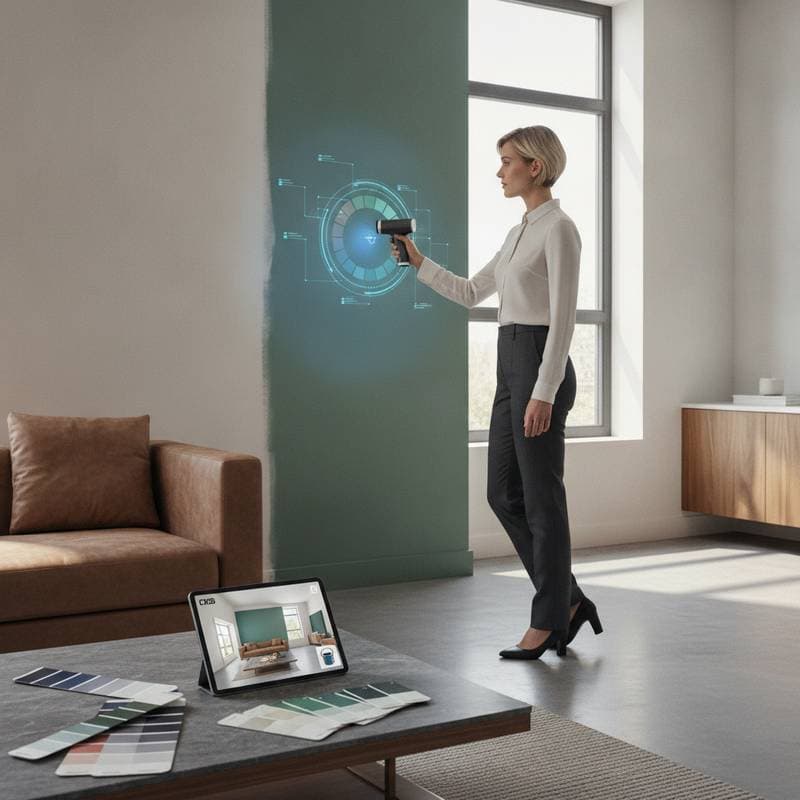
Individuals now experiment boldly with AI-guided augmented reality. Virtual applications let users apply colors to walls pre-purchase, testing options like deep blue or bright ochre risk-free. Tools match selections to available products precisely.
This interactivity fosters skill-building and appreciation for color dynamics. Homeowners transition from novices to informed designers, enhancing their spaces independently.
Sustainability Through Precision
AI promotes eco-friendly practices by minimizing trial-and-error. Accurate predictions curb excess purchases, from sample pots to deliveries. Integrated features suggest low-emission options aligned with preferences.
Such efficiency supports environmentally conscious choices without sacrificing aesthetics.
Navigating Limitations
Challenges persist with AI reliance on quality inputs. Inaccurate photos or measurements yield flawed suggestions; real-world finishes may vary from screens. Physical samples remain advisable for validation.
The interpretive element also eludes algorithms. Professionals add narrative cohesion, elevating functional palettes to meaningful environments.
Embracing a Collaborative Future
Design progresses as a partnership: AI manages analytics, humans cultivate essence. Adopters gain speed, variety, and tailored outcomes, outpacing resistance.
Homeowners start with tools for exploration, then consult experts for polish. This balance advances innovation while honoring craft, benefiting all participants.