AI Tools Outperform Human Perception in Paint Color Matching
Many individuals have dedicated hours to evaluating paint swatches, only to discover that the selected color appears entirely different upon application to a wall. Lighting variations alter the appearance, undertones emerge unexpectedly, and a chosen shade of gray may unexpectedly reveal lavender hues. Selecting the appropriate color often proves to be one of the more challenging aspects of design projects.
Fortunately, advancements in artificial intelligence are revolutionizing the process of color selection. Tasks that previously demanded expert judgment and repeated trials can now be completed swiftly using a smartphone or laptop. AI-driven color matching enables both professionals and homeowners to achieve precise and consistent outcomes.
Limitations of Conventional Color Matching Methods
Even seasoned designers encounter difficulties with color perception. The human eye interprets colors variably based on ambient lighting, surface textures, and adjacent hues. A color that appears warm and harmonious in one setting may seem subdued or stark in another environment.
Paint samples provide some guidance, yet their utility remains limited. Natural and artificial light influence pigment reflection, while manufacturing inconsistencies in printing can introduce subtle discrepancies. Attempting to match fabrics, finishes, and wall paints through visual inspection alone frequently leads to inaccuracies.
AI addresses these challenges by processing digital data to quantify and replicate exact color values. This approach minimizes uncertainty and prevents expensive errors in projects.
The Mechanism Behind AI Color Matching Accuracy
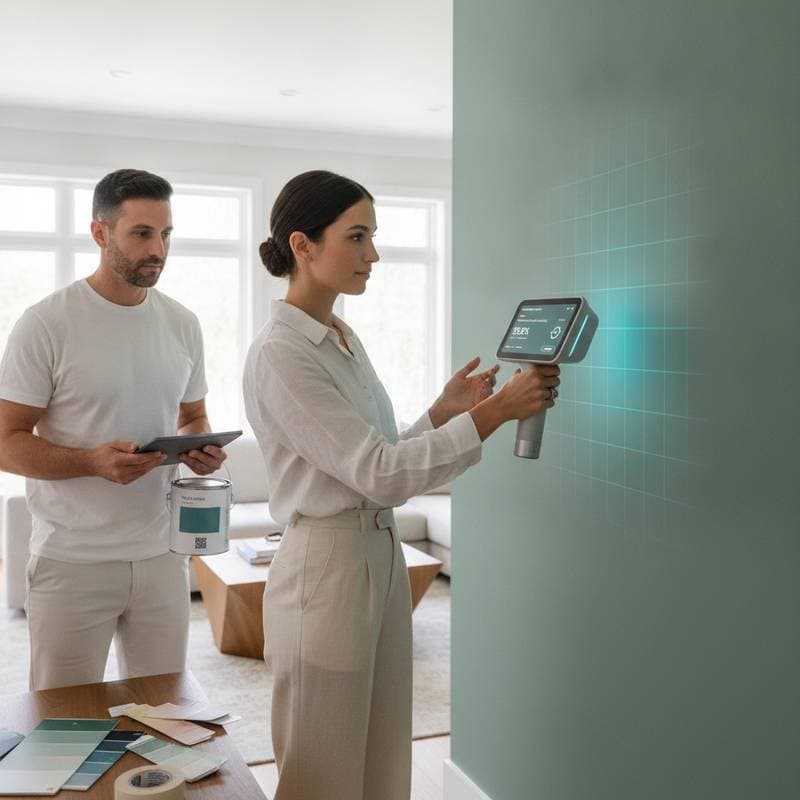
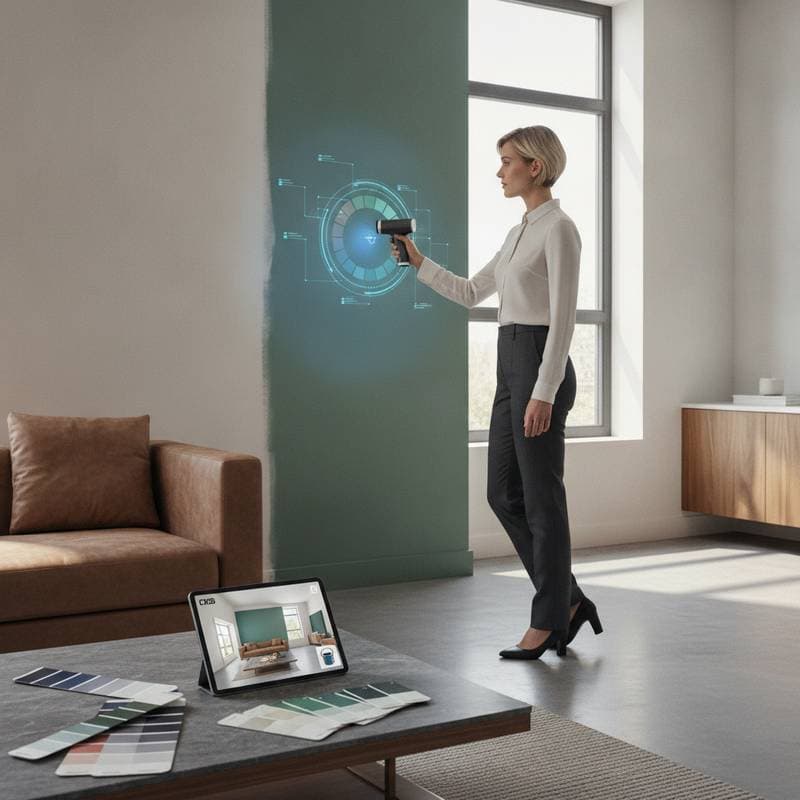
AI color matching systems employ image recognition and advanced data modeling to pinpoint precise color codes. Upon scanning a photograph or physical object, the software discerns multiple color layers, including subtle undertones and reflections overlooked by human vision.
The operational process of most AI color tools follows these steps:
-
Image Acquisition: Upload a photograph or capture a surface image via smartphone or camera.
-
Detailed Color Extraction: The AI examines the image at the pixel level to compute authentic color values, often using models such as RGB or LAB for comprehensive analysis.
-
Extensive Database Matching: These values are cross-referenced against expansive libraries containing digital representations of paint brands, textiles, and finishes.
-
Tailored Suggestions: The system recommends the nearest match along with complementary colors, drawing from design principles like analogous schemes or considerations of emotional impact.
This sequence completes in mere seconds, removing the trial-and-error element that often prompts repainting or material reorders among homeowners.
Real-World Applications and Leading Tools
Numerous platforms have emerged to leverage this technology. Certain paint manufacturers provide complimentary mobile applications that allow users to photograph a surface and receive an immediate paint color match. Additional options integrate seamlessly with professional design software, facilitating the development of digital mood boards that mirror real-world color accuracy.
Homeowners benefit from AI color tools in several ways:
-
Identifying matches for existing wall colors during touch-ups when original labels are unavailable.
-
Harmonizing new furniture with prevailing room finishes.
-
Simulating room appearances under varied lighting scenarios to anticipate outcomes.
-
Developing unified color palettes for comprehensive home renovations.
Professionals retain their creative edge and intuition, yet these tools expedite workflows and diminish error rates. Experienced designers increasingly rely on AI to corroborate selections prior to palette finalization, ensuring reliability.
To illustrate, consider a scenario where a homeowner photographs a cherished fabric swatch. The AI tool not only identifies the dominant hue but also proposes three harmonious accents, complete with paint codes from popular brands like Benjamin Moore or Sherwin-Williams. This precision transforms abstract ideas into executable plans.
Pricing, Constraints, and Professional Guidance
The majority of AI color-matching tools operate at no cost or minimal expense, typically ranging from zero to twenty dollars for basic app versions. Subscriptions for advanced, professional software may cost between fifty and two hundred dollars monthly, scaled to include features such as multi-brand integrations or batch processing.
Despite their strengths, these tools possess limitations. Results depend on optimal lighting conditions and image quality; suboptimal photos or fluctuating illumination can skew outputs. Furthermore, color rendering varies across devices, meaning a shade that appears flawless on a mobile screen might differ slightly on a monitor or in physical application.
For extensive renovations or projects involving atypical materials like natural stone or custom finishes, engaging a professional designer or painter is advisable. Such experts can validaterecommendations and adapt them to unique spatial dynamics.
Integrating AI with Human Expertise for Optimal Design
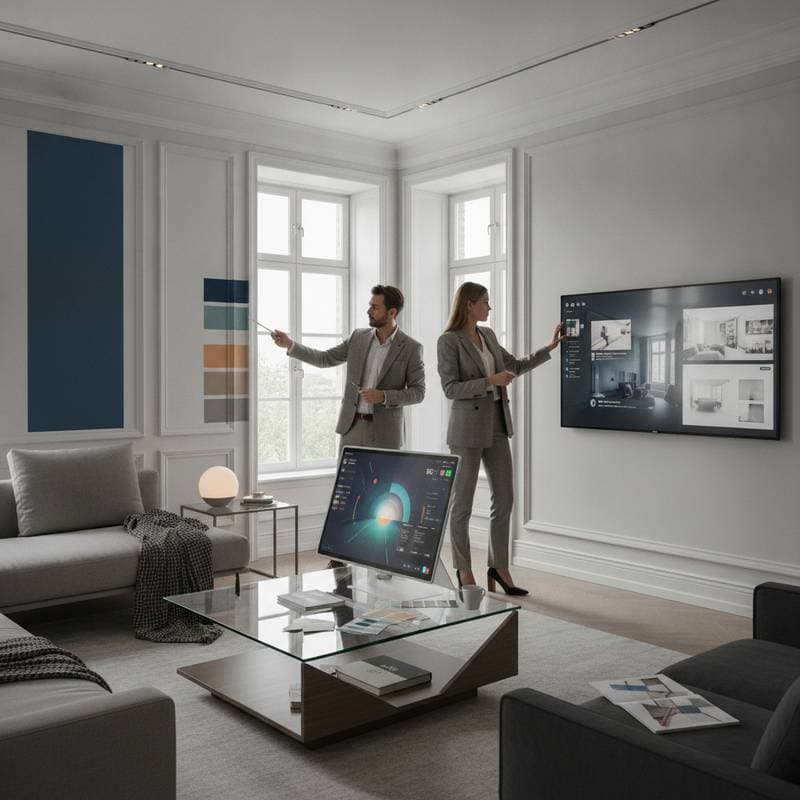
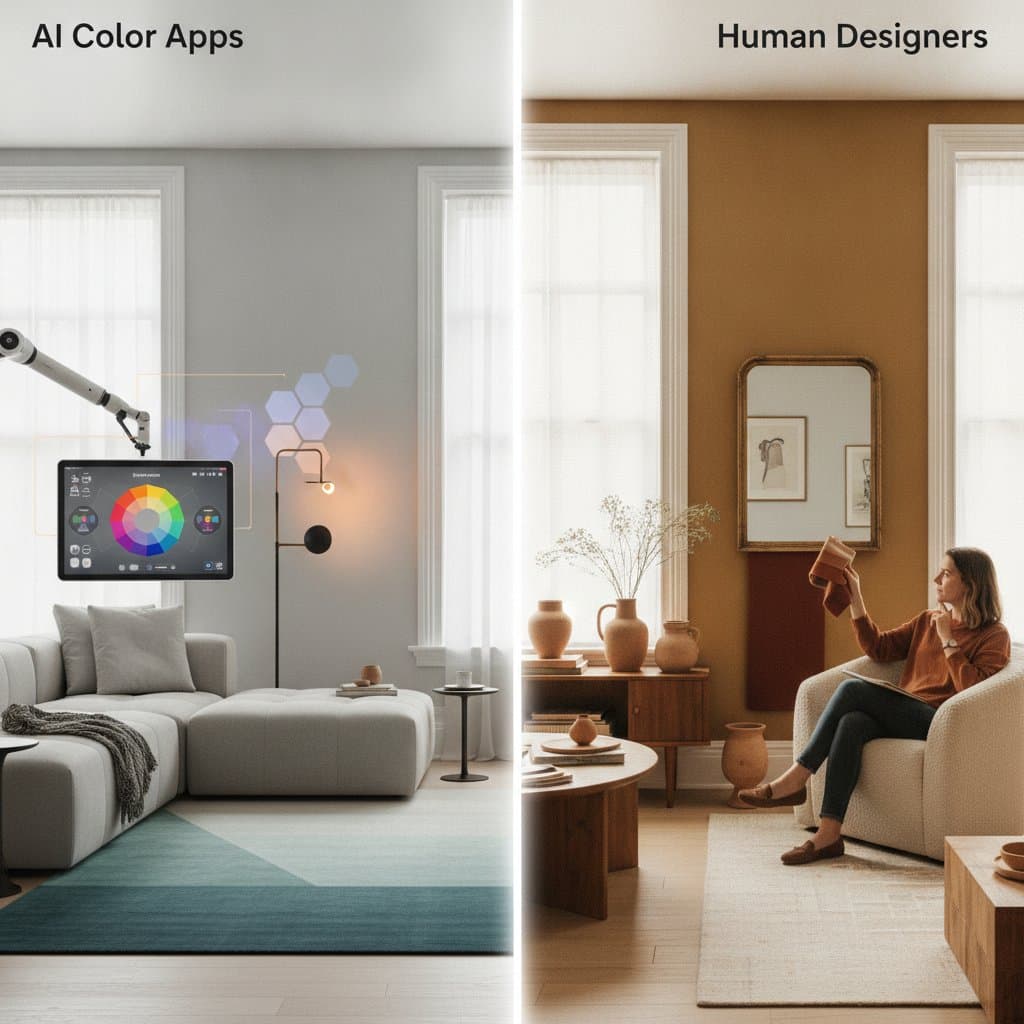
While AI excels at rapid data analysis, it cannot supplant human discernment or accumulated experience. Designers contribute contextual awareness, emotional acuity, and insight into color's influence on ambiance and functionality. Combining these elements yields a streamlined, highly effective methodology.
In practice, a designer may initiate with an AI-derived palette and refine it according to the client's illumination patterns, architectural elements, and stylistic preferences. The technology delivers exactitude, whereas the human touch preserves aesthetic warmth and individuality.
This synergy proves particularly valuable in commercial settings, such as retail spaces where brand consistency demands unwavering color fidelity across fixtures and signage.
Applying AI Color Matching to Your Design Projects
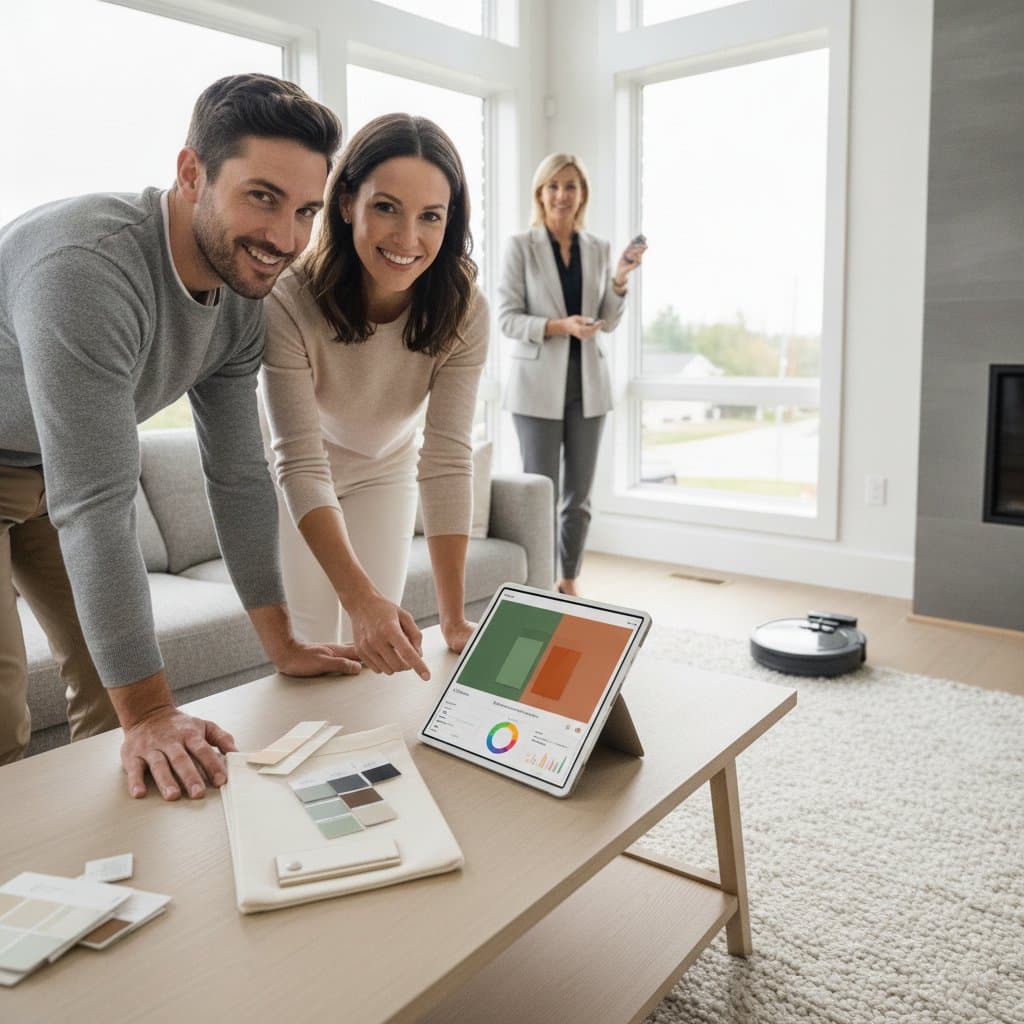
To incorporate AI color matching effectively, commence with modest experiments. Select a reputable application and test it on a single room. Capture images under both natural daylight and indoor lighting, then evaluate the proposed matches against physical samples to build familiarity.
For projects of moderate scope, augment AI outputs with a brief professional consultation. This strategy offers reassurance at a fraction of comprehensive design costs. Advanced users or industry professionals may opt for integrated software compatible with 3D visualization or virtual reality staging tools, enhancing predictive accuracy.
Color serves as a foundational element in design, and AI empowers users to wield it with greater precision. From minor updates to full-scale transformations, this technology eliminates ambiguity, fostering intentional and unified results that elevate living spaces.