Universal Design: Creating Enduring Bathroom Safety for Modern Living
Imagine entering your bathroom on a typical morning, only to notice the floor's unexpected slickness underfoot. The overhead light casts faint shadows, and adjusting the shower faucet demands an uncomfortable reach. These subtle cues highlight how bathroom usability evolves with time and circumstance. For homeowners committed to long-term residence or those supporting aging relatives, strategic design decisions transform this essential space into one that prioritizes safety, aesthetics, and ease of use for all occupants.
Universal design extends beyond basic accessibility. It emphasizes environments that foster autonomy and well-being, accommodating varying levels of mobility, strength, and vision. Through intentional choices, a bathroom emerges as both visually appealing in the present and reliably functional for the future.
The following guide outlines practical steps to achieve this balance.
Essential Steps for Safety and Usability
1. Optimize Layout and Spatial Flow
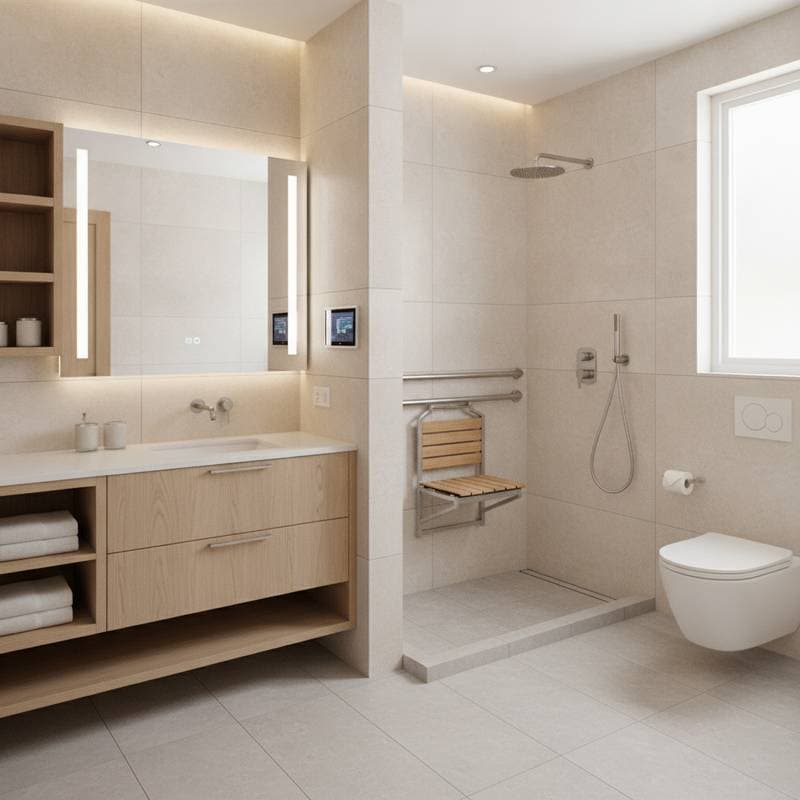
Begin renovations by assessing movement pathways. Designate a minimum of 60 inches of clear turning radius to accommodate wheelchairs or walkers, facilitating smooth navigation as needs shift. In compact bathrooms, opt for pocket doors that slide into walls or doors that swing outward, maximizing usable floor area without compromising entry.
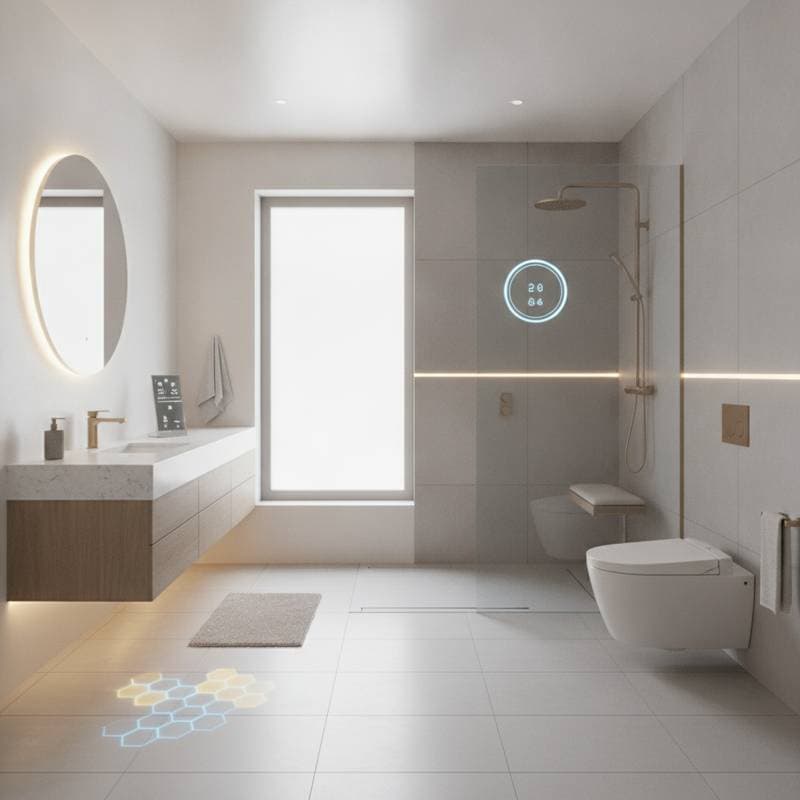
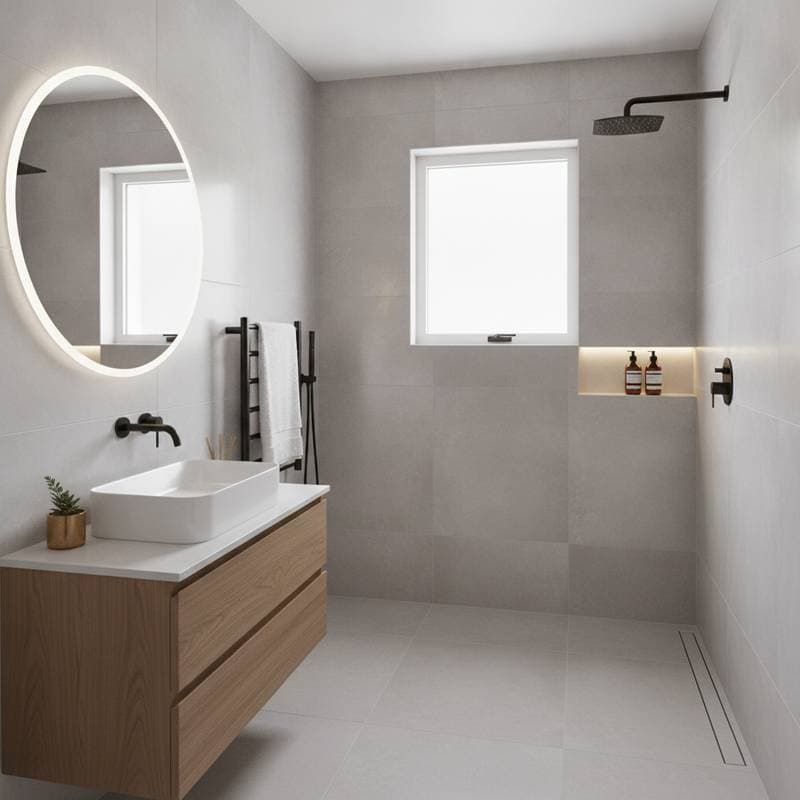
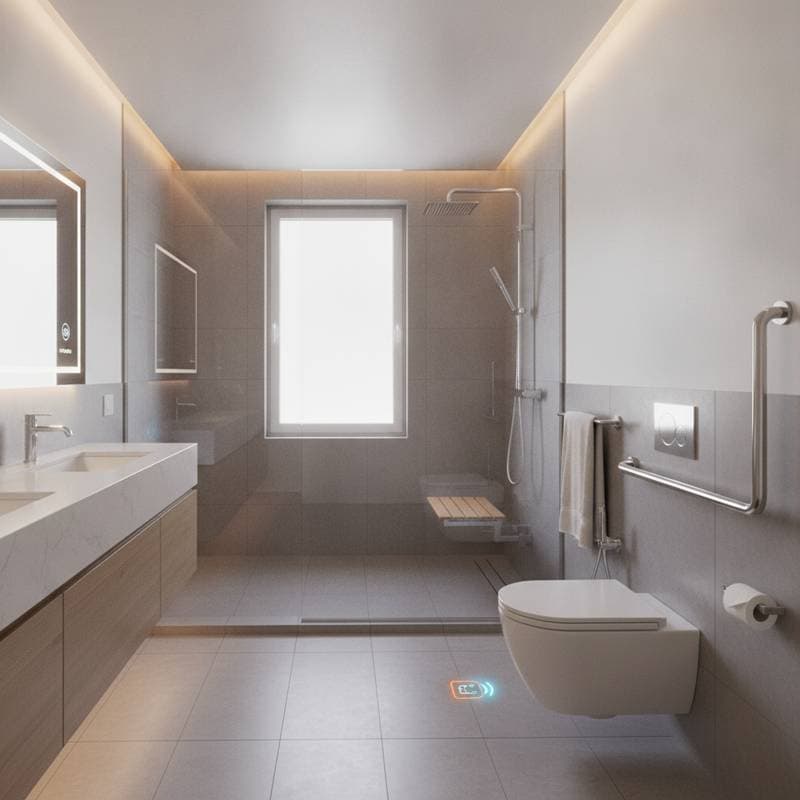
Prioritize shower configuration for inherent safety. Install a curbless, walk-in shower with an entry width of at least 30 inches, surpassing traditional tubs in slip prevention and accessibility. Integrate a fixed bench at 17 to 19 inches high or a fold-down seat rated for 300 pounds. Place controls, including thermostatic valves to maintain steady water temperature, within arm's reach of the entrance, allowing activation before entering the wet zone.
2. Select Durable, Traction-Enhanced Flooring
Falls on wet surfaces account for a significant portion of household injuries. Select materials engineered for grip, such as porcelain tiles with textured surfaces, luxury vinyl planks mimicking wood grain, or cork composites treated for moisture resistance. These options maintain footing integrity when saturated, outperforming smooth stones or polished concretes.
Steer clear of intricate patterns or expansive grout joints that trap water and complicate maintenance. For installation, ensure a slight slope toward drains to channel water efficiently.
Budget considerations include:
- Entry-level: $3 to $6 per square foot for resilient vinyl or rubber mats
- Standard: $7 to $10 for textured ceramic or porcelain
- High-end: $12 to $20 for custom-molded, anti-microbial synthetics
3. Implement Versatile Lighting Solutions
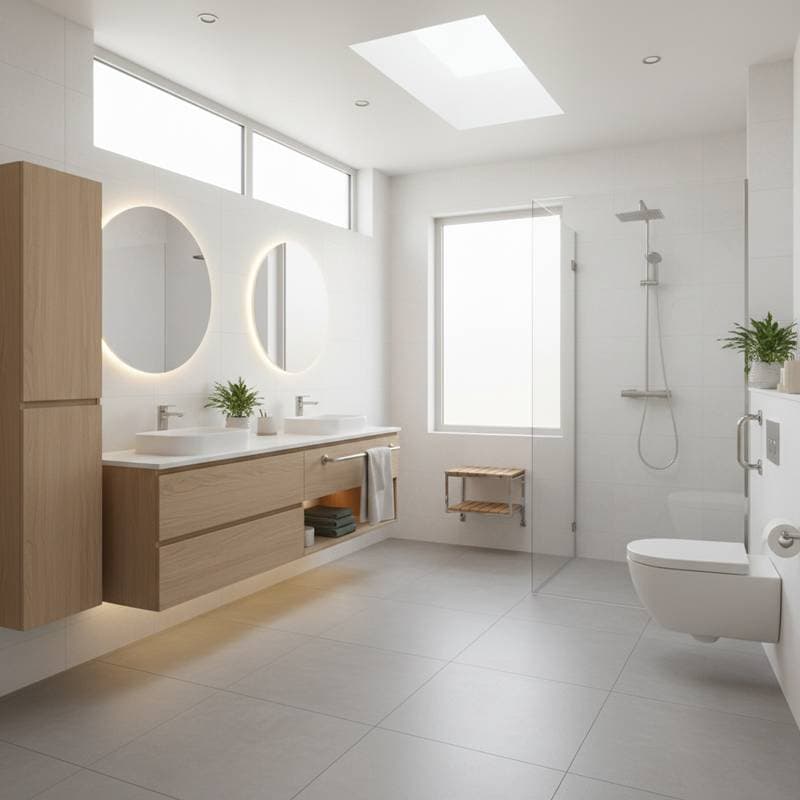
Effective illumination prevents accidents by illuminating hazards and supporting precise tasks. Layer ambient ceiling-mounted LEDs with focused vanity lights positioned to eliminate facial shadows. Integrate dimmers for adjustable brightness and warm-to-cool color shifts via smart bulbs.
Incorporate motion-activated nightlights embedded in baseboards or outlets, activating at low levels to guide nighttime visits without full-room glare. Select fixtures with a 4000K neutral tone for natural visibility, and ensure all are rated IP44 or higher for water resistance near wet areas.
4. Integrate User-Friendly Fixtures
Ease of operation defines fixture selection. Replace twist knobs with lever-style handles on doors and cabinets, reducing torque requirements for those with joint limitations. Faucets should feature single-lever mixing with pull-out sprayers, enabling one-handed flow and temperature adjustment.
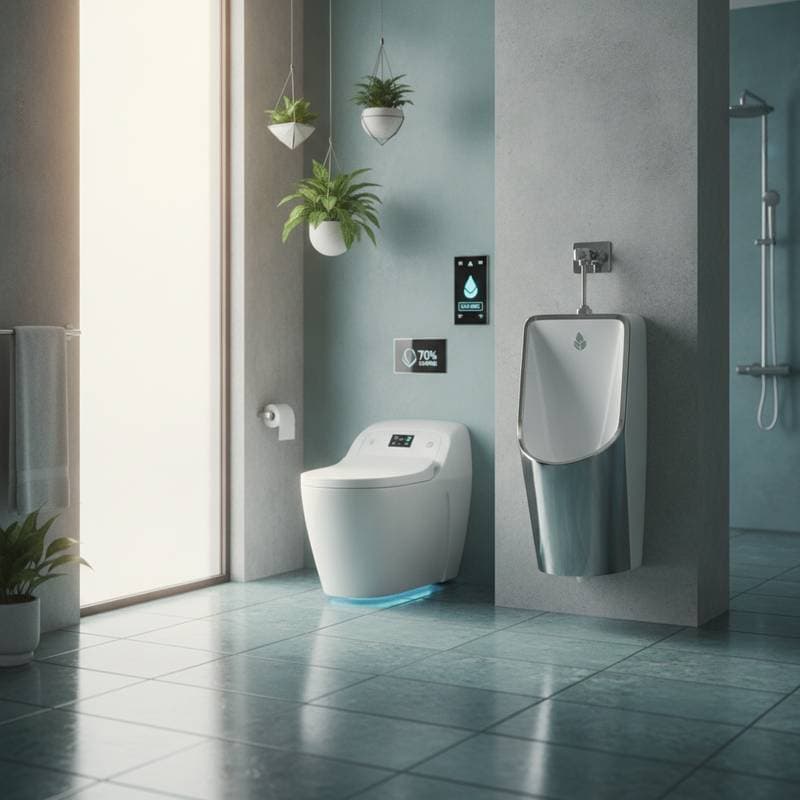
Toilets demand a seat height of 17 to 19 inches for reduced bending, compliant with ADA standards. Reinforce adjacent walls during framing to support grab bars positioned at 33 to 36 inches high, angled for optimal leverage during transfers.
Shower enhancements include rain heads paired with handheld wands on height-adjustable rails spanning 24 to 48 inches. Add anti-scald devices to cap water at 120 degrees Fahrenheit, safeguarding vulnerable users.
5. Incorporate Stylish Support Elements
Contemporary grab bars blend seamlessly with decor, available in finishes like brushed nickel or matte black to mimic towel racks or shelving. Position primary bars horizontally at 34 inches above the floor near toilets and showers, with vertical options for standing support.
Secure installation demands anchoring into structural studs or installing plywood blocking behind drywall during renovations. Each bar must withstand 250 pounds of dynamic load per building codes. Professional fitting typically costs $150 to $300 per unit, including hardware and labor.
6. Enhance with Intelligent Home Integrations
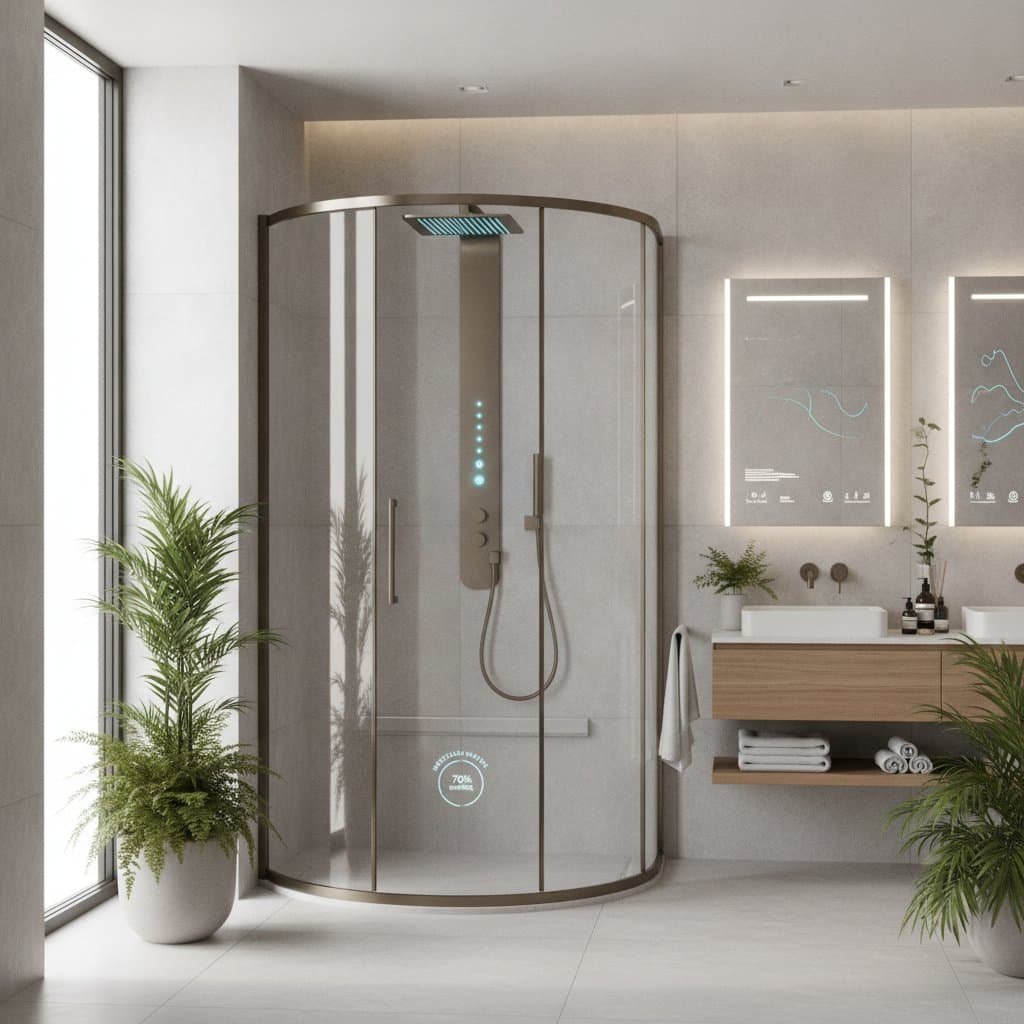
Technology amplifies universal principles without overwhelming the design. Touchless sensor faucets dispense water via infrared detection, minimizing germ transfer and physical effort. Anti-fog mirrors with integrated LEDs and magnification zones improve grooming for all vision levels.
Underfloor radiant heating warms tiles to 85 degrees Fahrenheit, deterring chills on bare feet. Voice-activated systems, compatible with assistants like Alexa, control exhaust fans to maintain humidity below 60 percent, preventing mold while offering hands-free operation.
These additions, though initial investments of $200 to $1,000 per feature, yield daily conveniences across demographics.
Engaging Expert Assistance
Certain modifications suit skilled DIY efforts, such as adding lever handles or motion lights. However, projects involving layout alterations, pipe rerouting, or wiring demand certified professionals to uphold safety and compliance.
Plumbers ensure seamless integration of linear drains in curbless showers or elongated traps for comfort-height fixtures, averting backups. Electricians wire GFCI outlets and low-voltage systems to code, incorporating surge protection.
Consult a Certified Aging-in-Place Specialist (CAPS) for holistic plans addressing current and anticipated needs. These experts, trained by the National Association of Home Builders, deliver customized blueprints that evolve with residents.
Realizing Enduring Benefits
Universal features transcend age-specific use, serving families with infants in carriers, individuals recovering from surgery, or active adults valuing efficiency. Such adaptations promote confidence in daily routines, reducing injury risks by up to 50 percent according to safety studies.
In property markets, bathrooms with these elements command premiums of 5 to 10 percent at resale, particularly in retiree-friendly communities. Beyond financial gains, they minimize disruptive future overhauls, preserving resources for other priorities.
Sustaining Peak Performance
Post-installation, vigilance ensures longevity. Inspect seals quarterly, reapplying silicone caulk to block moisture intrusion. Gently scrub traction surfaces with pH-neutral solutions to preserve grip without residue buildup.
Annually evaluate tech components, recalibrating sensors and replacing batteries. Document contact details for vetted service providers, enabling prompt resolutions for any plumbing clogs or electrical fluctuations.
Embracing a Secure Future
Universal design elevates the bathroom into a resilient sanctuary, harmonizing protection with elegance. Initiate with targeted enhancements like lighting upgrades or fixture swaps, then scale to comprehensive redesigns aligned with personal trajectories.
Professional input refines execution, ensuring every element contributes to sustained well-being. This approach secures not only physical safety but also the freedom to thrive independently across life's continuum.