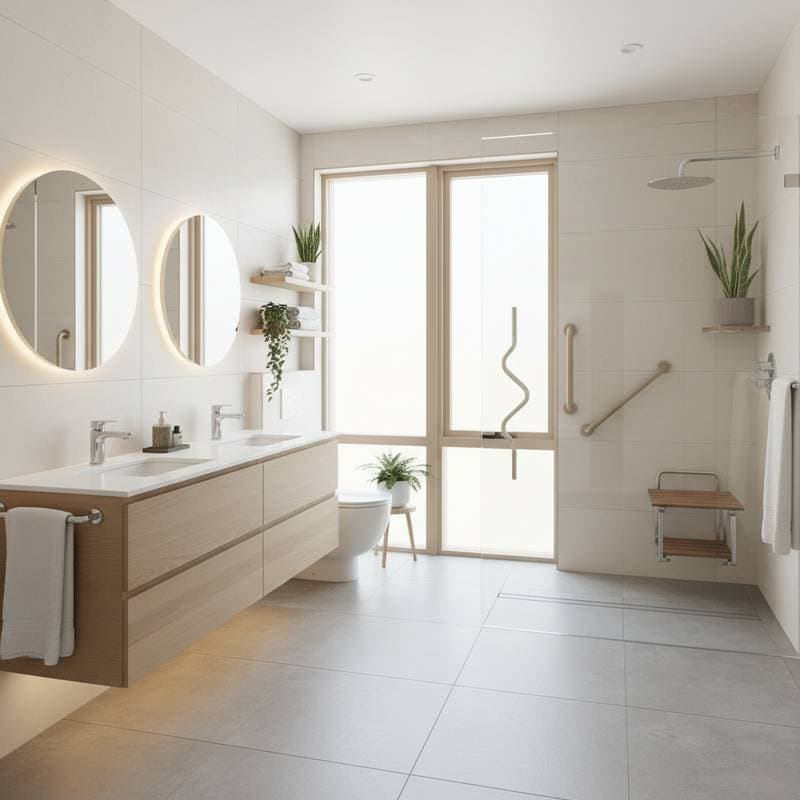
Essential Universal Design for Aging-in-Place Bathrooms
A well-designed bathroom serves as more than a functional space for daily routines. It functions as a sanctuary that promotes independence, comfort, and safety. As homeowners increasingly opt to stay in their homes during later life stages, universal design principles guide the creation of bathrooms that adapt to evolving needs. These designs integrate accessibility with aesthetic appeal, demonstrating that functionality and personal style can coexist harmoniously.
The following sections outline key design strategies for aging-in-place bathrooms. Each approach merges visual elegance with practical benefits, providing a framework for spaces that accommodate all generations seamlessly.
10. Step-Free Entry and Open Layouts
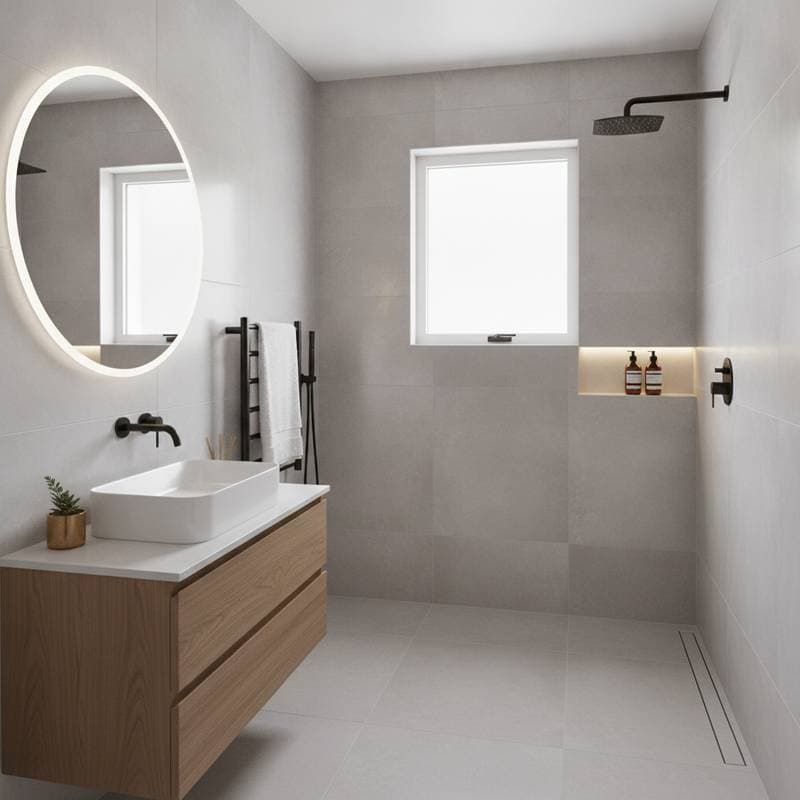
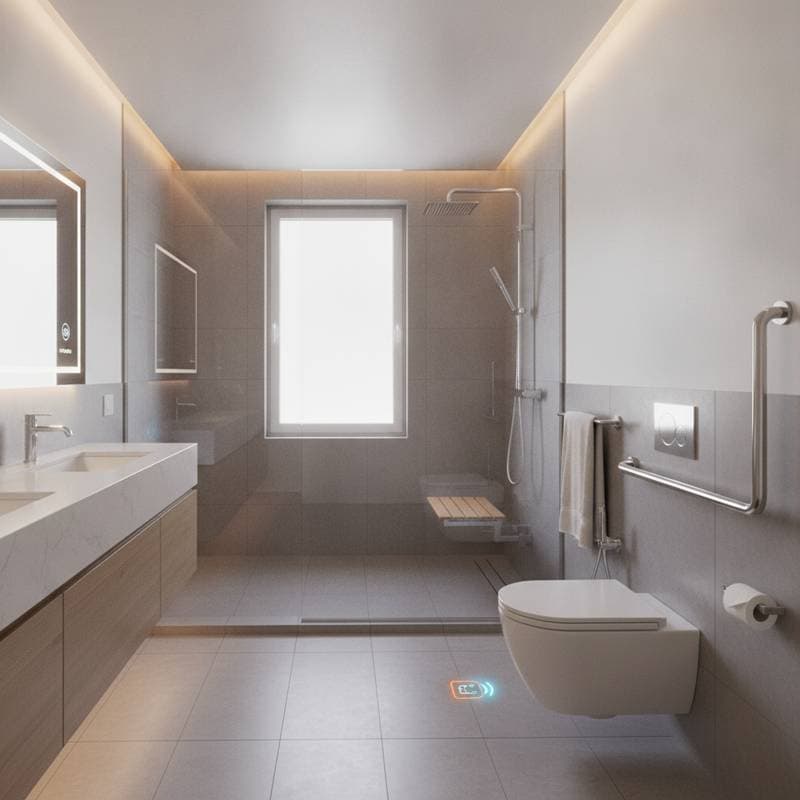
Prioritize barrier-free movement as the foundation of universal design. Install step-free shower entries to enable smooth access for individuals walking unaided or relying on mobility devices. Opt for curbless showers using large-format porcelain tiles with slip-resistant surfaces, as recommended by designers like Lisa Cini of Mosaic Design Studio. Select flooring materials such as honed limestone or matte porcelain that offer gentle texture for traction without discomfort.
Incorporate open layouts to foster a sense of spaciousness and tranquility. Eliminate thresholds and visual obstructions to enhance navigation. Extend continuous flooring from the bathroom into adjacent areas like dressing spaces, promoting fluid transitions that support both safety and cohesive style.
9. Strategic Lighting and Layered Illumination
Effective lighting enhances comfort and visibility while minimizing risks. Use balanced layers to avoid glare and ensure clear sightlines across task areas. Combine ambient ceiling fixtures with sconces positioned at mirror level, following advice from architectural lighting designer Karen LeBlanc, to reduce shadows that impair depth perception.
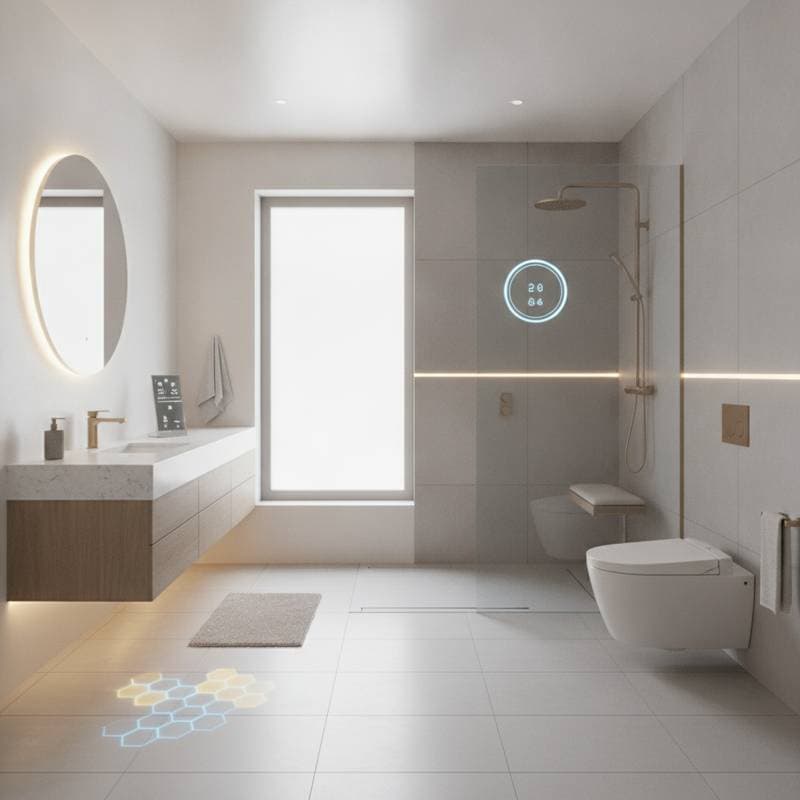
Install soft LED strips beneath floating vanities or within shower niches for nighttime guidance. Choose warm color temperatures around 2700K and include dimmer controls for adjustable brightness throughout the day. Select fixtures in finishes like brushed nickel or satin brass to harmonize with warm materials such as rift-cut oak cabinetry or Calacatta marble.
8. Comfort-Height Fixtures and Ergonomic Placement
Design every element to facilitate effortless interaction. Choose comfort-height toilets measuring 17 to 19 inches from floor to seat to ease pressure on knees and hips. Install wall-mounted sinks with unobstructed space underneath to suit seated users, maintaining a modern silhouette.
Balance ergonomics with visual appeal, as emphasized by interior designer Jamie Drake of Drake/Anderson. Equip faucets with lever handles or touchless operation in finishes such as matte black or polished nickel for improved grip. Position storage elements between 24 and 48 inches from the floor to avoid excessive bending or reaching.
7. Grab Bars as Sculptural Elements
Transform grab bars from basic aids into integrated design features. Select modern options from manufacturers like Kohler and Moen that double as towel bars or shelves. Use finishes such as brushed stainless steel or oil-rubbed bronze to align with surrounding hardware, ensuring a unified appearance.
Strategically place bars for comprehensive support: horizontal ones near the toilet, vertical at shower entries, and diagonal within bathing zones. Integrate them into tiled walls along grout lines or decorative edges to preserve aesthetic flow. This method delivers discreet security that complements the room's overall harmony.
6. Adjustable and Handheld Shower Systems
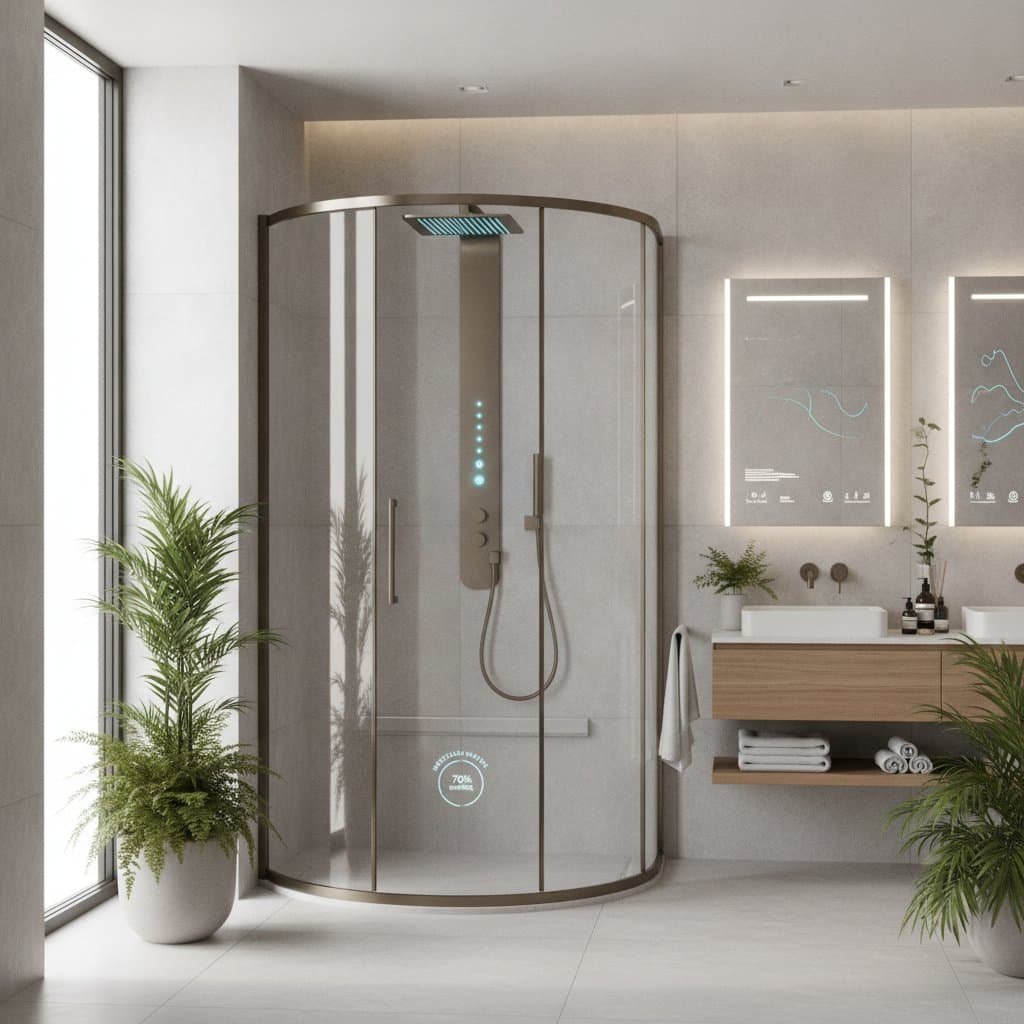
Build flexibility into shower setups for varied user needs. Mount handheld showerheads on vertical slide bars for height customization, suitable for standing or seated positions. Incorporate magnetic docking for easy handling and thermostatic valves to maintain steady water temperatures, protecting sensitive skin.
Enhance these systems with premium materials for added luxury. Feature a mosaic wall of matte glass tiles in subdued shades like sea-gray or soft sand behind fixtures in chrome or brushed gold. Such pairings underscore the bathroom's role as a wellness retreat.
5. Non-Slip Flooring with Warmth and Texture
Select flooring that prioritizes safety alongside sensory appeal. Choose non-slip porcelain tiles, or alternatives like textured limestone or tumbled marble, for reliable grip and natural variation. Integrate radiant underfloor heating under tile surfaces to deliver even warmth, removing the risks associated with loose rugs.
Apply subtle patterns, such as herringbone or offset arrangements, as suggested by architectural designer Michael K. Chen, to add dynamic interest without visual overload. This combination ensures the floor remains inviting and secure over time.
4. Seamless Transitions and Continuous Materials
Promote accessibility and elegance through material continuity. Run a single surface, like soft gray porcelain or pale terrazzo, across floors and select walls to reduce visual complexity and simplify cleaning. Use integrated linear drains to maintain unbroken planes.
In designs from Studio O+A, extend engineered quartz slabs to vanity tops and shower benches for durability against moisture. The nonporous nature resists stains, while the seamless look conveys refined simplicity. This unified strategy results in intuitive, navigable spaces.
3. Supportive Seating and Multi-Functional Benches
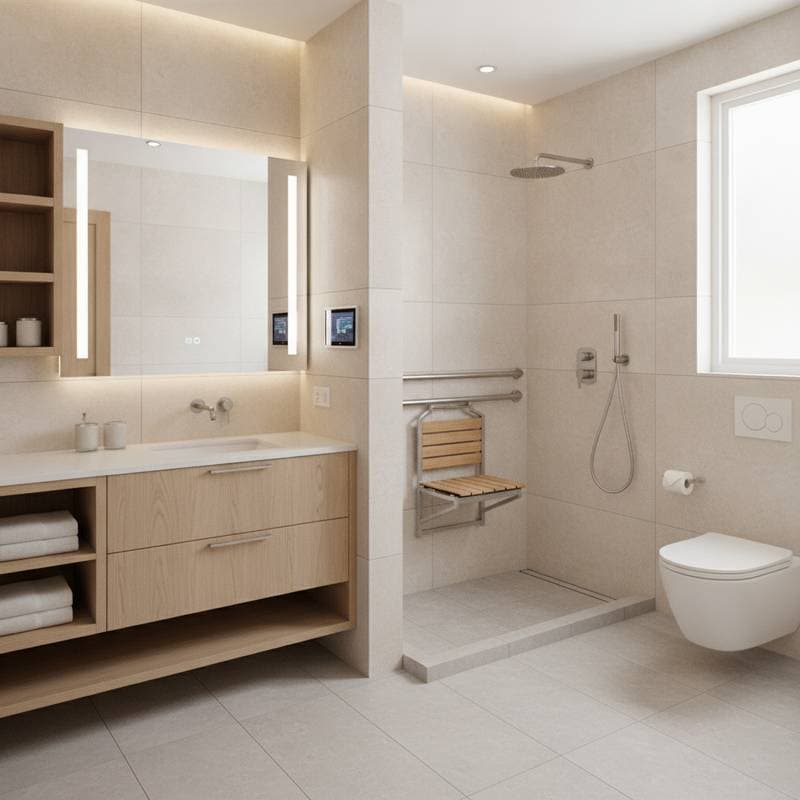
Incorporate built-in seating to elevate shower functionality. Install floating benches in quartz or teak for stable support during use, which also serve for holding towels or products. Consider fold-down versions in slatted bamboo or solid composites to optimize space.
Coordinate bench materials with nearby cabinetry or walls for seamless integration, as interior architect Dana Tomic Hughes advises. Embed seating into the room's architecture to extend visual lines from vanities or structures, fostering a composed and supportive environment.
2. Smart Storage and Accessible Organization
Design storage to empower independence rather than impede it. Equip pull-out drawers with full-extension glides to access items without deep reaching. Place shallow drawers under sinks for everyday necessities and vertical pull-outs flanking the vanity for clear organization.
Add interior lighting to illuminate contents and select soft matte paints like Benjamin Moore’s Gray Owl or Farrow & Ball’s Cornforth White. Use custom millwork in European oak or walnut veneer to infuse natural warmth, making the space feel inviting rather than institutional.
1. Thoughtful Color and Sensory Comfort
Select colors that shape mood and clarity. Employ warm neutrals with mild contrasts to define surfaces distinctly and minimize confusion. Pair light stone tones with richer cabinet shades like graphite or espresso for subtle layering.
Incorporate varied textures, such as matte and satin finishes, to enrich tactile experience and distribute light evenly. Integrate natural elements like honed marble or woven linen curtains to dampen sound and evoke tranquility. These choices craft an instinctively soothing atmosphere.
Embracing Long-Term Adaptability
Universal design enables bathrooms to support life stages without sacrificing style. Focus on forward-thinking choices that prioritize safety and ease alongside enduring beauty. Implement these strategies to build confidence in daily routines and sustain personal comfort over years.
Such bathrooms deliver practical assurance through integrated features. They harmonize protection with sophistication, allowing users to navigate independently. Ultimately, these spaces affirm design's power to nurture well-being across generations.