Aging-in-Place Retrofits: Bathroom Transformations for 2025
Aging-in-place design integrates innovation and functionality to promote safety and independence at home. Bathrooms serve as critical areas for these enhancements, offering opportunities to address common hazards while elevating aesthetics. Solutions range from comprehensive renovations to simple, cost-effective adjustments, ensuring accessibility for diverse budgets.
Why Focus on Bathrooms
Bathrooms demand attention in aging-in-place strategies due to their role in daily routines and potential risks. Slippery floors, poor lighting, and challenging layouts increase fall hazards, yet targeted modifications can mitigate these issues. Thoughtful retrofits transform these spaces into secure, efficient environments that maintain privacy and dignity.
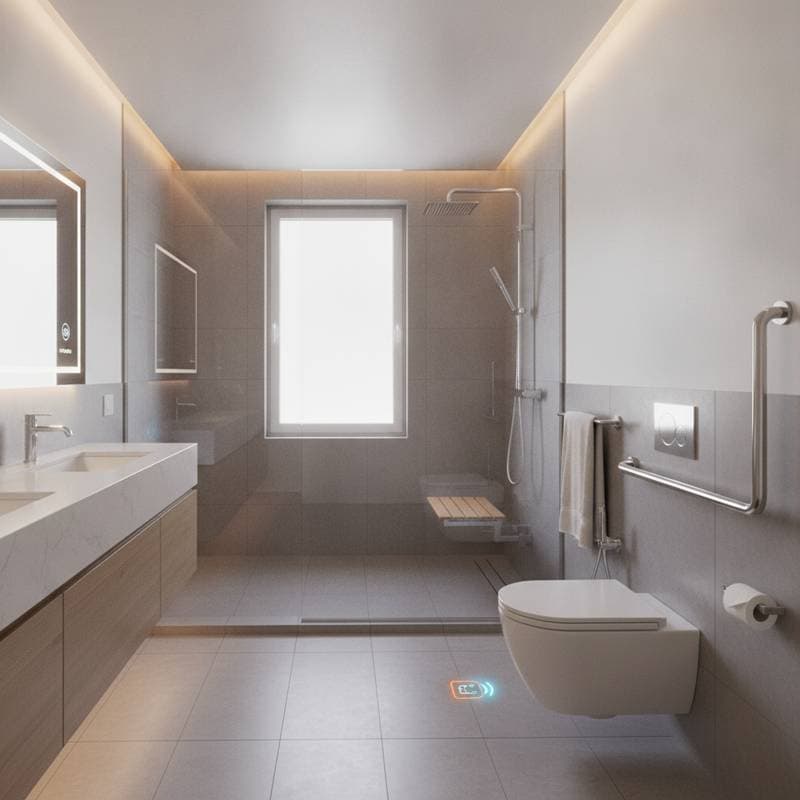
Accessible designs now prioritize seamless integration with modern decor. Grab bars that coordinate with hardware and curbless showers resembling luxury features exemplify this shift. These elements support functionality without compromising visual appeal.
Universal Design Principles in Modern Bathrooms
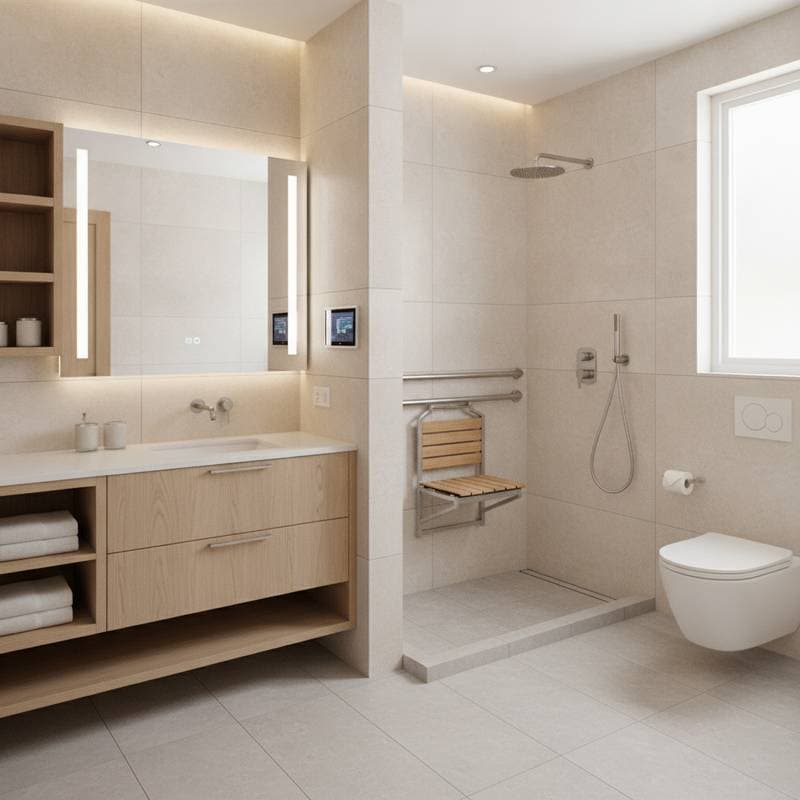
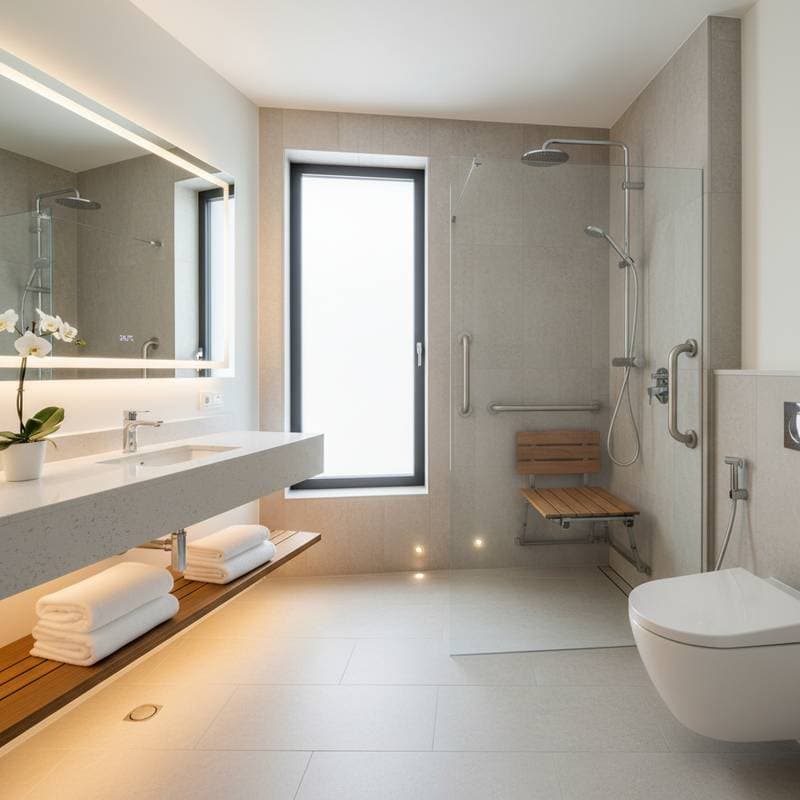
Universal design accommodates all users by emphasizing flexibility and simplicity. Recent advancements incorporate stylish elements that align with contemporary interiors. Products such as fold-down teak shower seats and grab bars finished in graphite provide both utility and elegance.
These features appear in design publications and suit various budgets. A brushed nickel ADA-compliant grab bar costs under fifty dollars, while custom rail systems range into several hundred. Selection depends on specific needs, but all options enhance safety and cohesion.
Benefits of Curbless Showers
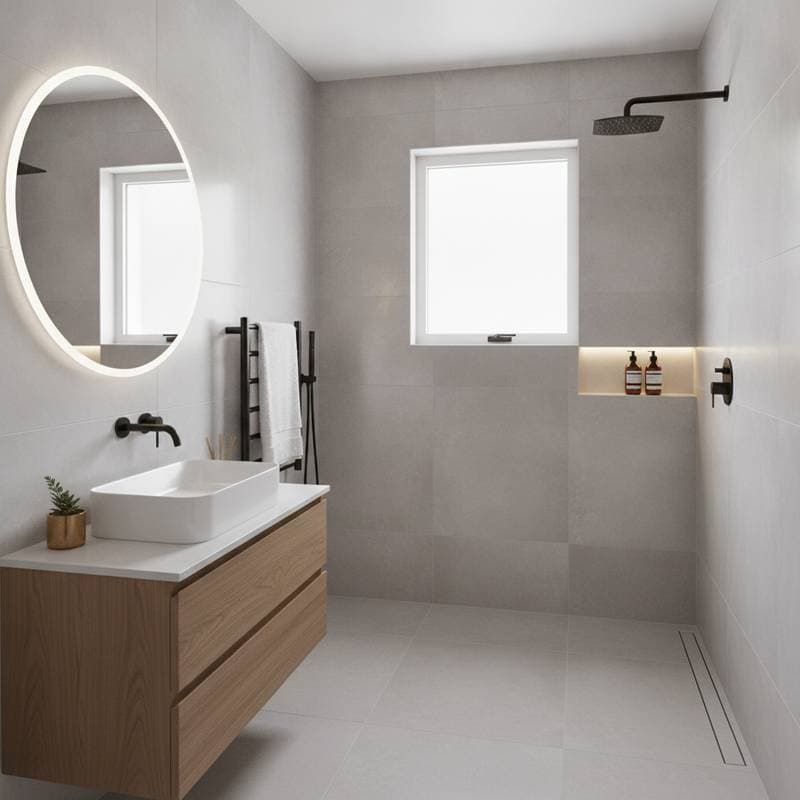
Curbless showers remove barriers that pose tripping risks and expand perceived space in compact areas. They facilitate easier entry and exit, benefiting users with mobility challenges. Additionally, these designs simplify cleaning and maintenance.
Retrofitting involves adjusting floor slopes and waterproofing for effective drainage. Professional installations may cost a few thousand dollars, whereas DIY approaches using prefabricated pans and tile overlays prove more economical. Opt for slip-resistant materials like textured porcelain or mosaic tiles to ensure stability.
Effective Lighting Strategies
Proper lighting reduces shadows and improves visibility for tasks like grooming and navigation. Layered approaches combine wall sconces, recessed ceiling fixtures, and low-level illumination. This setup prevents accidents and creates a welcoming atmosphere.
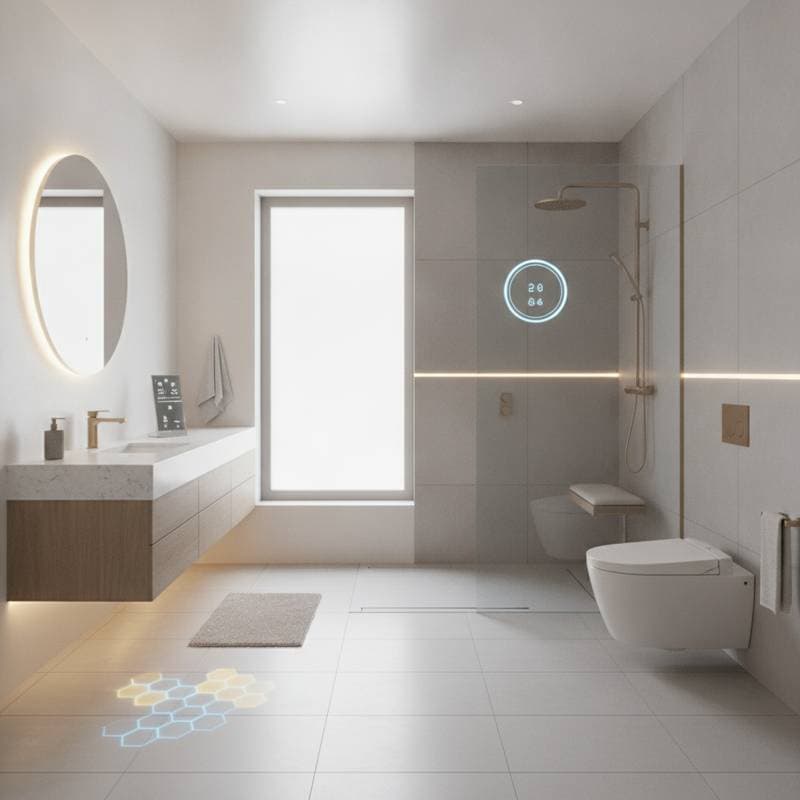
Budget options include motion-sensor LED strips under vanities, which install easily and suit rental properties. Advanced systems with tunable white lighting adjust temperatures to mimic natural light cycles. Such installations, though costing several hundred dollars, foster a supportive daily environment.
Integrating Smart Technology
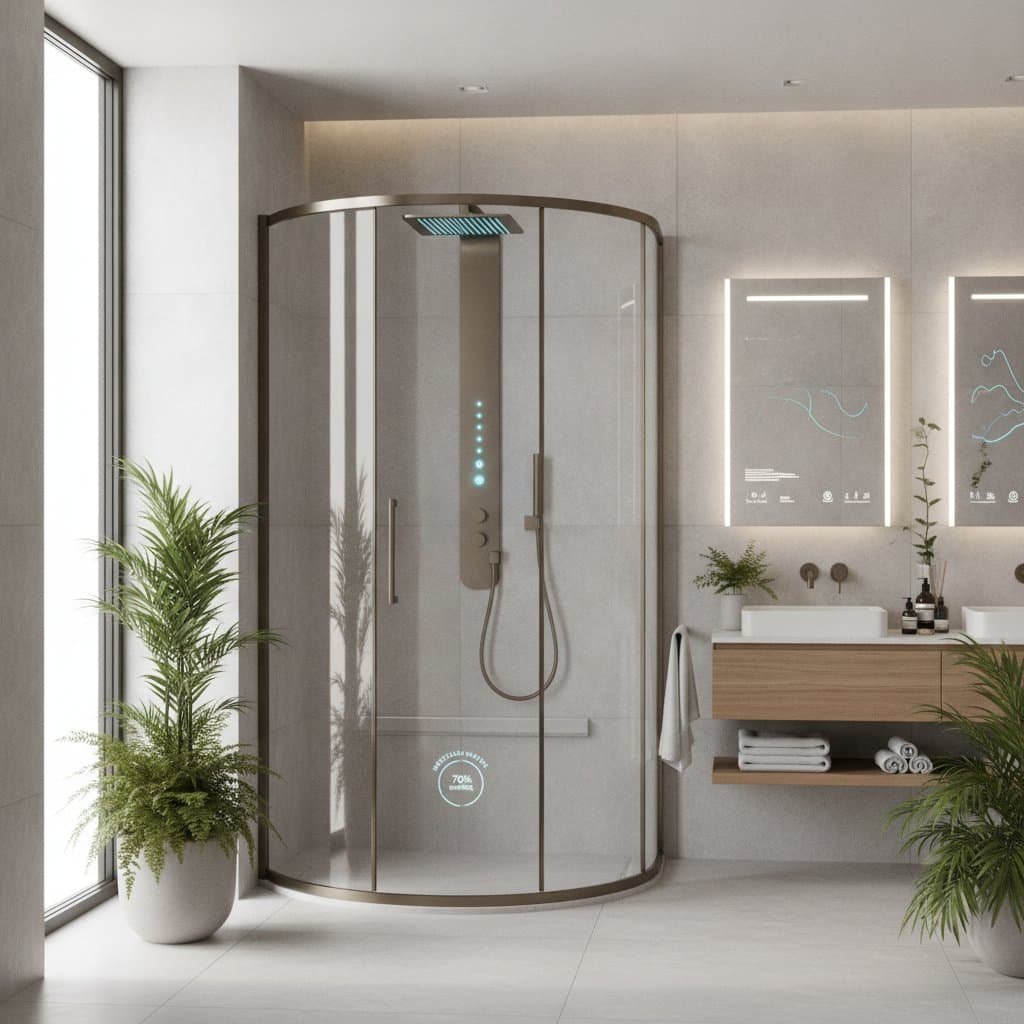
Smart technology streamlines bathroom interactions and bolsters independence. Voice-activated fixtures and touchless faucets respond intuitively to user needs. Mirrors with automatic lighting and app-controlled showers further enhance convenience.
Affordable choices, such as motion-sensor faucets under two hundred dollars, deliver essential features. Higher-end smart shower systems integrate with home assistants for personalized settings. These tools build user confidence through reliable performance.
Optimizing Fixture Heights for Comfort
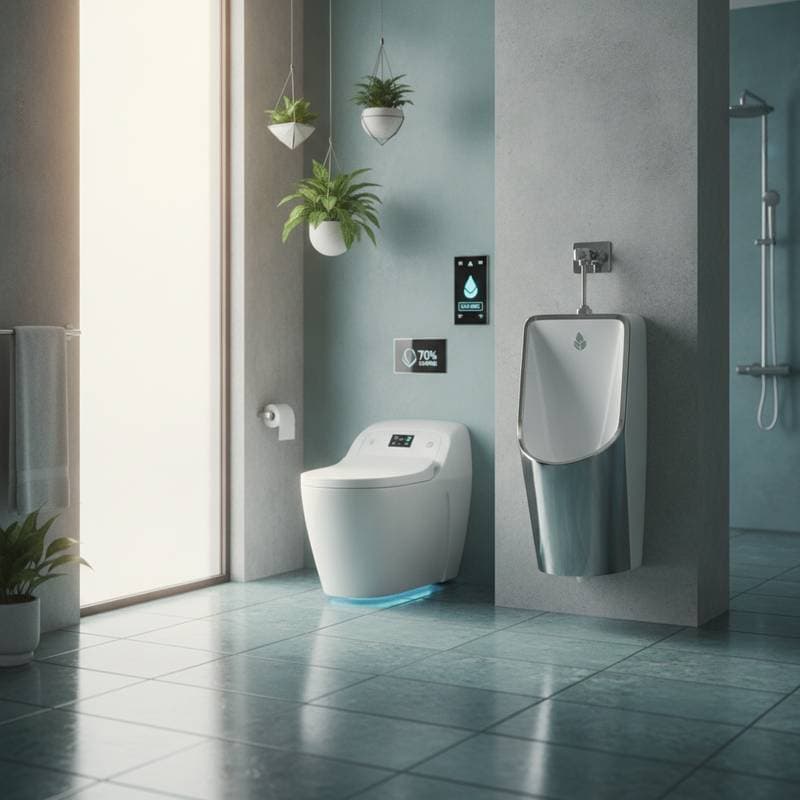
Adjusting fixture heights minimizes strain and supports ease of use. Comfort-height toilets, taller by a few inches than standard models, start at around one hundred dollars and match various styles. Bidet seats add hygiene benefits without extensive modifications.
Vanities benefit from ergonomic adaptations like floating designs with open underspace. These allow wheelchair access while preserving a sleek appearance. Removing lower cabinet doors creates knee space at no cost, paired with pull-out storage for accessibility.
Enhancing Grip and Temperature Management
Non-slip surfaces prevent falls on wet floors. Modern options include stone-look vinyl and patterned tiles that blend durability with design. For quick updates, anti-slip mats or grip coatings apply over existing floors for under twenty dollars.
Temperature controls safeguard against scalds and discomfort. Scald-prevention valves, priced under one hundred dollars, maintain consistent water flow. Heated floors combat chill and moisture, with plug-in mats offering a budget alternative to full installations.
Low-Maintenance Material Choices
Durable materials reduce upkeep demands in aging-in-place bathrooms. Solid-surface panels resist mold and install with few seams, mimicking tile or stone. DIY kits cost a few hundred dollars, while professional setups reach several thousand.
Quartz countertops and non-porous vinyl simplify cleaning. Water-resistant cabinetry and darker grout extend longevity. Minor swaps, like mildew-resistant shower curtains or mold-proof caulk, provide effective, low-cost improvements.
Blending Accessibility and Aesthetics
Current retrofits harmonize safety with stylish elements, avoiding stark clinical looks. Linear drains serve as design accents while aiding accessibility. Teak benches add functional warmth, and coordinated grab bars unify hardware.
These integrations treat accessibility as an enhancement. Mixing textures and colors elevates ordinary spaces into refined retreats. The result supports users across life stages without aesthetic sacrifice.
Budget-Friendly Retrofit Ideas
Affordable modifications yield significant safety gains. Consider these practical steps:
- Apply non-slip decals to tub or shower floors.
- Install handheld showerheads with adjustable slide bars.
- Use contrasting colors on edges for improved visibility.
- Replace knobs with lever handles for easier operation.
- Employ temporary suction-cup grab bars in rentals.
Cumulative changes foster supportive environments. Each adjustment contributes to overall functionality and appeal.
Planning and Executing Your Retrofit
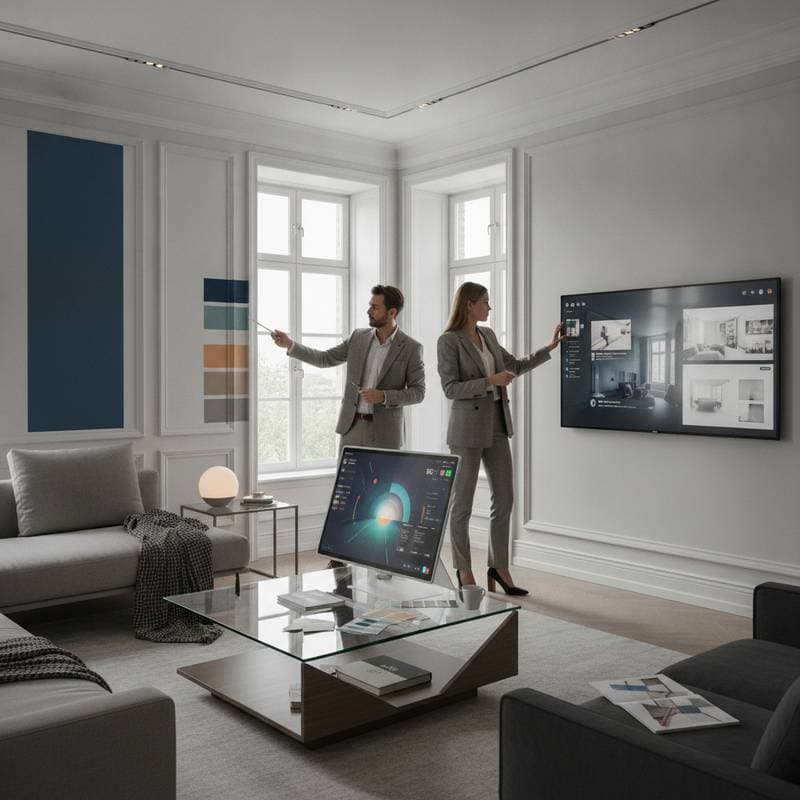
Aging-in-place retrofits adapt to evolving needs, benefiting seniors, caregivers, and those recovering from injuries. Anticipating changes ensures long-term viability. Consult professionals for complex projects to align designs with personal circumstances and achieve lasting independence.