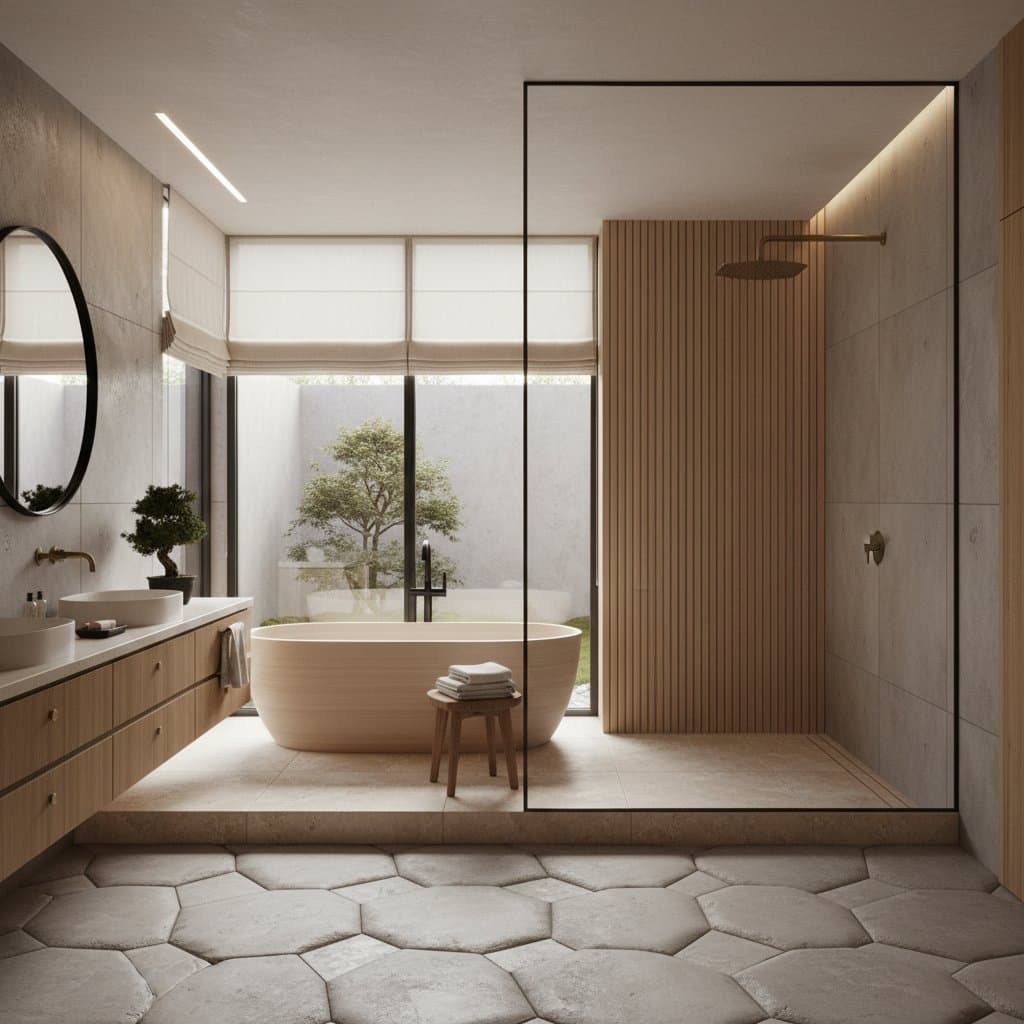
Japandi Wet Rooms: The 2025 Doorless Shower Evolution
Simplicity holds profound influence in design. Japandi wet rooms embody this principle by integrating Japanese restraint with Scandinavian coziness, resulting in grounded, expansive areas that resonate on a human level. The rise of doorless showers signals a move toward seamless, contemplative bathing rituals. These spaces transcend traditional tiled enclosures, becoming integrated environments where light, texture, and water converge with natural poise.
This overview highlights ten key elements driving the Japandi wet room trend, illustrating how cultural fusion reshapes contemporary bathrooms.
10. Embracing Fluid Movement
Flow forms the core of Japandi wet rooms. Eliminating doors erases visual divisions, permitting water and air to circulate freely. Architect Hiroshi Tanaka of Studio Kumo explains this as designing for water's natural trajectory rather than containing it. Such methods soothe the gaze, directing focus to inherent materials and shapes over fixtures or walls. Consequently, the bathing area extends seamlessly into the broader home, fostering visual and emotional continuity.
9. Genuine Material Choices
Authenticity defines surfaces in Japandi design. Walls frequently receive Tadelakt plaster, a moisture-resistant lime finish from Morocco that delivers a velvety, touchable luster. Floors incorporate European oak slats sealed for durability or porcelain tiles in subdued earth shades. Mina Rasmussen of Nord Form Studio selects materials that develop patina over time, prioritizing enduring character above flawless uniformity. This choice yields understated opulence, prompting interaction and contemplation rather than overt display.
8. Subtle Color Harmony
Color contributes discreetly but effectively to the style. Warm neutrals supplant stark whites, cultivating an organic and deliberate ambiance. Options like Farrow and Ball's Skimming Stone or Benjamin Moore's Revere Pewter on walls impart soft warmth, complemented by graphite gray or charcoal slate accents for grounding. Light oak storage, unglazed pottery, and brushed brass hardware temper the overall scheme, achieving balance across hues and surfaces.
7. Layered, Natural Illumination
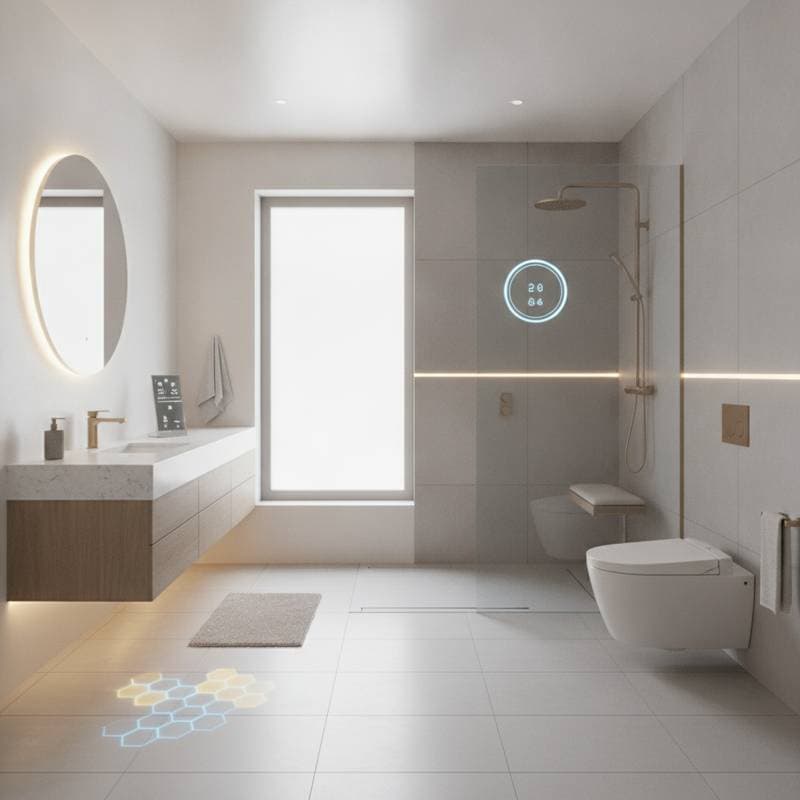
Illumination in Japandi wet rooms avoids intensity, echoing daylight's cadence. Hidden LED lines under suspended seats or along mirror edges produce gentle, stratified glows. Laura Hino, founder of Sora Interiors, advocates adjustable wall lights with linen diffusers to cast diffused radiance over textured walls. Daylight takes precedence, often entering via obscured panes or slim overhead windows that safeguard seclusion while enhancing spaciousness.
6. Precise Spatial Design
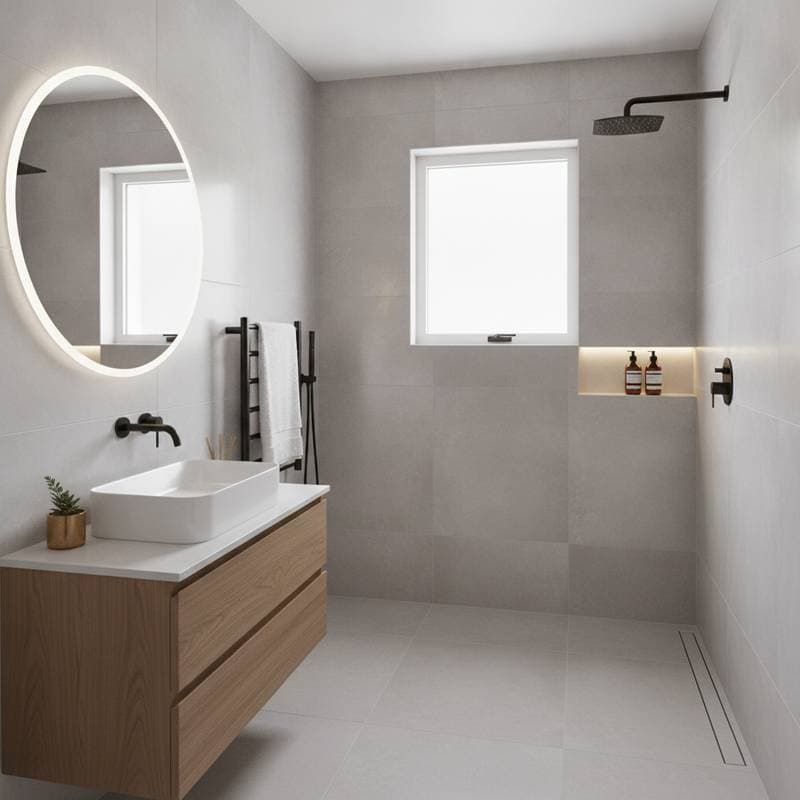
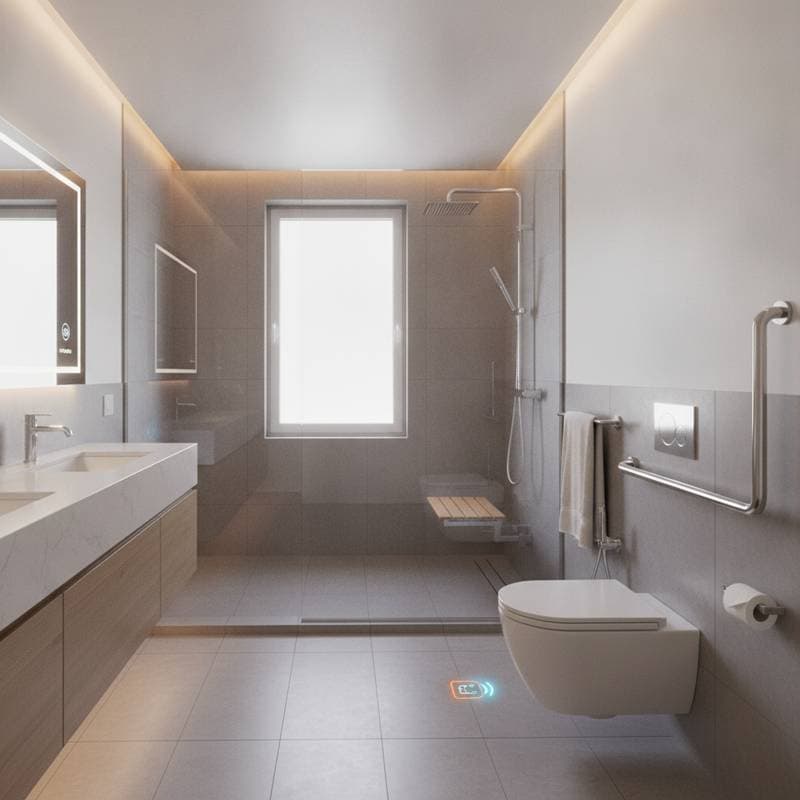
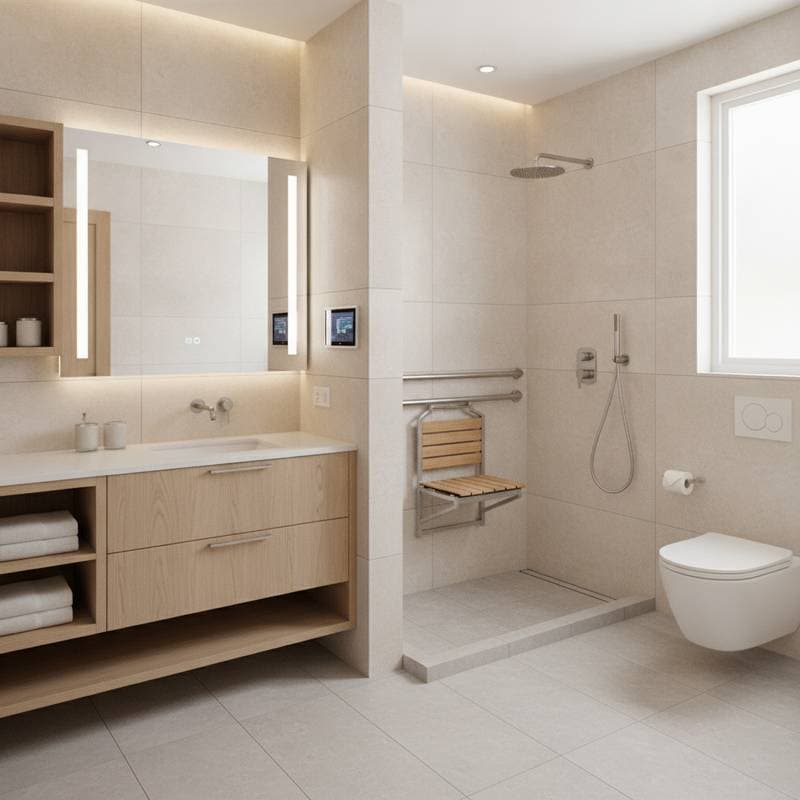
Effective doorless showers demand exact spatial control. Containment relies on strategic slopes and understated shifts instead of solid barriers. Floors incline subtly to linear drains hidden under teak grating or stone troughs. Any glass elements remain slim and borderless, acting as hints rather than confines. This arrangement promotes unbroken flow, allowing utility areas to blend without disruption, with each measurement intentional and every detail functional.
5. Intentional Simplicity in Practice
Minimalism in Japandi bathrooms emphasizes purpose over void. Each item justifies its presence. Towels stack neatly on walnut ledges, soaps display on shagreen platforms, and lone plant stems introduce natural equilibrium. This discipline promotes awareness during routines. Elin Dahl, lead designer at Atelier Nord, notes that minimizing distractions generates mental breathing room. The open layout reinforces this deliberate approach, elevating showers to moments of serene rejuvenation.
4. Texture as Primary Detail
Ornamentation emerges from texture in Japandi wet rooms, bypassing bold motifs. Oak wood grain in storage, matte tones on darkened steel hardware, and subtle variations in applied plaster form the visual narrative. Collections like Kohler's Purist in brushed nickel or VOLA's streamlined faucets in matte black align seamlessly. Emphasizing tactile depth over decoration conveys comfort through contact, eschewing extravagance.
3. Integrating Natural Elements
Both Japanese and Scandinavian traditions revere nature's essence. Wet rooms manifest this through raw materials, indirect vistas, and fresh airflow. Incorporations include river pebbles, bamboo flooring, or rough-hewn seats from artisans such as Jonas Kettunen of Nordic Timberworks. Humidity-tolerant plants like ferns or peace lilies flourish, easing angular forms and infusing vitality. The setting shifts from mere washing to reconnection with fundamental purity.
2. Artisanal Expertise and Teamwork
Skilled collaboration underpins every tranquil wet room. Architects, masons, and fabricators unite to realize these visions. Japanese woodworking informs hidden joints in fixtures, while Scandinavian precision hones dimensions to exact tolerances. Studio Mizu in Copenhagen partners with regional plaster experts for impermeable, fluid finishes. This dedication to workmanship ensures aesthetic appeal matches practical reliability, elevating standard spaces to lasting artistry.
1. Advancing Open, Adaptive Spaces
Doorless showers extend beyond style, embodying aspirations for liberation, versatility, and heightened senses. As residences prioritize wellness and flexibility, wet rooms serve as retreats and artistic expressions. Japanese wabi-sabi imperfection merges with Scandinavian hygge intimacy, yielding bathrooms that calm rather than overwhelm. This subtle shift profoundly impacts modern lifestyles.
Implementing Japandi Wet Rooms
Creating a Japandi wet room demands careful assessment and balance. Begin with drainage and sealing systems, as robust infrastructure enables creative liberty. Select inherent natural substances over artificial substitutes. Establish a muted color scheme and analyze light patterns across the day. Engage regional artisans versed in wood, stone, and plaster techniques when feasible.
Ongoing care sustains the design. Apply sealants to wooden elements periodically, use mild cleaners on stone, and promote airflow to protect surfaces. These practices allow the space to evolve attractively, gaining depth over years.
A doorless configuration might appear bold, yet in Japandi context, it integrates naturally. It promotes accessibility absent disorder, comfort without excess, and restraint without severity. Choices in surface feel, illumination levels, and layout details build an environment that honors routines with composed grace. Here, water acts as both element and inspiration, crafting encounters that endure, heal, and connect profoundly.