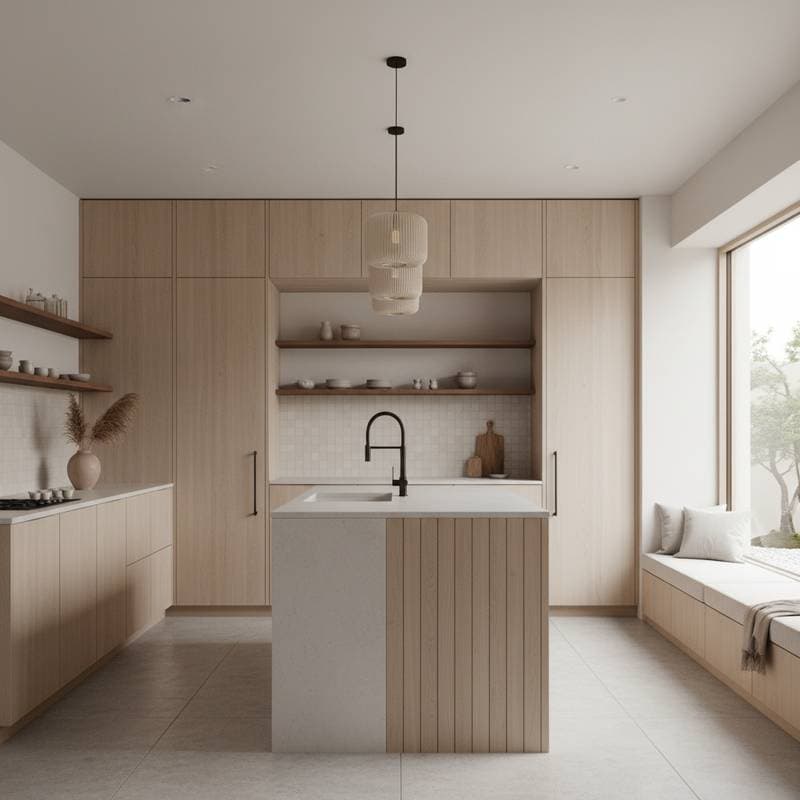
Japandi Kitchens: Minimalism Meets Cozy Warmth
A kitchen that balances calm and connection offers profound satisfaction. Japandi style fuses Japanese and Scandinavian design principles to achieve this equilibrium. It combines Nordic minimalism with Japanese wabi-sabi warmth, resulting in grounded, tactile, and timeless spaces. In the kitchen, this approach extends beyond aesthetics to embody a lifestyle that prioritizes serenity and functionality.
The following seven elements define Japandi kitchens. These features illustrate how the style elevates routine cooking into a mindful practice.
1. Connection to Nature
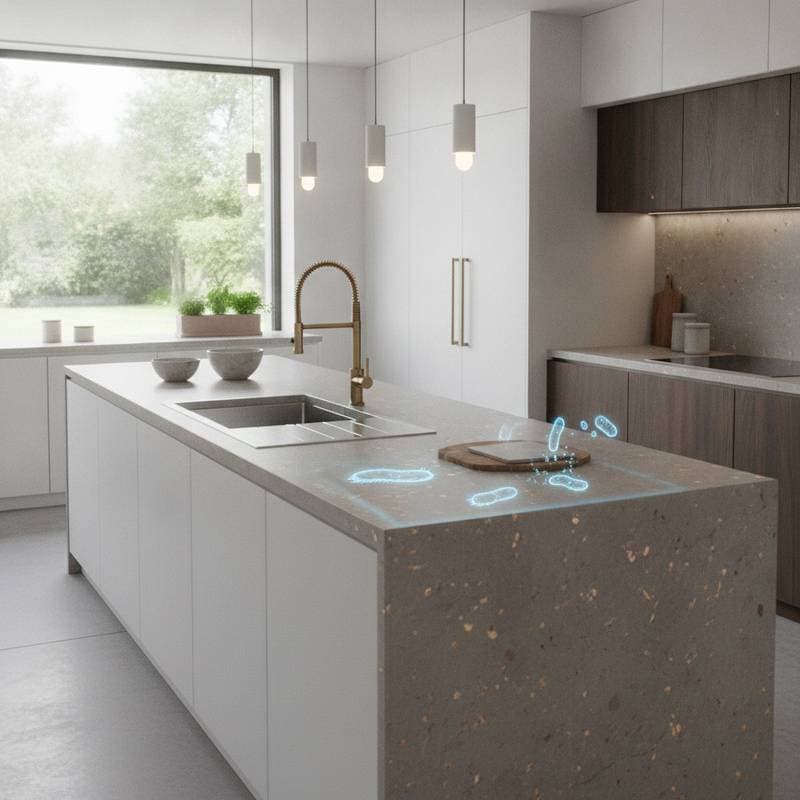
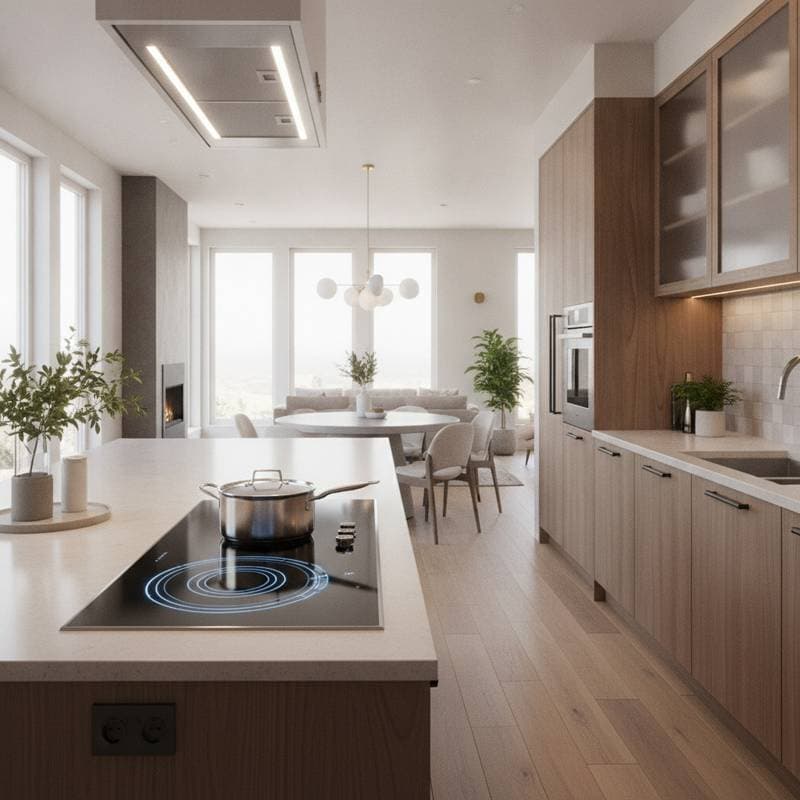
The strongest characteristic of a Japandi kitchen lies in its bond with the natural world. Large windows allow daylight to flood the space and provide views of surrounding greenery. Potted herbs, branches in ceramic vases, or a single magnolia stem introduce vitality without excess.
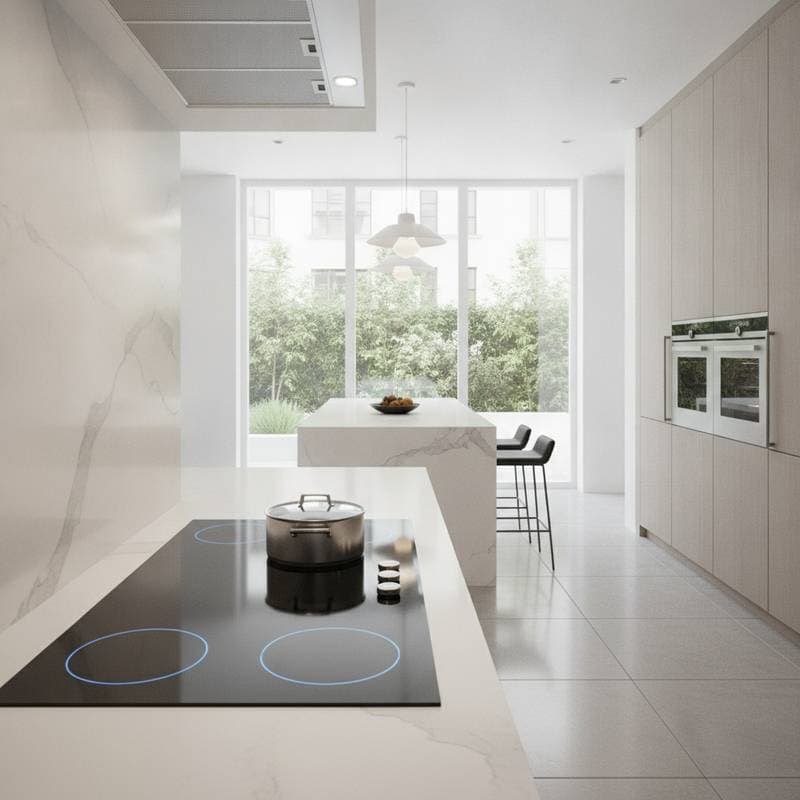
Natural materials reinforce this link indoors. Oiled oak or polished concrete flooring creates a stable foundation. Stone countertops and handmade tiles reflect the subtle variations of nature. Ventilation hoods and fittings integrate seamlessly into the architecture to preserve clear lines of sight to the outdoors.
2. Thoughtful Function and Flow
Japandi design ensures practicality complements beauty. Layouts facilitate fluid transitions between food preparation, cooking, and dining zones. Islands serve as multifunctional hubs with ample overhangs for seating and concealed storage below.
Drawers operate smoothly, and cabinets employ touch-latch openings to uphold sleek profiles. Design firm Haven Atelier incorporates elements such as built-in wooden trays, pull-out spice drawers, and vertical knife storage. These solutions blend Japanese precision with Scandinavian efficiency, yielding a kitchen that enhances daily routines with ease.
3. The Beauty of Open Shelving and Display
Open shelving in a Japandi kitchen prioritizes narrative over mere utility. Arranged ceramics, wooden bowls, and glass jars create an evolving still life shaped by everyday activities. This method promotes intentionality, as each item secures its position through usefulness or personal meaning.
Shelves constructed from solid oak or bamboo feature softly rounded edges to align with organic forms. Repetition in visuals, such as aligned cups, stacked bowls, or folded linen napkins, fosters harmony. The objective remains equilibrium rather than flawlessness, conveying a space that pulses with life while retaining composure.
4. Warm Minimalism through Texture and Light
Minimalism in Japandi avoids chilliness by emphasizing texture and illumination. Strategic layering prevents starkness. Woven rattan stools, linen pendants, and handmade ceramics interrupt smooth planes.
Light diffuses softly, often via rice paper shades or frosted glass globes. Lighting designer Jonas Mikkelsen of Nordlight Collective recommends diverse low-level sources over singular overhead lights. Concealed LED strips beneath cabinetry paired with pendant fixtures above islands generate intimacy and adaptability. The resulting illumination resembles candlelight, enveloping the area in gentle warmth.
5. Honest Materials and Authentic Craft
Japandi kitchens honor materials in their true form. Texture and finish reveal genuineness. Smooth European oak, raked limestone, unglazed ceramic, and hand-thrown pottery deliver sensory depth.
Countertops of honed marble or soapstone display natural veining, while walnut or bamboo shelving adds dimension. Architect Naomi Takahashi of Koto Design Studio notes that imperfection houses the essence. A craftsman's subtle mark or glaze variation in clay serves as a testament to authenticity. This reverence for natural flaws renders Japandi environments profoundly human.
6. A Natural Palette Grounded in Soft Neutrals
Color in Japandi kitchens builds ambiance rather than dominates. The scheme relies on layered neutrals inspired by the earth. Consider Benjamin Moore Pale Oak, Farrow and Ball Skimming Stone, or Little Greene Slaked Lime. These shades form a subdued foundation that highlights material qualities.
Natural light enhances surfaces like sand-toned oak or off-white plaster. Warmth emerges from tonal and textural nuances, not vivid hues. The outcome proves soothing yet inviting, evoking a space that welcomes habitation and affection.
7. The Art of Restraint
Intentional simplicity anchors Japandi design. Selections prioritize purpose and elegance. Designer Karin Lindqvist of Studio Linde characterizes it as a subtle exchange between materials and light.
Cabinetry adopts streamlined forms with flat-panel fronts in light woods or subdued matte coatings. Hardware remains understated or concealed, spotlighting superior workmanship. This disciplined approach heightens sensory engagement. Without excess decoration, elements like ash wood grain, linen texture, and brushed nickel sheen emerge as the primary adornments.
Embracing Japandi in Daily Life
The lasting allure of a Japandi kitchen stems from its emotional cadence as much as its appearance. It fosters unhurried mornings, serene meals, and heightened awareness of cooking's sensory aspects. The interplay of restraint and warmth delivers both lucidity and solace.
Homeowners can adopt this style without comprehensive overhauls. Begin by decluttering surfaces, incorporating organic textures, and selecting unified neutral tones. Swap artificial surfaces for natural alternatives. Introduce a linen runner, ceramic teapot, or wooden cutting board showcasing visible grain. Such deliberate adjustments cultivate ongoing tranquility.
Professionals view Japandi as a philosophy exceeding trends. It embodies mutual cultural principles from Japan and Scandinavia: reverence for nature, craftsmanship, and everyday elegance. In the kitchen, this manifests as a domain that nurtures comprehensively. Functional and evocative, precise and indulgent, it stands as a timeless haven. As Karin Lindqvist observes, a Japandi kitchen resembles an perpetual deep breath. Here, simplicity and warmth harmonize, with details murmuring softly. For those desiring a contemporary yet profoundly personal home, Japandi invites elegant living through mindful instants.