AI Tools Revolutionizing Room Colors in 2026
Color defines the emotional pulse of a space. It can transform an ordinary room into a sanctuary, a workspace into a creative hub, or a dining room into a stage for memory-making. The process of choosing the right shade has long been one of design's greatest challenges. Paint swatches under fluorescent store lights never quite capture the subtleties of real-world conditions. Even the most seasoned designers can struggle to predict how a hue will behave throughout the day. A new generation of AI-driven color tools is rewriting the rules of paint selection. These digital systems do not merely predict color preferences. They learn from real environments to deliver palettes that harmonize with architecture, lighting, and individual taste.
The following selection highlights ten visionary AI tools reshaping color selection for designers, homeowners, and architects. Each tool merges technological precision with human intuition. This combination creates a new standard for experiencing color in built spaces.
10. ToneMatch by Chromatech
ToneMatch by Chromatech bridges scientific analysis and artistic instinct. The platform scans a room's existing materials, such as Belgian linen upholstery or brushed brass hardware. It calculates their reflective and absorptive color values. The tool then recommends paint colors that complement these materials with high accuracy. Designers can visualize how Sherwin-Williams Iron Ore or Benjamin Moore Wind's Breath will appear under specific lighting conditions. The software accounts for natural light variations across seasons. For professionals, this tool saves hours previously spent on trial-and-error testing.
9. HueLens by Studio Palitra
HueLens functions as a visual diary for color exploration. Developed by Studio Palitra, it uses machine learning to analyze the emotional tone of reference images. A designer uploads a photograph of a mist-covered forest or a still life of terracotta vessels. HueLens generates a palette that captures the same mood. The system translates visual emotion into measurable color language. It applies this to wall colors, textiles, and finishes. The algorithm identifies subtle undertones. This ensures that a warm gray does not drift too cool in northern light. Interior designers favor HueLens for treating color as narrative expression.
8. ColorVerse from VividLogic
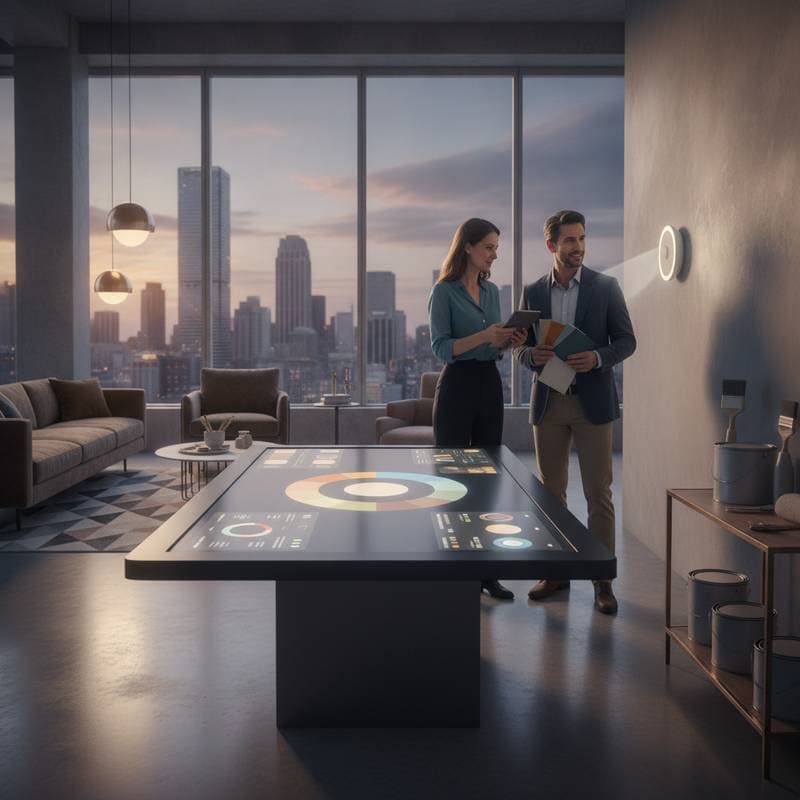
VividLogic's ColorVerse elevates predictive modeling. It uses spatial mapping to evaluate how light interacts with geometry. The tool considers ceiling height, window placement, and material reflectivity. This creates a dynamic simulation of color evolution through the day. The feature proves powerful in open-plan spaces where transitions must flow seamlessly. Designers preview how Farrow & Ball Green Smoke shifts from moody to serene as evening light filters across oak flooring. ColorVerse's simulations deliver spatial intelligence once limited to physical mockups.
7. PaletteMind by NeoHue
PaletteMind emphasizes behavior-driven design. NeoHue Labs developed it to learn user preferences through interaction. Over time, it recognizes whether a client prefers muted neutrals or bold contrasts. The system creates adaptive color recommendations that evolve with the project. For instance, if a homeowner favors desaturated blues and soft whites, PaletteMind suggests Benjamin Moore November Skies paired with Chantilly Lace for coastal-inspired calm. Designers value its blend of analytics and personality. This helps clients articulate feelings they cannot easily describe.
6. SpectrumSync by Auralis Design Systems
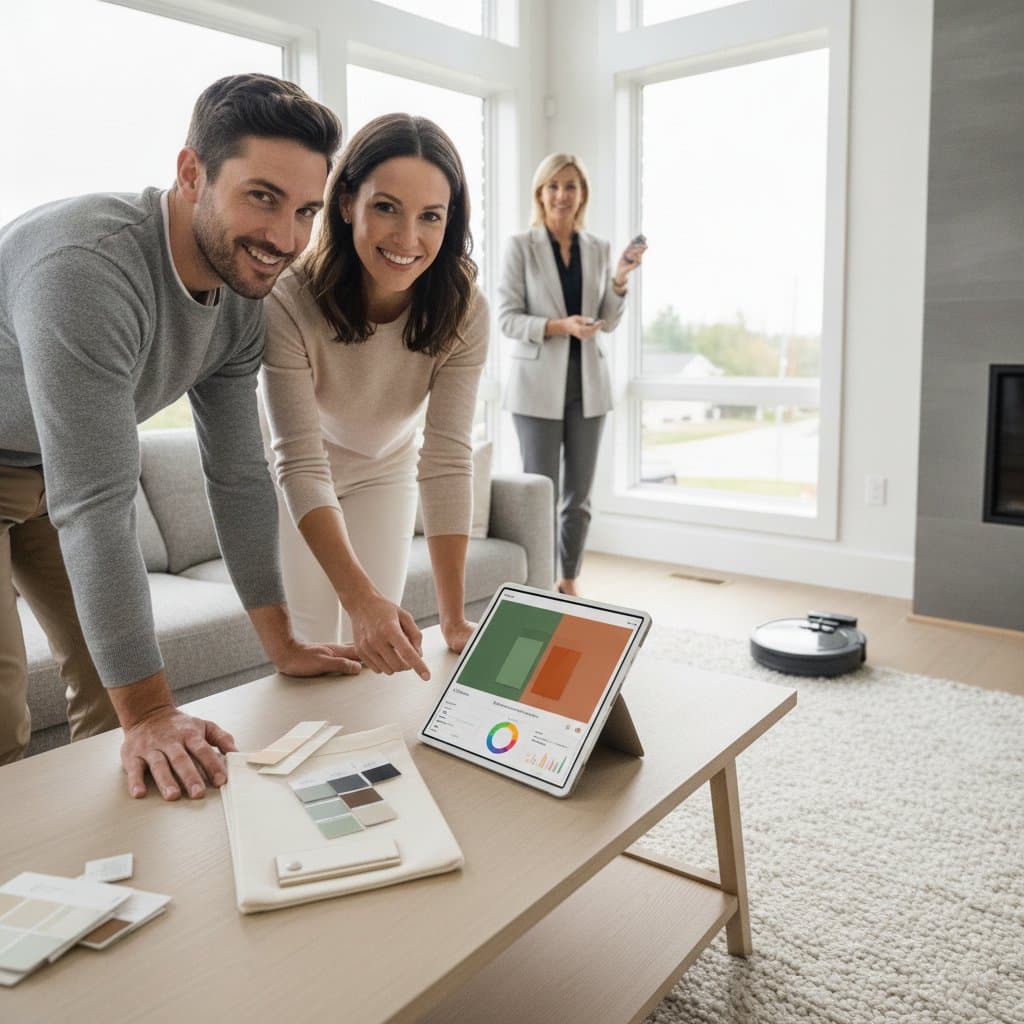
SpectrumSync enhances collaboration for multidisciplinary teams. It connects architects, interior designers, and clients in a shared digital environment. Participants adjust color selections in real time. The AI maintains tonal consistency throughout the project. When a contractor selects a new tile finish, SpectrumSync recalibrates wall color options for visual harmony. It supports color libraries from brands like Behr, Dunn-Edwards, and Portola Paints. Professionals specify exact shades for immediate ordering. This workflow minimizes miscommunication and material waste.
5. ChromaFlow by RenderWorks
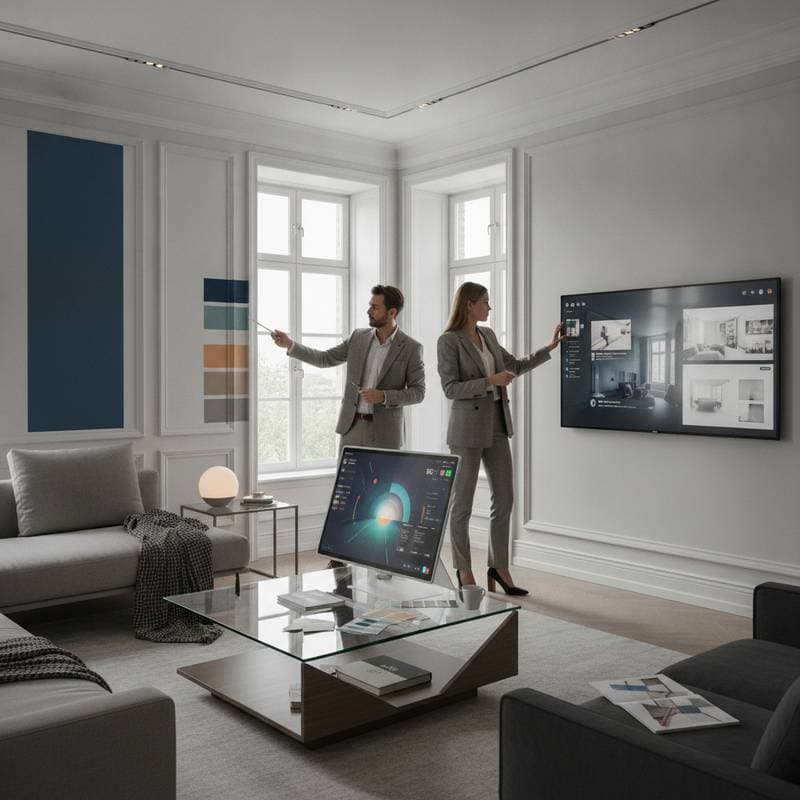
ChromaFlow redefines visualization by integrating AI with photorealistic rendering. The system processes natural and artificial lighting data. It simulates how color behaves across different times of day. The tool interprets textures, so plaster, limewash, and matte paint appear distinct in previews. Designers virtually walk through spaces to observe interactions, such as Benjamin Moore Hale Navy with warm LED lighting. For architects, it integrates with BIM platforms. Color decisions thus align with structural and lighting design. This approach makes color an integral part of spatial planning.
4. TintLab by ColorMetric Studio
TintLab adopts a scientific perspective on color. Its proprietary AI engine measures the LRV of every surface in a space. This determines the most balanced palette. The program adjusts recommendations based on room orientation. It accounts for how sunlight intensity influences perceived brightness. A north-facing living room might require a warmer tone like Farrow & Ball Dimity. A sun-drenched studio could benefit from the depth of Sherwin-Williams Tricorn Black. Architects trust TintLab for designing spaces with visual equilibrium and sensory comfort.
3. ColorCraft by Atelier Synapse
ColorCraft converts inspiration into specification. Users upload inspiration boards, magazine clippings, or fabric swatches. The AI extracts dominant tones using deep image analysis. It proposes harmonizing paint colors from major manufacturers. The tool suggests accent combinations for cohesive rhythm across rooms. Designers develop palettes that tell a continuous story through a home. For example, a series might start with Benjamin Moore Pale Oak in the entryway, move to Revere Pewter in the living room, and conclude with Chelsea Gray in the study. ColorCraft translates intangible inspiration into actionable design.
2. LumiAI by Forma Design Intelligence
LumiAI serves as a sensory color advisor. Developed by Forma Design Intelligence, it considers psychological and emotional responses to colors. The system analyzes how hues influence focus, relaxation, or appetite. It recommends combinations suited to the space's function. For a wellness studio, LumiAI suggests soft neutrals like Dunn-Edwards Whisper paired with Behr Sea Salt accents. In a collaborative office, it proposes energizing contrasts such as Sherwin-Williams Tangerine with crisp whites. This sensitivity matches color to architecture, behavior, and mood.
1. ChromAIc Vision by Studio Gradient
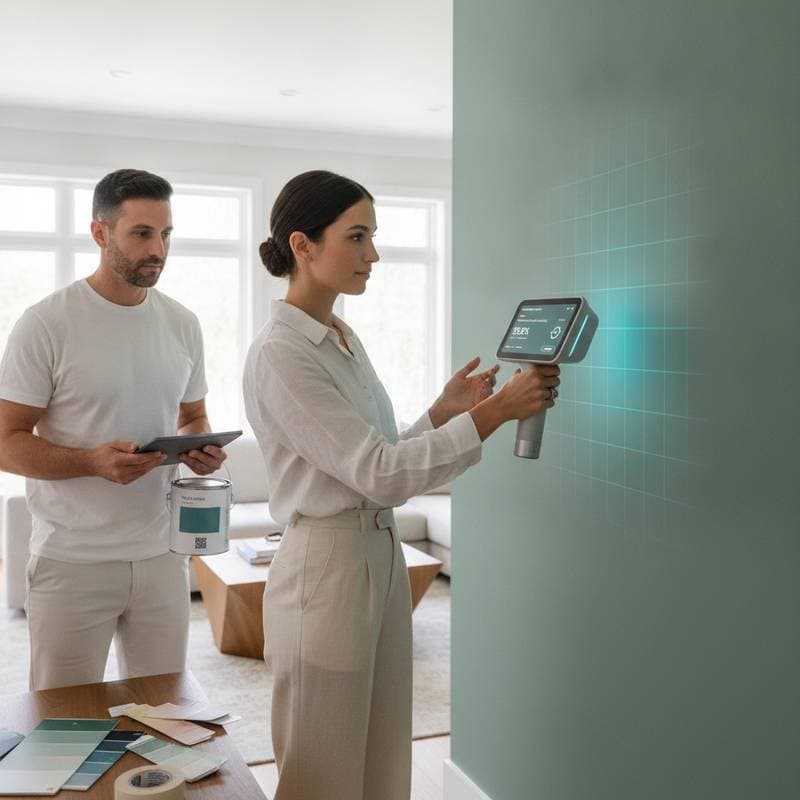
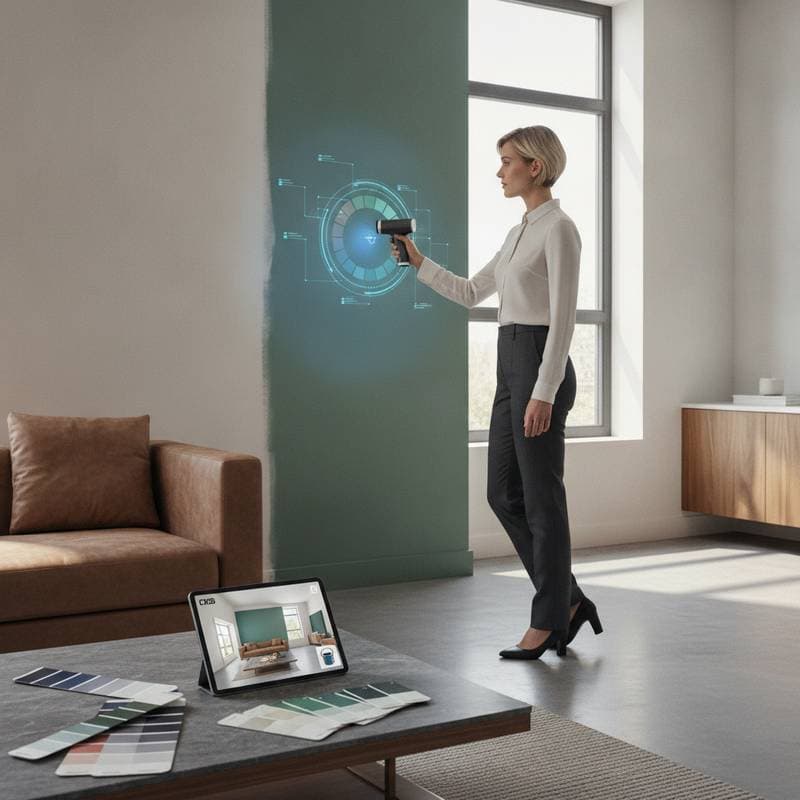
ChromAIc Vision tops the list as a groundbreaking system. Developed by the research team at Studio Gradient, it combines environmental sensing, emotional mapping, and real-time rendering. The tool uses spatial sensors to interpret natural light levels and surface temperatures. It adjusts the digital color palette accordingly. ChromAIc Vision replicates how a paint finish appears under specific lighting, from Edison bulbs to diffused LEDs. Its predictive capacity anticipates color appearance with installed furniture and textiles. This ensures coherence from concept to completion. For interior designers, it approximates standing in a finished room before any painting begins.
Integrating AI for Smarter Color Choices
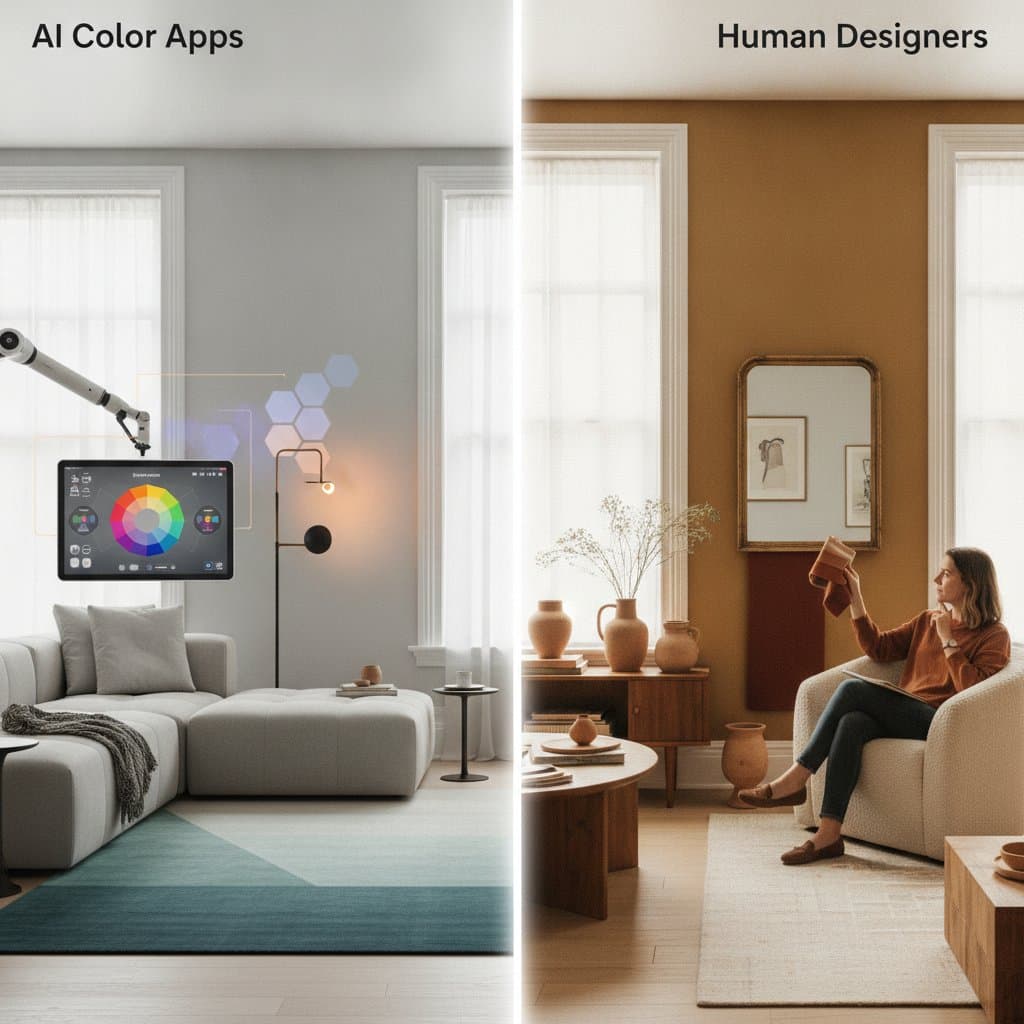
These AI tools stand out for their technical sophistication and empathy toward human perception. They interpret design intent without replacing it. Designers explore daring palettes with data-backed confidence. Clients visualize outcomes before committing to changes. Color decisions thus become more collaborative and purposeful.
AI integration also cuts waste and boosts efficiency. Accurate predictions mean fewer discarded test gallons and repaints. The environmental gains are clear. Equally important is the reduced emotional stress of color selection. These tools turn uncertainty into creative potential, paving the way for personalized spaces that evolve with user needs.