AI Color Tools Revolutionize Home Paint Choices
Color carries emotional weight in interior design. The right hue shifts a rooms energy, influences mood, and defines how a space feels throughout the day. Choosing paint colors has long intimidated homeowners, with tiny paint chips and inconsistent lighting leading to uncertainty until the first coat dries. Artificial intelligence powered color tools now convert that uncertainty into creative confidence.
From Guesswork to Guided Precision
Traditional color selection depended on instinct, experience, and physical samples. Professionals struggled to predict how pigments would appear under varying light or alongside specific materials. AI color tools employ data driven analysis and predictive modeling to transform this process.
These systems assess a rooms architecture, existing finishes, and lighting to suggest shades that harmonize with the physical environment and user preferences. Platforms like Backdrop, Clare, and Benjamin Moores Color Portfolio App apply machine learning to uploaded photos for precise recommendations. By studying thousands of real interior images, algorithms identify relationships between color temperature, texture, and spatial perception, delivering tailored palettes for unique spaces.
The Psychology Behind Intelligent Color Matching
Color choices extend beyond aesthetics to deep psychological associations that shape room inhabitation. AI tools interpret these emotional layers using behavioral data and user feedback to detect response patterns to tones. For example, warm neutrals such as Benjamin Moores Revere Pewter or Farrow and Balls Skimming Stone suit those desiring calm and balance, while saturated hues like Sherwin Williams Naval inspire confidence and focus.
Such insights enable systems to create emotional maps of color responses, aiding selections that align with lifestyle and personality. A home office gains from cool, desaturated greens that enhance concentration. A dining area warms under blush toned neutrals that flatter skin tones and soften light.
Visualizing Reality Before the First Stroke
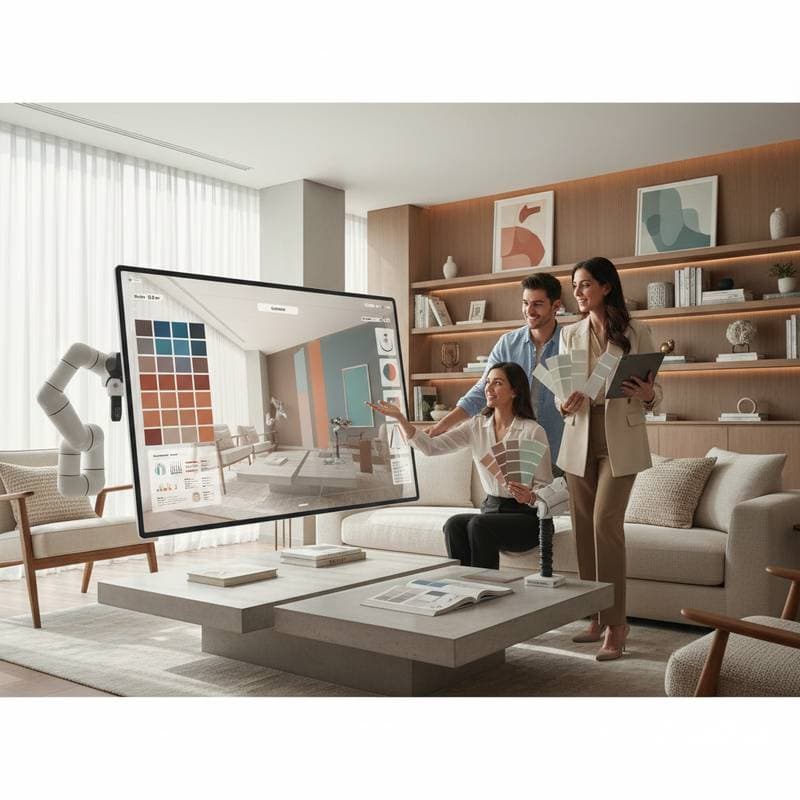
AI color tools excel in visualization through high resolution rendering engines. These project digital paint onto photographs or live camera feeds, adjusting for natural and artificial lighting. Users gain an accurate view of color behavior across the day, uncovering nuances beyond printed samples.
Designers leverage this for client concept refinement. Interior designer Sophie Burke of Sophie Burke Design uses AI visualization to verify subtle undertones in complex neutrals. It helps clients see the difference between a warm gray and a cool gray without painting four walls, she said. This approach saves time and cuts waste from unnecessary trials.
Crafting Harmony Between Color and Material
Advanced AI programs recommend full palettes that account for materiality, proportion, and natural light. They evaluate surface reflectivity, such as polished concrete, brushed brass, or European oak flooring, to predict how a colors undertone interacts with texture and sheen.
A matte charcoal like Farrow and Balls Railings appears velvety beside honed marble but heavy against high gloss finishes. AI systems detect these dynamics and refine suggestions. This method replicates seasoned designers intuition while remaining accessible via smartphone.
Empowering Both Designers and Homeowners
AI color tools connect professional expertise with personal experimentation. Designers value data backed options that preserve creative freedom. Homeowners build confidence through informed decisions, fostering collaborative processes via shared visualization.
Architect David John Dick of DISC Interiors integrates digital color tools into client presentations. They allow us to show variations instantly and test how different tones interact with materials. It keeps the creative conversation fluid, he said. This supports iterative design without multiple physical mock ups.
Merging Technology with Human Sensibility
AI excels in pattern recognition and prediction but complements human perception. Design soul stems from intuition, memory, and cultural reference. Technology offers clarity by narrowing overwhelming options into focused possibilities, preserving space for personal interpretation.
Designers view these tools as collaborative partners. AI structures choices, yet final decisions hinge on atmosphere, storytelling, and emotional resonance. A designer might select three cohesive palettes with AI, then use tactile experience to choose the one that fits the space.
The Environmental Edge
Sustainability shapes modern interiors, and AI color tools advance this goal. They minimize trial and error painting to reduce material waste and excess production. Some platforms highlight low VOC or zero VOC formulations, enabling healthier choices without visual compromise.
Paint brands apply AI to manufacturing for demand prediction of popular hues, curbing overproduction and inventory surplus. Overall, this creates an efficient, environmentally conscious design cycle.
Personalization at Scale
Each home conveys a unique story, and AI reads these narratives through machine learning. Models analyze users digital footprints, including saved images, preferred materials, and visual tones, to develop aesthetic profiles. Recommendations evolve with interactions, shifting from generic consultations to personalized dialogues.
Personalization adapts to cultural and geographic variations. Coastal homes receive light reflective whites and soft aquas. Urban apartments favor muted neutrals and deep accent walls for intimacy. Technology adjusts for regional light, architectural styles, and local traditions.
Living with Your Design
Color selection impacts daily living beyond initial impressions. AI systems analyze long term perception, examining morning light on pigment, seasonal mood shifts, and evolving color relationships with furnishings.
For renovations or refreshes, upload space photos to explore complementary palettes. Test colors under various lighting before finalizing. This process sharpens visual results and enhances understanding of colors experiential role.
Steps to Integrate AI Tools into Your Project
Start by selecting a reliable AI color platform and uploading clear room photos. Input details on lighting, materials, and desired mood to generate initial palettes. Review visualizations in different times of day, then iterate based on personal feedback.
Consult professionals for complex spaces, using AI outputs as discussion starters. Track how selections align with sustainability goals, opting for eco friendly paints. This methodical approach ensures colors enhance your homes narrative and functionality over time.