AI Tools Unlock Perfect Palettes for Your Home
Color exerts a subtle influence on interiors. It shapes emotions, guides movement through spaces, and fosters connections among occupants. Selecting an appropriate palette involves harmonizing personal feelings, natural light, and structural elements. For numerous homeowners, converting these instincts into unified choices proves challenging. Advanced digital tools now combine technology and creativity to reveal color schemes suited to the distinct traits of each residence.
This overview examines how smart design applications, informed by color psychology and precise visuals, reshape palette creation to achieve genuine integration.
1. The Rise of Intelligent Color Companions
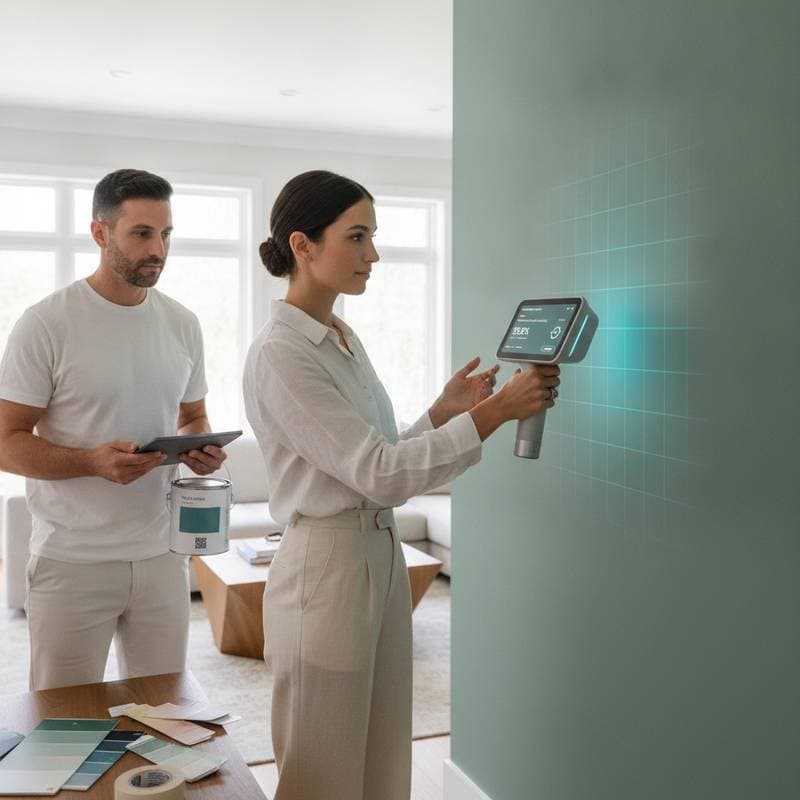
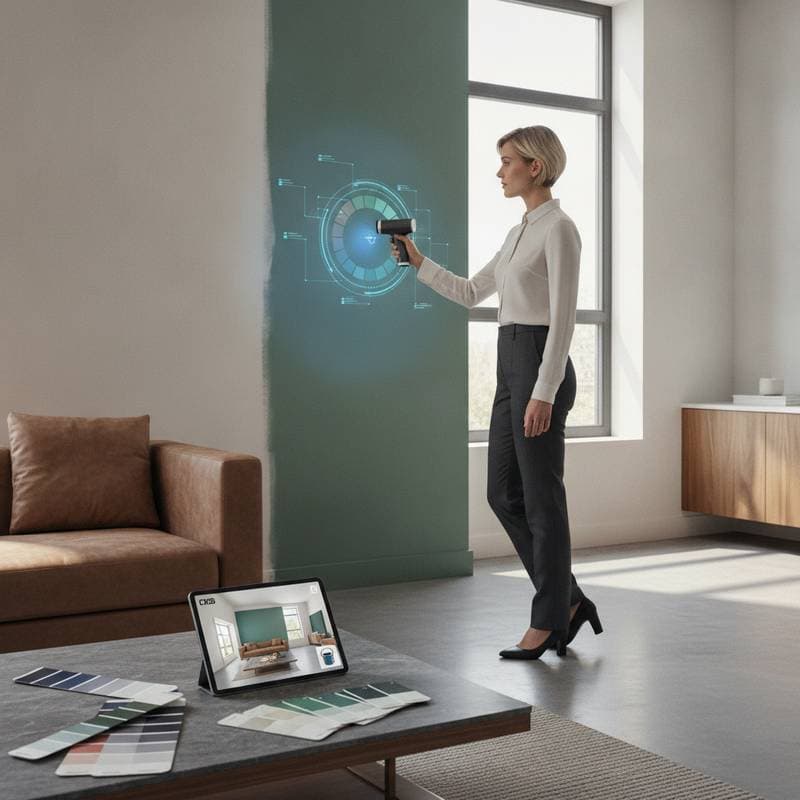
AI-driven color tools redefine palette development for designers and homeowners. Users upload interior photos or reference images to obtain suggestions aligned with illumination, surfaces, and ambiance, eliminating the need to review countless samples or depend entirely on intuition.
Applications like Sherwin-Williams ColorSnap Visualizer and Benjamin Moore Color Portfolio employ image analysis to detect current shades and elements, proposing colors that amplify surface qualities and dimension. These systems assess light warmth, flooring types, and external vegetation. Outcomes appear instinctive yet derive from intricate computations.
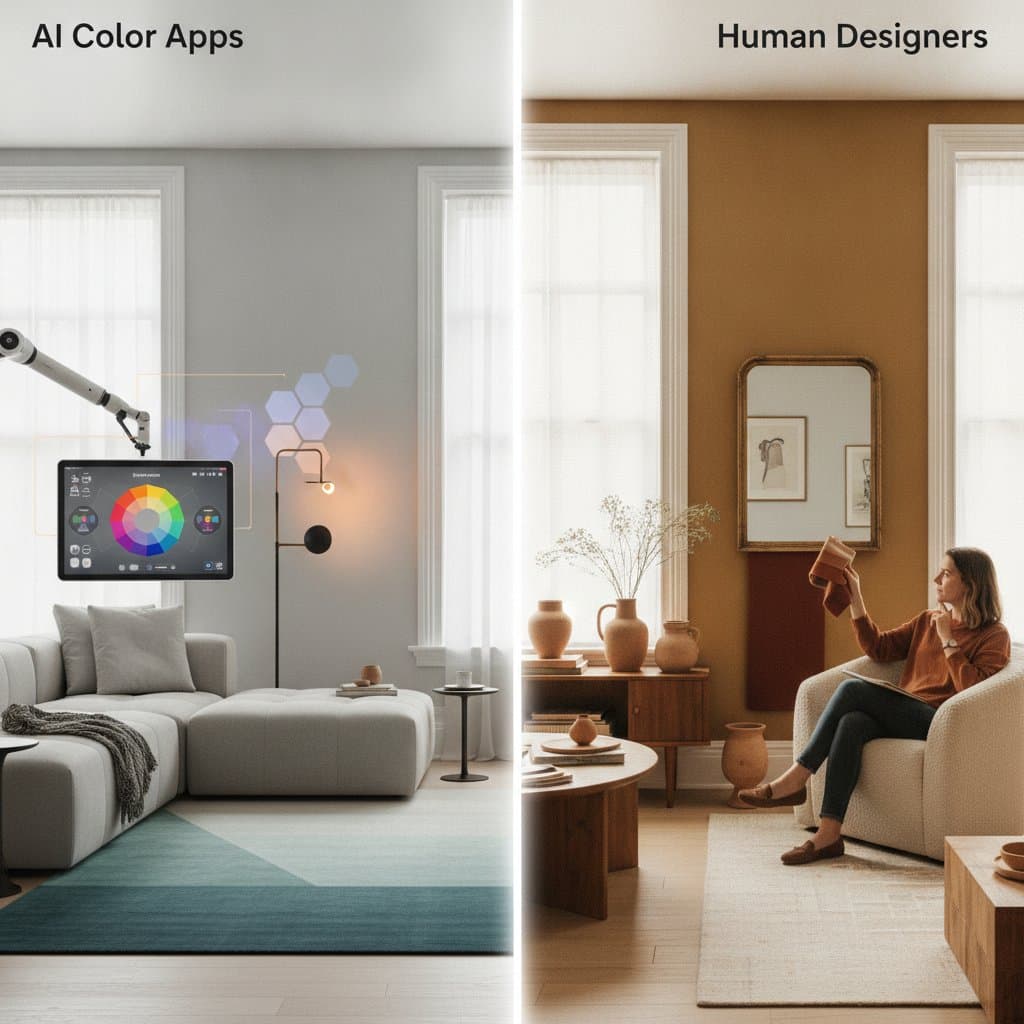
Such tools augment rather than supplant artistic decisions. Designers such as Mara Ellison of Studio Ellison Interiors call them digital partners that sharpen observed details. The aim involves preserving human insight while promoting accuracy, speed, and assurance.
2. Reading the Room Through Color Psychology
Visual fidelity extends to the affective role of color. AI systems incorporate psychological evaluations to forecast mood and conduct influences in designated areas. A living room designed for evening social events, for example, suits inviting tones like Farrow and Ball India Yellow or Benjamin Moore Chestertown Buff.
Home offices typically favor stable neutrals that support concentration, such as Sherwin-Williams Mindful Gray or Behr Graphite. Drawing from color psychology studies, AI recommends schemes that align with planned uses beyond mere appearance.
This blend of empirical knowledge and nuance advances design past fleeting fashions. Homeowners thereby fashion settings that attune to personal moods and habits.
3. Texture, Light, and the Digital Eye
Color interacts dynamically with surface qualities and illumination. Effective AI applications replicate this relationship with high fidelity. They model how a European oak floor in matte finish tempers a cream wall or how a shagreen console adds subtle variation amid linen curtains.
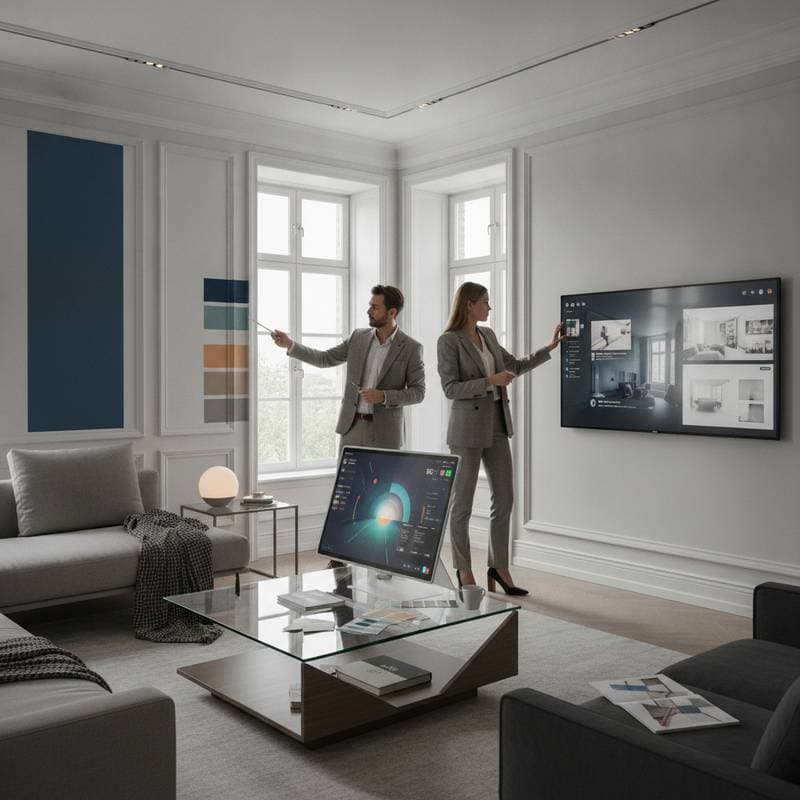
Professionals preview these visualizations prior to committing to paints. Features allow examination of Benjamin Moore White Dove under north light or Farrow and Ball De Nimes near brass elements, minimizing errors and expenses.
Architect Daniel Kwan of Atelier Kwan notes that teams employ these models as preparatory views. They verify that envisioned effects endure with actual daylight and material interactions.
4. From Inspiration to Implementation
AI color tools excel in connecting creative ideas to practical steps. Numerous platforms link to supplier catalogs, producing order lists and sample requests automatically. Individuals obtain adhesive swatches or scaled digital previews of their rooms.
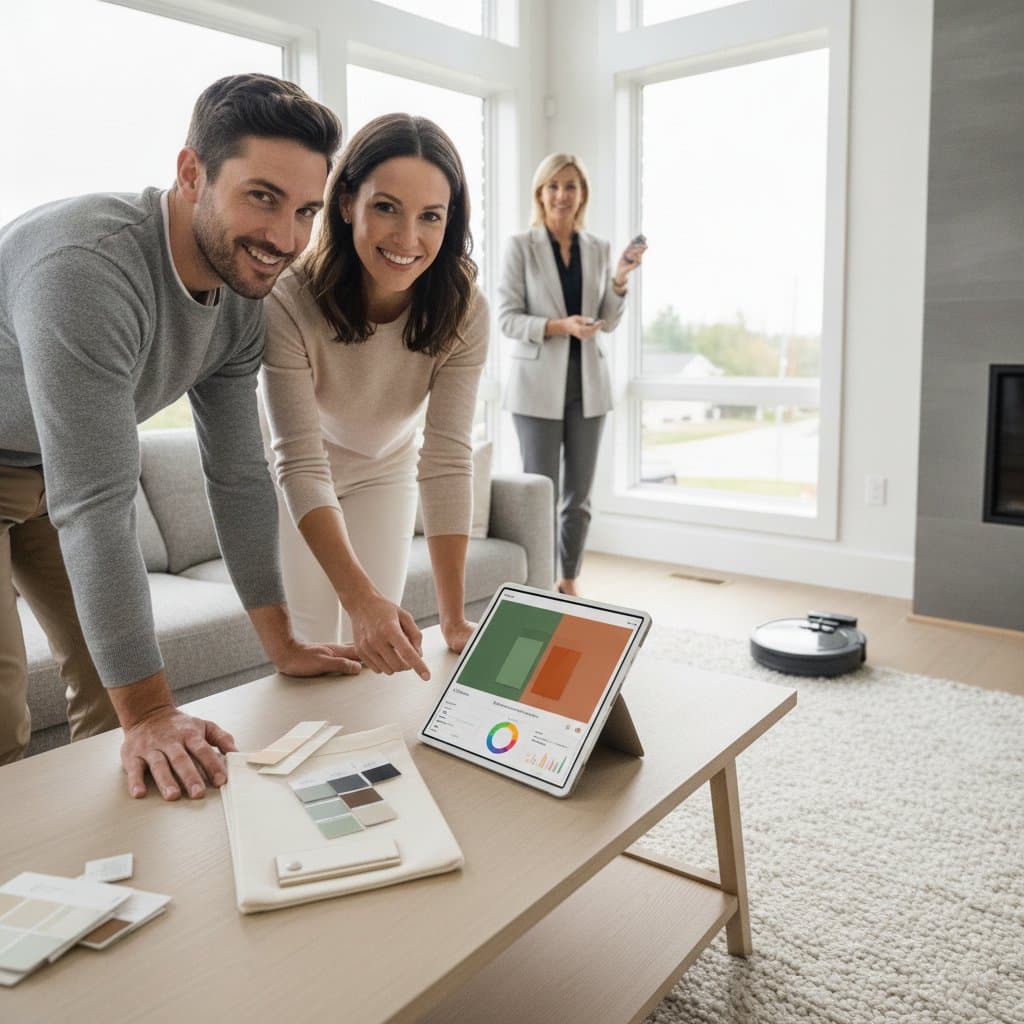
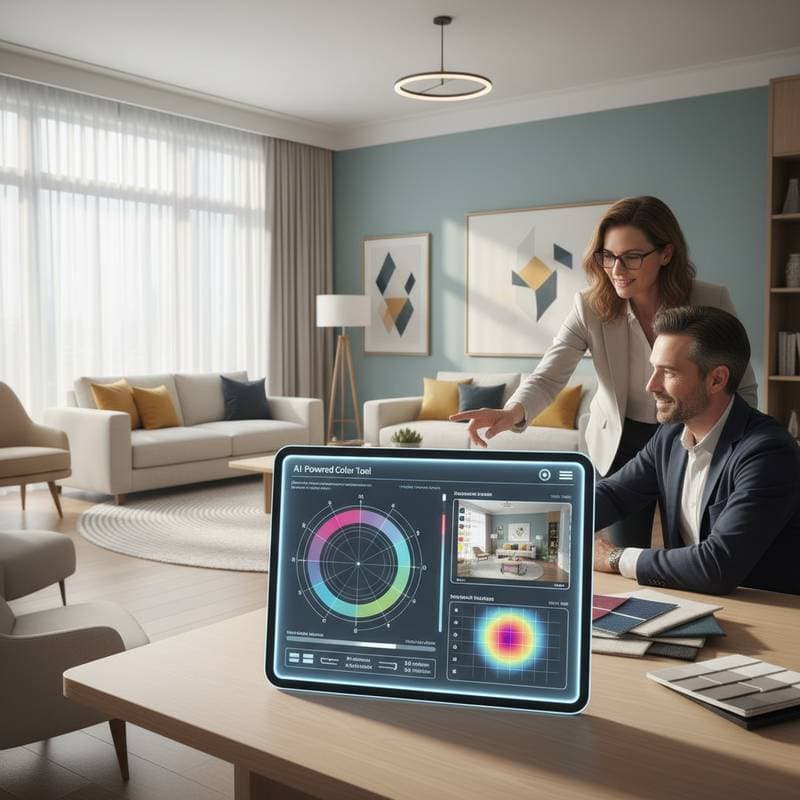
For collaborations with designers, these tools establish precise communication. Discussions shift from broad terms like warm neutrals or vivid blues to exact codes and simulations, streamlining joint efforts.
Pantone Connect advances this by converting photo, art, or travel inspirations into standard colors. Personal visions thus become robust palettes that retain sentiment while satisfying technical standards.
5. Customizing Palettes for Personality
Personalization distinguishes AI color tools. In addition to light and material assessment, they adapt to user choices. As individuals select or dismiss options, algorithms refine taste profiles. Recurring preferences inform future proposals.
A user attracted to seaside settings may prefer muted blues, soft grays, and beige tones. The tool then offers related schemes with accent or trim suggestions. This adaptation mimics an expert advisor, delivering customized outcomes rapidly.
Interior stylist Clara Hines of Hines Studio likens it to a design journal that recalls preferences effortlessly.
6. The Designer’s Perspective
Experts regard AI color tools as process enhancers. They generate client visuals, explore novel mixes, and trial palettes beyond familiar ranges.
At Atelier Verde Interiors, AI mapping forms part of initial planning. Teams input building visuals, tweaking shades to fit narrative goals. Senior designer Eliot Ramos states that intuition initiates the work, with technology validating its architectural fit.
This method unites instinctive and analytical elements. Designers produce outcomes that appear deliberate yet natural.
7. The Future of Digital Color Craft
Advancing platforms incorporate broader inputs like sound and climate data, refining suggestions for multisensory harmony. Integration with intelligent lights maintains hue stability across lighting variations.
Human pursuit of balance persists as the core. Innovations merely offer refined pathways. Enduring designs rely on the creator's discernment alongside algorithmic input.
Applying Your Palette in Everyday Spaces
Daily use validates palette choices. AI guides initial selections, but real habitation reveals enduring suitability. As surfaces capture seasonal light and items integrate, nuances emerge beyond any model.
Intuition guides final adjustments here. Tools illuminate options, yet residents determine what resonates as home. Strong palettes adapt over time, mirroring structure and inhabitants.
Starters in color selection find these systems encouraging entry points. They convert doubt to exploration, supporting risk-free trials.