Aging-in-Place Bathrooms: The Leading Remodeling Trend in Residential Design
Every home tells a story of comfort, longevity, and adaptability. Among all the rooms that shape daily experiences, the bathroom holds quiet but essential importance. It marks the start of morning routines and the close of evening rituals. As homeowners plan to remain in their residences longer, aging-in-place bathrooms have shifted from niche ideas to a core design movement. This approach emphasizes dignity, accessibility, and enduring beauty.
Universal Design as the Foundation
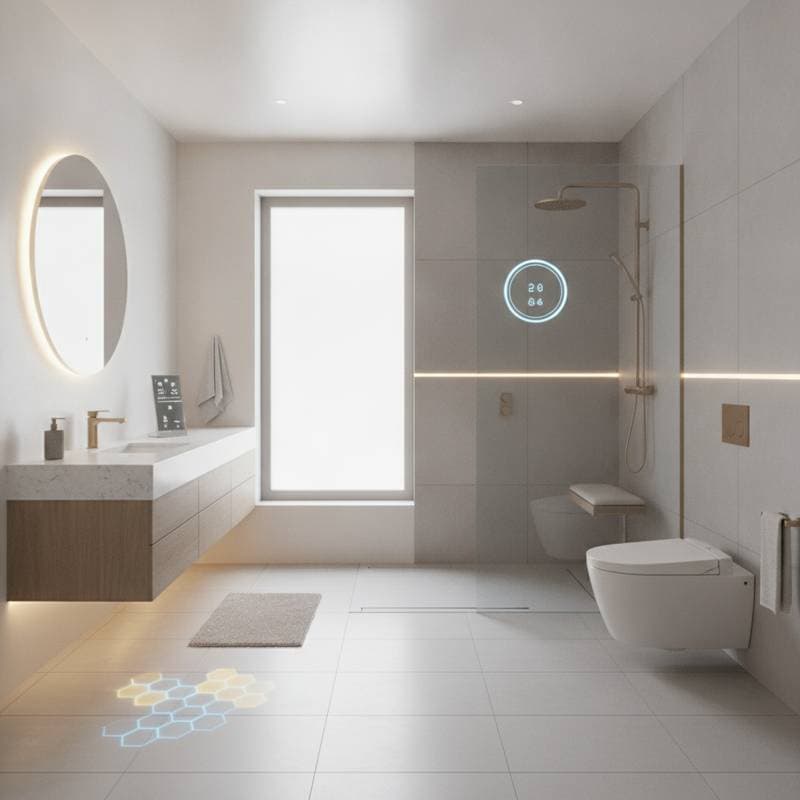
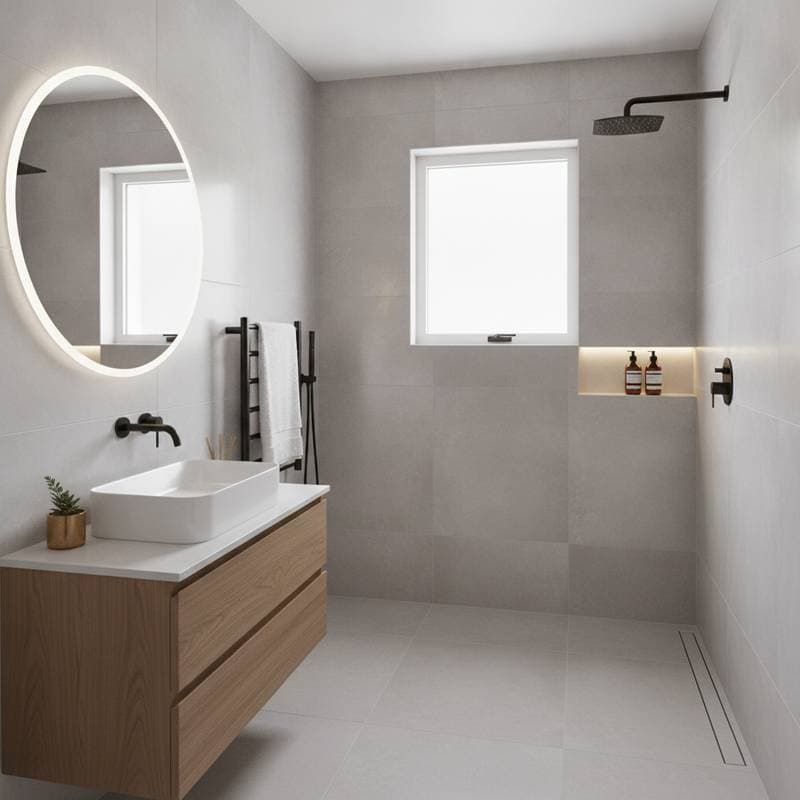
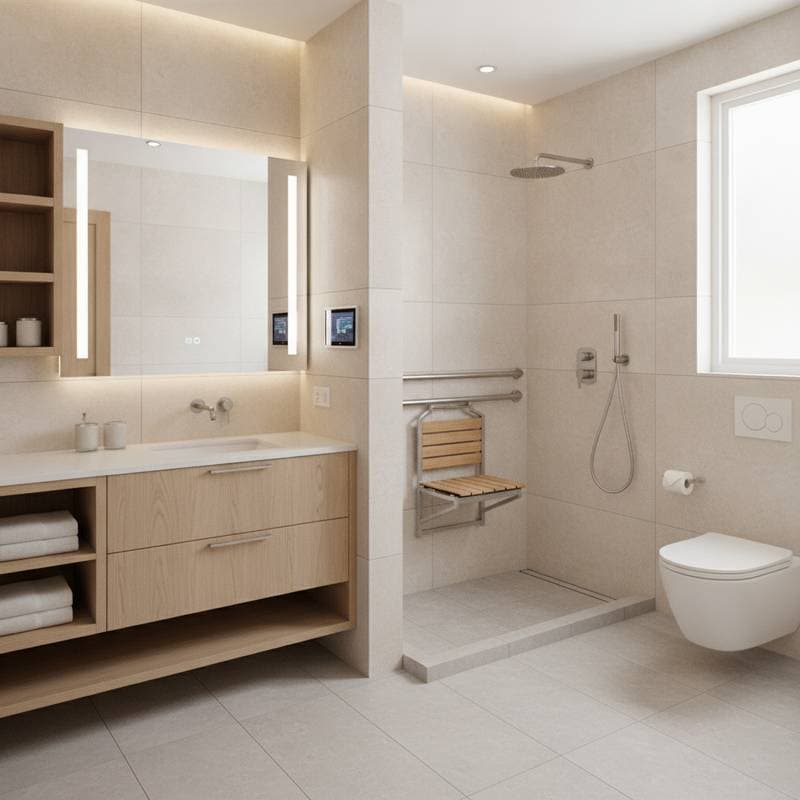
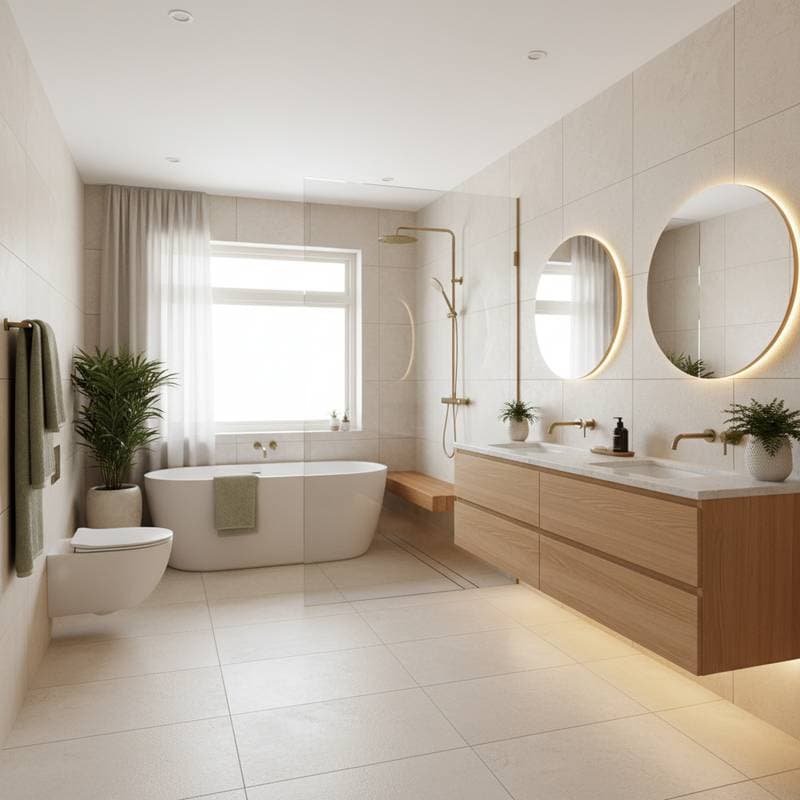
Universal design once focused solely on function, but now it embodies inclusivity and refinement. Designers like Patricia Moore of MooreDesign Studio advocate for spaces that accommodate every life stage without compromising style. Consider walk-in showers with zero-threshold entries that eliminate steps. Wall-mounted vanities provide open legroom for seated use, while wide doorways feature concealed hinges for seamless operation.
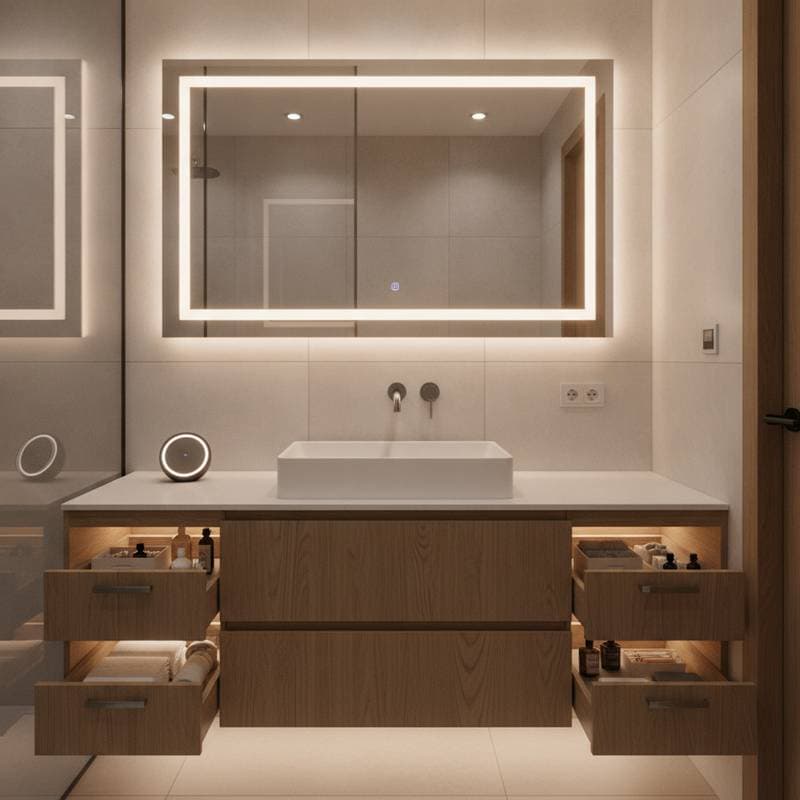
Subtlety defines this evolution. Accessibility integrates through thoughtful proportions and inviting textures. Select honed limestone tiles for floors to ensure slip resistance alongside a gentle, natural feel. Install integrated LED lighting under floating vanities to deliver soft, safe illumination without glare.
Selecting Materials for Warmth and Durability
Aging-in-place bathrooms pair durable materials with sensory appeal. European oak cabinetry, sealed in matte polyurethane, adds inviting warmth to functional areas. Pair it with Caesarstone’s Cloudburst Concrete quartz countertops. This choice offers soft gray veining that echoes natural stone, while standing up to moisture and stains.
For walls, Benjamin Moore’s Balboa Mist paint adapts to changing light, fostering a serene environment. Complement it with brushed nickel fixtures from Kohler or Rohl. These elements create a secure yet refined space. Each texture enhances comfort and builds user confidence.
Optimizing Spatial Flow for Daily Ease
Ease of movement stands at the heart of aging-in-place design. Architects like David Ramos of Studio R Architecture start with the rhythm of everyday activities. He notes that clients need spaces which guide them effortlessly, free from barriers. Plan for wider turning radii to accommodate mobility aids.
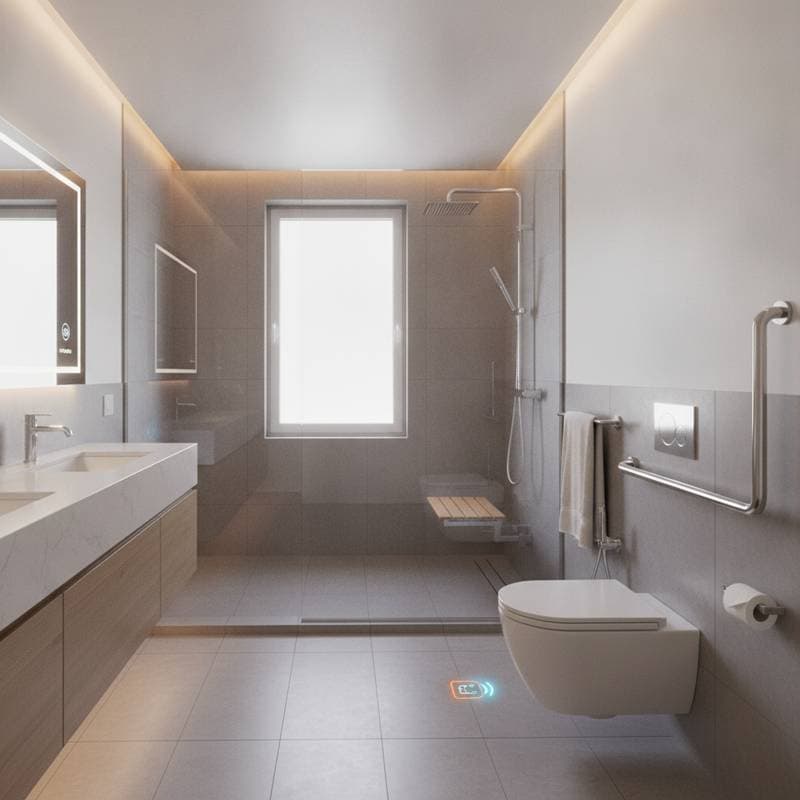
Incorporate pocket doors to save on swing space. Position toilets along side walls for easy grab bar addition without disrupting sightlines. In showers, use linear drains that blend into tile patterns. This setup promotes continuity and minimizes trip risks.
Layering Lighting for Safety and Ambiance
Lighting in modern aging-in-place bathrooms balances beauty and utility. Layered systems provide clear visibility and adjustable moods. Recessed ceiling fixtures work with eye-level wall sconces to eliminate shadows. Add motion-activated night lights to guide steps in low visibility.
Incorporate warm LED strips inside mirror frames or beneath shelves. These create gentle gradients that orient users calmly. Such features turn safety measures into thoughtful expressions of care, suitable for all ages.
Integrating Smart Technology Seamlessly
Technology enhances aging-in-place bathrooms without dominating them. Opt for touch-free faucets and thermostatic shower controls that maintain preset temperatures. Smart mirrors adjust brightness on demand to support independence. The goal remains user-friendly integration.
Elena Torres of Atelier Forma describes technology as a quiet ally. In her projects, voice-activated lights blend into marble surroundings. This preserves tranquility while boosting practicality through artisanal details.
Crafting Spaces of Dignity and Continuity
The emotional impact of aging-in-place bathrooms proves profound. These designs reject notions of decline in favor of ongoing vitality. They promote confidence, privacy, and respect through every choice. For instance, blackened brass handrails serve as stylish towel bars.
Teak slat benches offer sculptural appeal alongside practical rest spots. Each feature holds layered purpose, merging need with elegance. Homeowners retain their sense of self in environments that adapt over time.
Fostering Multidisciplinary Collaboration
Effective aging-in-place remodels demand teamwork. Architects, contractors, occupational therapists, and fabricators unite for success. Firms like Harper & Lane Construction partner with design teams to handle structural needs. They adjust plumbing and ensure smooth tile transitions that meet accessibility codes.
Custom millworkers contribute adjustable shelving and removable panels in cabinetry. These adaptations allow spaces to change as requirements evolve. Such collaboration guarantees both form and function endure.
Prioritizing Sustainability for Lasting Value
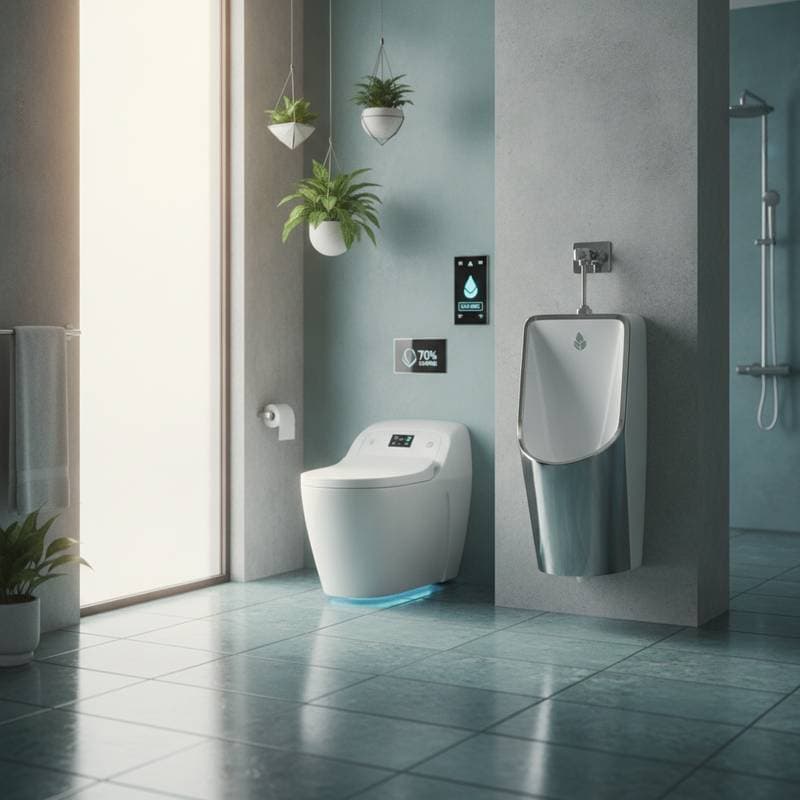
Accessibility aligns closely with sustainable practices. Choose low-maintenance materials to cut down on future replacements. Install water-efficient fixtures to promote eco-friendly use. Porcelain slabs for walls minimize grout lines and simplify upkeep.
This perspective supports emotional longevity too. Environments stay relevant, cozy, and attractive through decades. Homeowners invest in spaces that align with shifting needs and values.
Building Homes That Endure
Aging-in-place bathrooms redefine luxury through intentionality. They encourage envisioning long-term living as an asset, not a constraint. Start remodels by assessing current habits and future possibilities. Select features that promote autonomy while upholding serene sophistication. This strategy crafts bathrooms that support life's journey with grace.