Induction Zones Replace Gas in Electrified Kitchens
Modern kitchens are undergoing a quiet transformation. Where the blue flame once symbolized culinary mastery, a new form of precision has arrived. Induction technology, with its silent efficiency and sleek surfaces, is redefining how designers conceive the heart of the home. The shift is not merely technical. It represents a rethinking of aesthetics, sustainability, and the sensory experience of cooking.
This evolution is being guided by forward-thinking architects, interior designers, and manufacturers who see induction not as a compromise but as an advancement. The electrified kitchen has become a canvas for innovation, merging performance with design clarity.
Featured projects below illustrate how induction zones are replacing gas while maintaining the artistry and warmth that define the domestic ritual of preparing food.
The Coastal Retreat by Harbor House Design Group
Set against white oak cabinetry and sea-glass accents, the induction cooktop from Miele integrates effortlessly into a quartzite counter called White Macaubas. The design team favored induction for its responsiveness and safety, particularly in a space frequented by children and guests.
The cooktop subtle markings echo the geometry of the shiplap-inspired backsplash. When inactive, it reads as part of the countertop, preserving the home coastal serenity. The client appreciated how the absence of gas plumbing simplified the renovation, reflecting a broader movement toward all-electric infrastructure in residential design.
The Country Estate by Hearth and Timber Interiors
In a restored stone farmhouse, Hearth and Timber Interiors chose induction technology as a modern counterpoint to the rustic architecture. The cooktop is framed by reclaimed elm cabinetry finished in Farrow and Ball Drop Cloth, a warm gray that softens the surrounding textures.
The induction zone, by Fisher and Paykel, is set beneath a handcrafted copper hood, blending traditional craftsmanship with modern performance. The design team emphasized that the choice was as much about sustainability as aesthetics. With local energy now sourced from renewables, the kitchen represents a thoughtful balance between heritage and progress.
The High-Rise Penthouse by Luma Collective
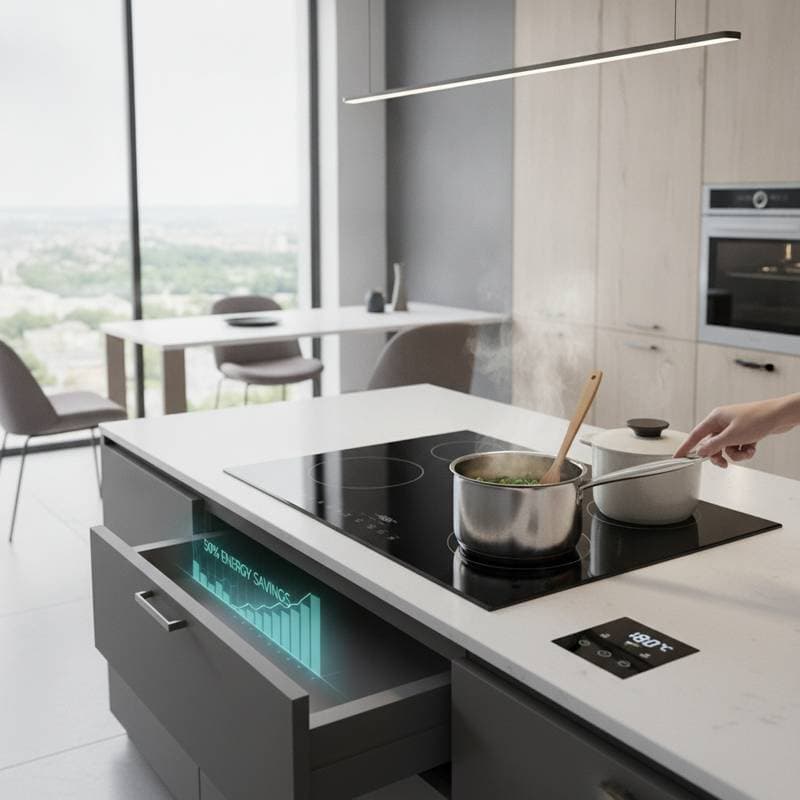
Perched above the city skyline, this penthouse kitchen by Luma Collective celebrates the drama of contrast. A seamless Thermador Freedom induction surface spans an island of polished Portoro marble, its veining reminiscent of liquid gold.
The design avoids visible knobs or grates, relying instead on touch-sensitive controls. This clarity of form supports the panoramic views beyond, allowing the city lights to take center stage. The transition to induction also enabled the design team to integrate discreet under-counter cooling drawers, keeping surfaces open and uncluttered.
The client described the experience of cooking on induction as pure control, citing the ability to bring a pot of water to a boil in seconds yet maintain a gentle simmer with exact consistency.
The Mountain Retreat by Peak Design Works
Set within a timber-clad chalet, the electrified kitchen by Peak Design Works proves that induction can coexist with rustic charm. The designers used a Wolf induction cooktop inset into a live-edge walnut countertop sealed in natural oil.
The juxtaposition of high technology with handcrafted material creates a striking dialogue between innovation and tradition. The team explained that induction reduced ambient heat helps maintain comfort in the tightly insulated structure, minimizing the need for additional cooling.
A pendant of hand-blown glass, made by Vetra Studio, hangs above, casting soft reflections across the dark glass surface. The design captures a balance between warmth and precision, a hallmark of modern mountain living.
The Modern Gallery Kitchen by Atelier Lume
At the top of this list is a kitchen that embodies the full potential of electrified design. Atelier Lume created a gallery-like environment where art, architecture, and cooking converge. A custom Bora Professional 3.0 induction system sits within a seamless slab of brushed stainless steel, paired with integrated downdraft ventilation nearly invisible to the eye.
The cabinetry, crafted from blackened ash with a matte finish, conceals appliances and storage in a rhythmic sequence of planes. The induction zones function as part of the overall composition, a quiet surface waiting to be activated.
Designer Lucien Martel described the approach succinctly: We wanted the kitchen to feel like a sculpture that moves. Induction allowed that, both visually and functionally.
Soft ambient lighting from recessed channels grazes the brushed metal, creating a play of shadow that changes throughout the day. The effect is serene, deliberate, and almost meditative.
Design Advantages of Induction Surfaces
As these projects demonstrate, induction cooking is not simply a technical upgrade. It transforms the spatial and aesthetic quality of the kitchen. Without grates, burners, or open flames, designers gain freedom to experiment with materials and proportions once constrained by ventilation and heat management.
Induction surfaces invite new relationships between cooking and architecture. They allow countertops to flow uninterrupted, making the kitchen feel integrated with adjacent living areas. They also encourage the use of delicate finishes, from natural stone to tactile composites, that thrive in cooler working conditions.