Kitchens That Defy Heat with Resilient Materials
Kitchens often become the warmest spaces in a home, particularly during intense cooking sessions with multiple burners and a preheated oven. Discoloration on countertops or warping in cabinets from such heat exposure leads to frustration and unexpected expenses. Selecting appropriate materials allows for the creation of a kitchen that maintains both strength and aesthetic appeal despite high temperatures.
A heat-resilient kitchen promotes comfort, extends durability, and represents a wise financial decision. Materials engineered to withstand heat minimize ongoing maintenance, prevent early replacements, and enhance safety during food preparation. The following sections outline strategies for designing a kitchen equipped to handle thermal challenges effectively.
Choosing the Right Countertop Materials
Countertops endure the most direct heat in a kitchen, warranting careful material selection. The options below provide proven resistance to elevated temperatures while balancing functionality and style.
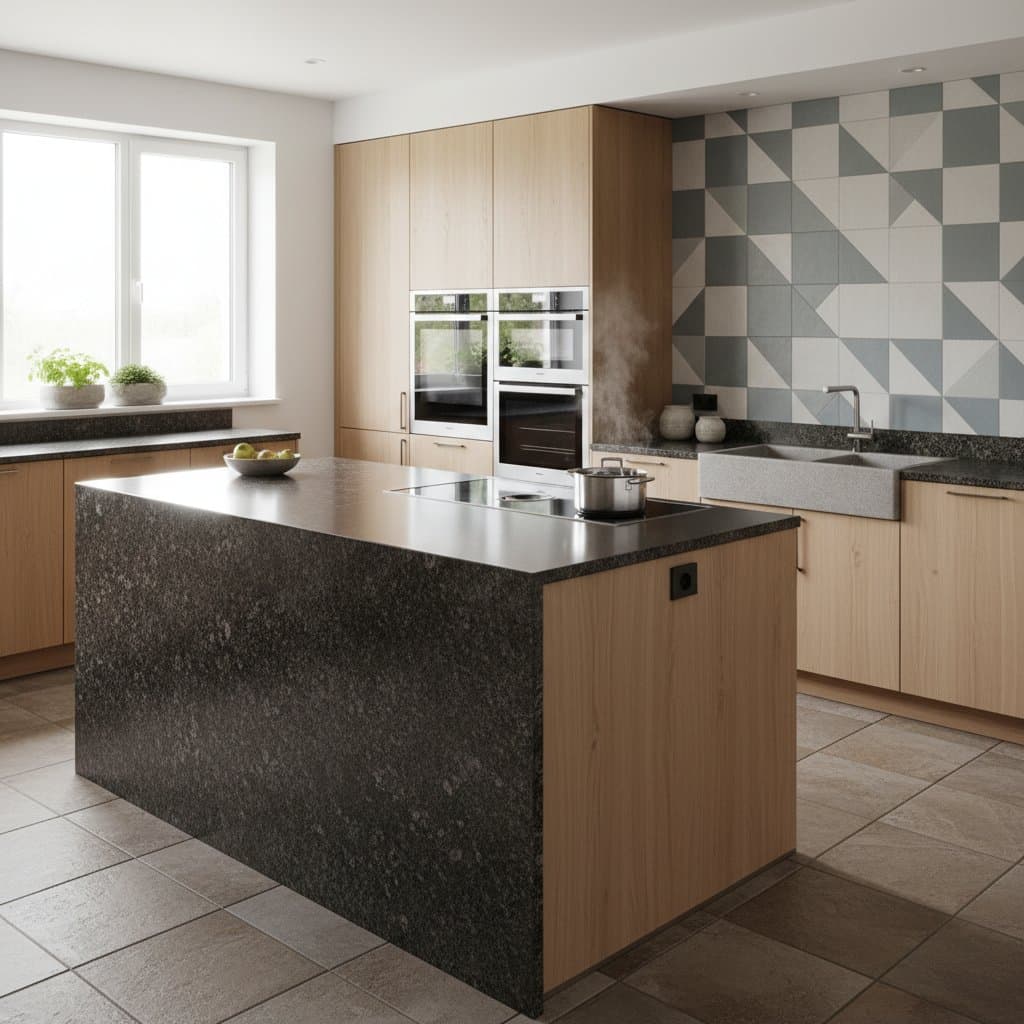
1. Granite: The Classic Performer
Granite stands as a premier choice for heat resistance. This natural stone accommodates hot pots and pans straight from the stove without scorching or damage. Although not impervious to all impacts, granite performs reliably under typical cooking heat levels.
- Cost range: $50 to $150 per square foot installed
- Maintenance: Seal the surface once or twice annually to protect against stains
- Heat rating: Excellent
- Best for: High-traffic kitchens with regular cooking demands
Granite offers inherent elegance, with each slab featuring distinct patterns and colors. Its weight requires sturdy cabinet reinforcement during installation to ensure stability.
2. Quartz: Durable but Cautious Use
Quartz countertops combine crushed natural quartz with resin binders, resulting in exceptional toughness and resistance to stains. These surfaces demand little upkeep and maintain a consistent appearance. The resin, however, may discolor or fracture when subjected to direct heat from hot cookware.
- Cost range: $60 to $120 per square foot installed
- Maintenance: None required beyond regular cleaning
- Heat rating: Moderate
- Best for: Households that prioritize trivets or protective pads during use
To maximize quartz longevity, place hot items on trivets or cooling racks without fail. This material excels in settings where visual appeal and ease of care outweigh frequent direct heat exposure.
3. Stainless Steel: Industrial Strength
Stainless steel delivers professional-level resilience alongside a sleek, modern look. It resists heat, moisture, and stains effectively, requiring only basic care. As a non-porous material, it discourages bacterial growth and odor retention.
- Cost range: $70 to $150 per square foot installed
- Maintenance: Wipe down routinely; polish periodically to minimize fingerprints
- Heat rating: Excellent
- Best for: Modern or chef-inspired kitchen designs
Scratches may appear on stainless steel over time, yet it avoids scorching or deformation. Professional cooks prefer it for its extended service life and superior hygiene standards.
4. Soapstone: Naturally Heat-Proof
Soapstone, a compact natural stone, distributes heat uniformly without adverse effects. Its velvety texture develops a richer patina with age, enhancing visual depth. This material proves ideal for placements adjacent to heat sources like ranges or ovens.
- Cost range: $70 to $120 per square foot installed
- Maintenance: Apply mineral oil occasionally to preserve even coloration
- Heat rating: Excellent
- Best for: Traditional or countryside-inspired aesthetics
Soapstone scratches more readily than granite, but such imperfections can be smoothed through light sanding. This approach keeps the surface refreshed without compromising its heat tolerance.
Walls, Backsplashes, and Finishes Built to Last
Areas near cooktops face relentless heat, making durable wall and backsplash selections essential. Ceramic tiles, glass panels, and stainless steel sheets endure high temperatures while facilitating simple cleaning. Avoid painted drywall or wallpaper in these zones, as they risk fading or delamination; reserve them for peripheral, lower-heat regions.
For an eco-friendly alternative, opt for tiles made from recycled glass. These withstand thermal stress and introduce a gentle iridescence that bounces light around the space, fostering a sense of openness and reduced warmth perception. Pair such backsplashes with heat-reflective paints on adjacent walls to further mitigate temperature buildup.
Cost Planning and Practical Tips
Heat-resistant materials vary in expense, allowing flexibility in budgeting. Consider this overview to align choices with financial parameters.
- DIY level: Install ceramic tile backsplashes or appliance heat shields, with materials costing $5 to $15 per square foot
- Mid-range: Select granite or quartz countertops at $60 to $120 per square foot installed
- Premium: Invest in stainless steel or soapstone surfaces from $100 to $150 per square foot installed
Quality installation equals material selection in importance. Substandard work invites gaps or unevenness that accelerate failure under heat. Engage certified professionals for stone or metal installations, particularly those involving precise cuts or joints.
Review local regulations prior to renovations. Certain areas mandate heat barriers or specific distances for gas appliances. Consult a contractor or permitting authority to verify compliance and avoid delays.
Implementing Heat-Resilient Upgrades
Transitioning to a heat-resilient kitchen requires methodical steps rather than abrupt overhauls. Begin by targeting high-exposure zones, including countertops, backsplashes, and oven vicinities. Substitute fragile elements with robust alternatives to yield swift improvements in performance.
Budget constraints permit phased progress. Introduce a range-mounted heat shield or upgrade a single countertop section to observe tangible benefits in durability and user comfort. Evaluate personal cooking frequency, regional humidity levels, and stylistic inclinations to customize selections.
Through deliberate choices, a kitchen emerges that remains temperate, elegant, and enduring. This design supports seamless daily operations, endures rigorous culinary demands, and preserves its allure across decades of service.