Terrazzo Revival: DIY Epoxy for 2026 Countertops
Terrazzo captures attention through its blend of color, pattern, and character. This classic material experiences renewed popularity, and individuals now achieve the terrazzo aesthetic without professional installation or high costs. Epoxy resin provides an accessible alternative to traditional methods, allowing creation of custom countertops suitable for various budgets. Projects range from small vanity updates to full kitchen overhauls, offering versatility for home improvement enthusiasts.
The Appeal of Terrazzo in Modern Design
Terrazzo merges practicality with artistic potential. Traditional formulations embed chips of marble, glass, or stone in concrete, followed by polishing for a reflective surface. The epoxy-based DIY approach produces a lighter, smoother result, well-suited to residential applications. Professionals often select this method for projects with constrained timelines and resources, as it delivers consistent, visually striking outcomes.
Customization defines the material's strength. Options include mint-green quartz aggregates, recycled glass fragments, or remnants from prior renovations. One project incorporated shards from a damaged chandelier, yielding a countertop that combined aesthetic appeal with narrative value.
Preparing for Your DIY Epoxy Terrazzo Project
Determine the installation method before starting: pour directly onto an existing surface or fabricate a separate slab. Beginners benefit from applying the mixture over laminate or concrete counters, which minimizes preparation and reduces expenses. This technique avoids extensive demolition and containment challenges.
Essential Materials
Assemble the following items:
- Two-part epoxy resin and hardener formulated for countertops
- Pigments or tints for the base layer
- Aggregates such as marble, glass, quartz, or colored stones for chips
- Mixing buckets and wooden stirrers
- Painter's tape and protective drop cloths
- Trowel or putty knife for application
- Sandpaper grits from coarse to fine, or an orbital sander
- Polishing compound and a clear sealer
Source aggregates affordably from local suppliers offering stone remnants, craft stores with decorative glass, or by crushing tiles from old installations. Experiment with combinations to achieve desired texture and hue variations.
Budget Considerations
Costs vary based on material quality and sourcing:
- Premium option: $250 to $400, featuring high-grade resin and polished marble aggregates
- Standard option: $120 to $200, with versatile epoxy and assorted glass chips
- Economical option: Under $100, utilizing recycled surfaces, crushed tiles, or scavenged elements
Careful execution ensures professional results across all ranges.
Step-by-Step Guide to Epoxy Terrazzo Application
Step 1: Surface Preparation
Remove all debris from the countertop and abrade it with medium-grit sandpaper to promote adhesion. Apply painter's tape along edges and adjacent walls to contain the epoxy. Allow the surface to dry completely before proceeding.
Step 2: Base Epoxy Mixture
Measure resin and hardener according to manufacturer ratios, typically one-to-one by volume. Incorporate pigments for the desired base tone and stir methodically to eliminate bubbles. Neutral shades like soft gray or ivory enhance the visibility of embedded chips.
Step 3: Incorporating Aggregates
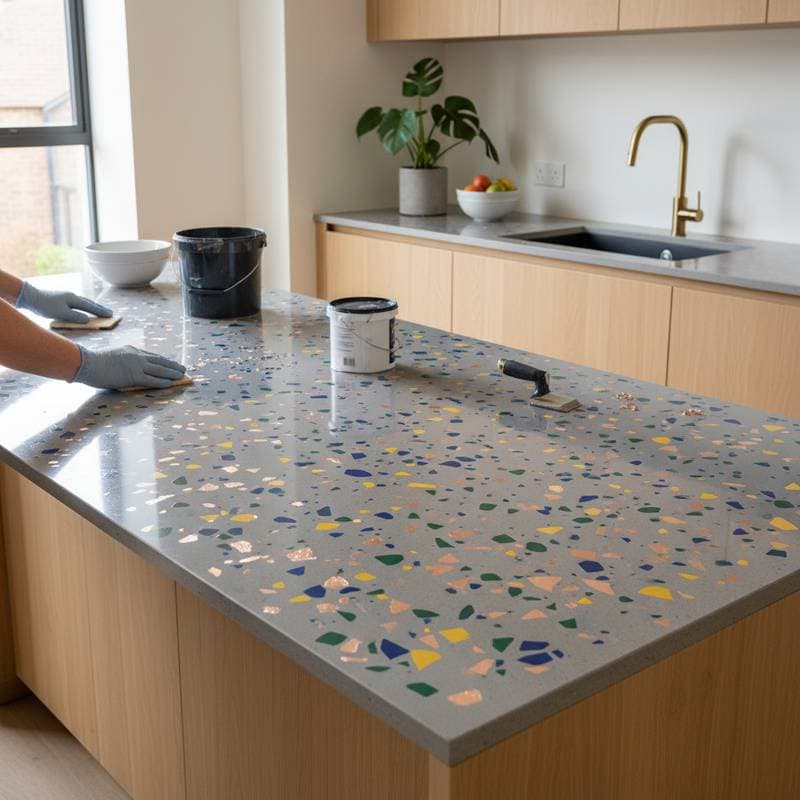
Spread a thin epoxy layer across the surface, then distribute chips uniformly. Cluster aggregates for emphasis in select areas or scatter them for a classic scattered effect; press gently to secure. Alternatively, blend chips into the epoxy batch, though this increases sanding effort during finishing.
Step 4: Topcoat Application
After positioning aggregates, apply a clear epoxy layer to encapsulate them. Distribute evenly with a trowel, allowing natural leveling. Pass a heat gun over the surface at low speed to release trapped bubbles.
Step 5: Finishing Process
Permit full curing as specified, usually 24 to 48 hours. Progressively sand from 80-grit to 220-grit, revealing and smoothing the chips. Clean residue, apply polishing compound with a buffing pad, and seal with a food-grade product for kitchen use.
The emerging gloss transforms the surface into a professional feature.
Design Variations for Personalization
Terrazzo accommodates diverse aesthetics:
- Monochrome minimalism: White resin paired with white marble for clean lines
- Retro influence: Blue base with vibrant glass accents evoking mid-century patterns
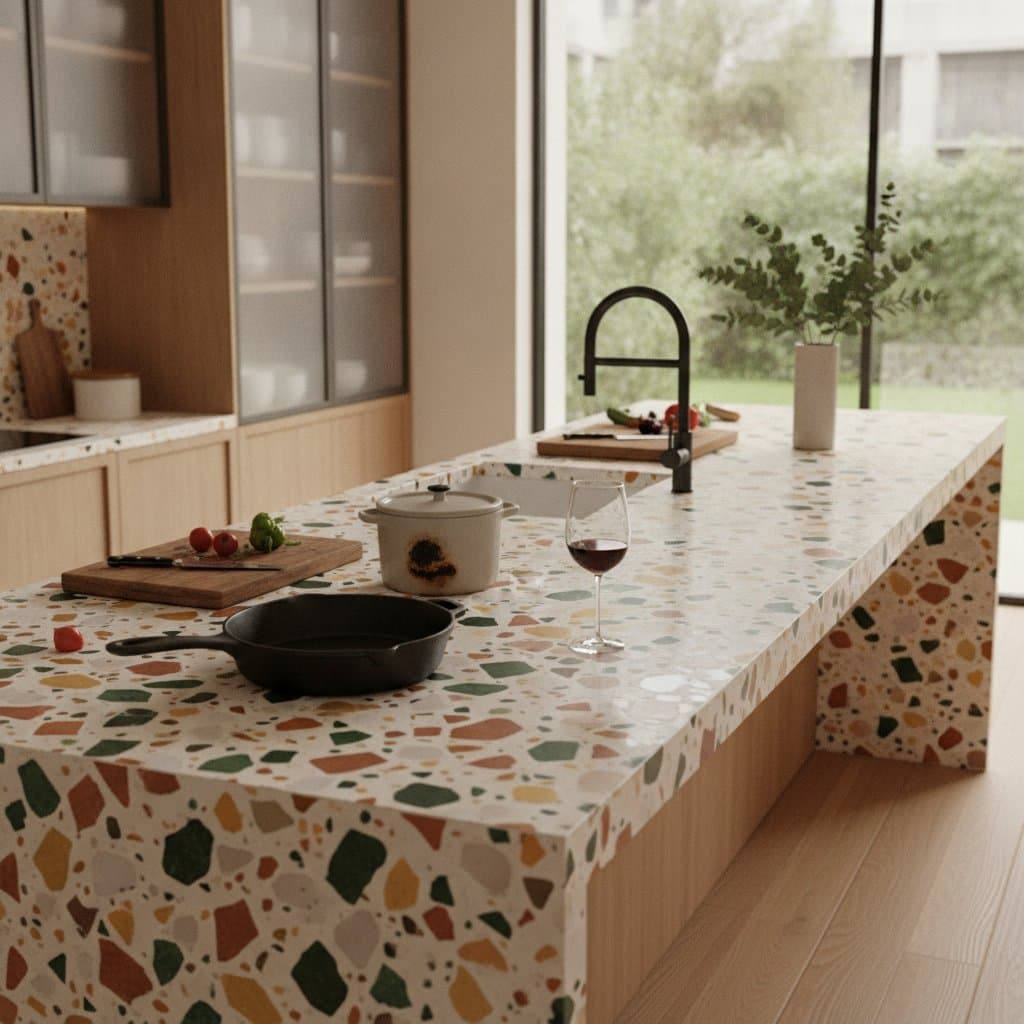
- Natural elegance: Beige resin incorporating green serpentine and amber fragments
- Urban contrast: Charcoal resin with metallic mirror pieces
Extend designs to backsplashes or tables for cohesion. Initiate with smaller scales to refine techniques before larger installations.
Ongoing Care for Epoxy Terrazzo
These surfaces require minimal upkeep. Address spills promptly and clean with a solution of mild soap and water. Reapply sealer annually to maintain luster. Use cutting boards to prevent scratches; minor imperfections yield to spot sanding and recoating.
Long-term users report sustained appearance despite regular contact, underscoring the material's resilience.
Opportunities in Terrazzo Craftsmanship
Design professionals and entrepreneurs find value in epoxy terrazzo services. Demand exists for bespoke countertops, tables, and bar surfaces in homes and businesses. Develop signature aggregate mixes or product collections to differentiate offerings. Local workshops often evolve into sustainable operations through handmade, customized creations.
Embracing Your Custom Creation
A terrazzo countertop embodies individual creativity, with each element reflecting thoughtful choices. Projects foster experimentation in hues, textures, and layouts to define a unique aesthetic. This process infuses spaces with vitality and accessibility, proving that exceptional design thrives within reach for all.