2026 Trends for Aging-in-Place Bathrooms
Consider the bathroom in your home and assess its suitability for future needs. Perhaps older family members plan to reside with you, or you intend to remain in your residence long-term. As mobility or balance diminishes, this space often presents significant navigation challenges. Fortunately, advancements in design, materials, and technology now facilitate the creation of accessible, aesthetically pleasing, and low-maintenance bathrooms at reasonable costs.
The following outlines emerging trends in aging-in-place bathroom design and provides guidance on incorporating them into a remodel.
Universal and Inclusive Design Principles
Universal design creates environments usable by individuals of all abilities, emphasizing flexibility, smooth movement, and intuitive operation. In bathrooms, this philosophy prioritizes elements that accommodate diverse needs without compromising appeal. Mainstream products increasingly incorporate once-specialized accessible features, such as wider doorways, curbless showers, and lever-style handles, which appear in many contemporary constructions.
Key trends shaping aging-in-place bathrooms include:
-
Curbless Showers with Linear Drains
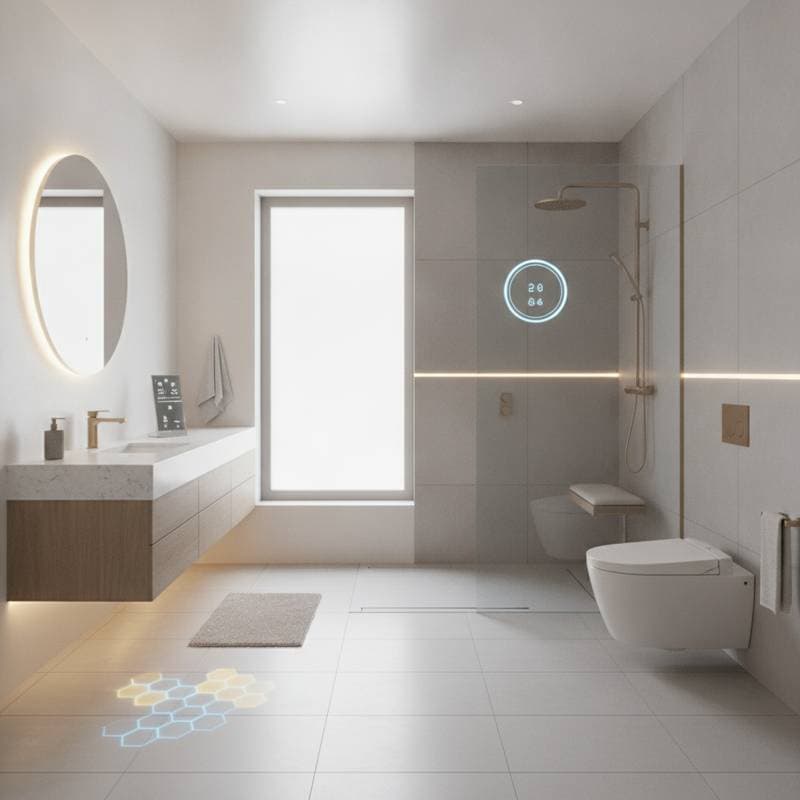
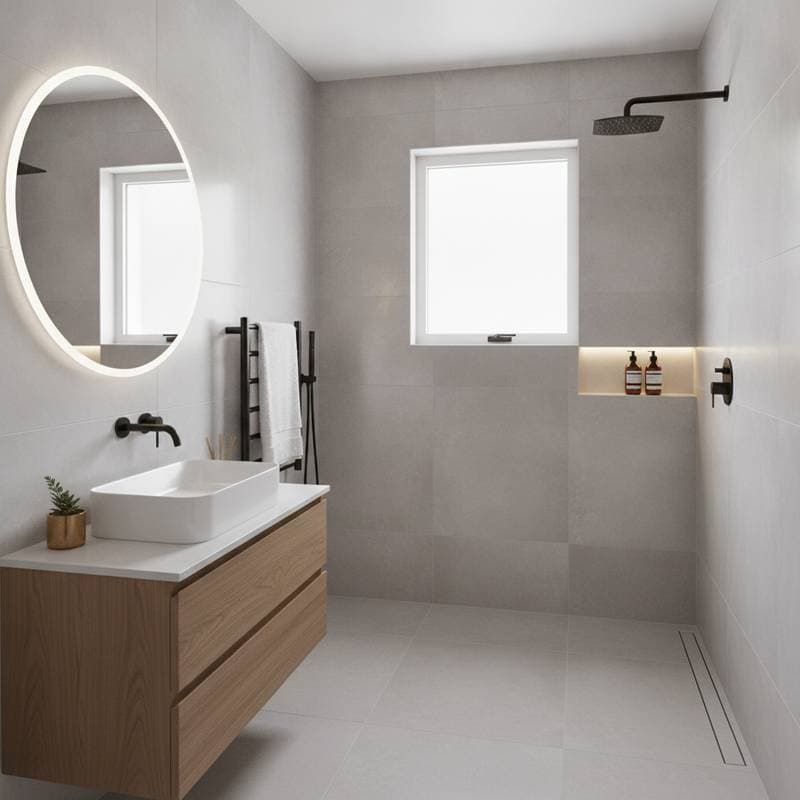
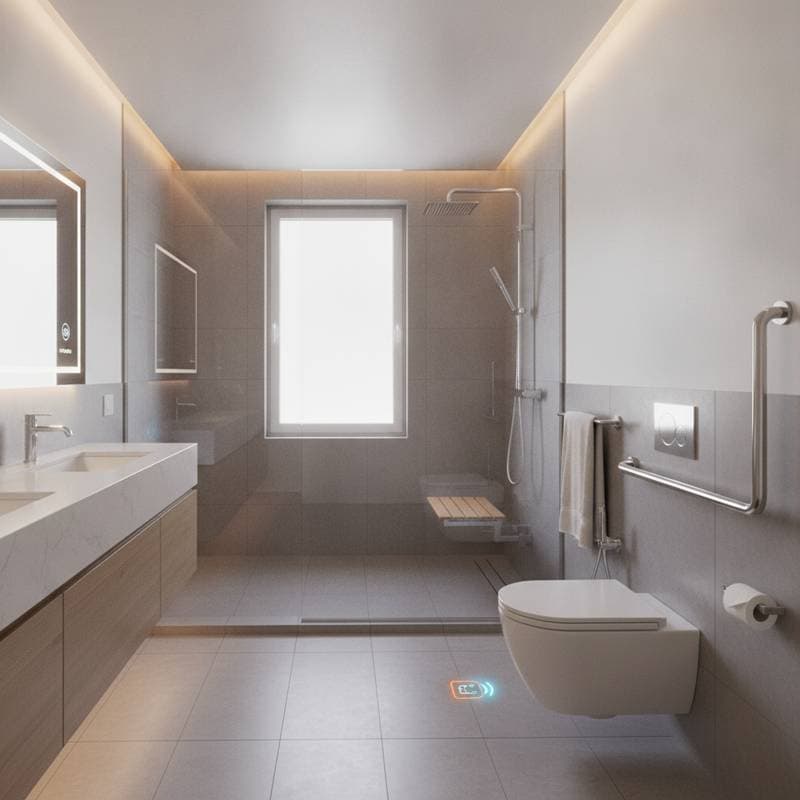
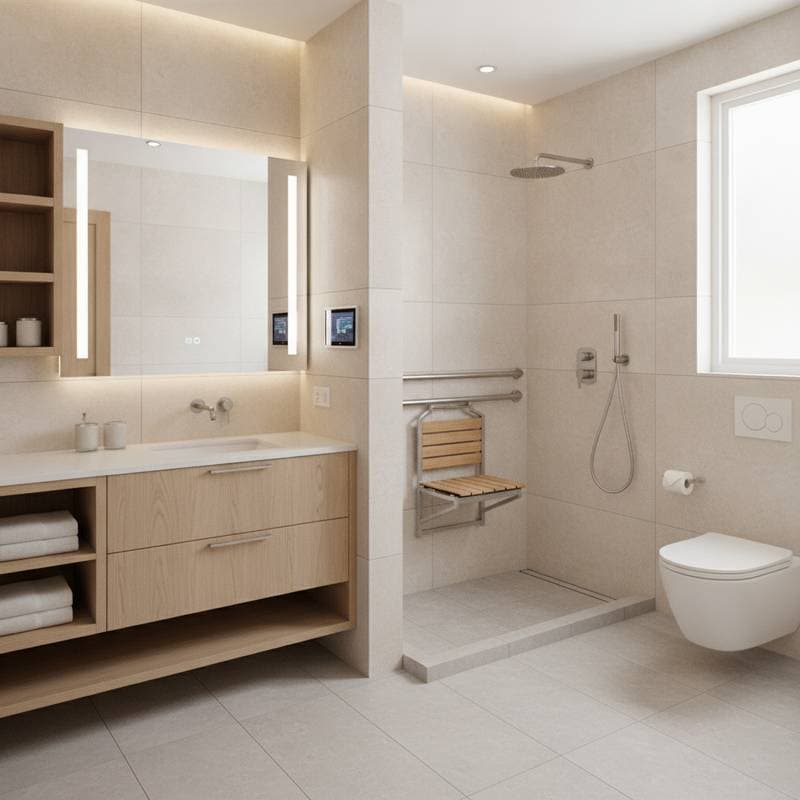
These walk-in showers feature level-entry thresholds to remove tripping risks and simplify access for wheelchair users. Install linear drains along the wall to direct water flow effectively, preserving a flush, uninterrupted floor surface. Opt for gentle slopes of one-quarter inch per foot to ensure proper drainage without visible barriers. -
Comfort-Height Toilets and Adjustable Fixtures
Select toilets elevated 17 to 19 inches from the floor to ease sitting and standing, minimizing joint stress. Pair with height-adjustable showerheads on sliding rails and handheld sprayers for versatile bathing positions, whether seated on a bench or standing. -
Non-Slip Flooring Options with Added Comfort
Choose matte-finish porcelain tiles rated for wet areas, textured vinyl sheets, or luxury vinyl planks with high traction coefficients. Integrate radiant floor heating systems beneath these surfaces to provide warmth, particularly beneficial during cooler months. -
Smart Controls and Touch-Free Features
Install motion-sensor faucets that activate with hand proximity and voice-activated systems for lights and ventilation. Program temperature presets on shower valves to prevent scalding, with options now available from brands like Moen and Kohler at mid-range prices. -
Integrated Grab Bars and Versatile Fixtures
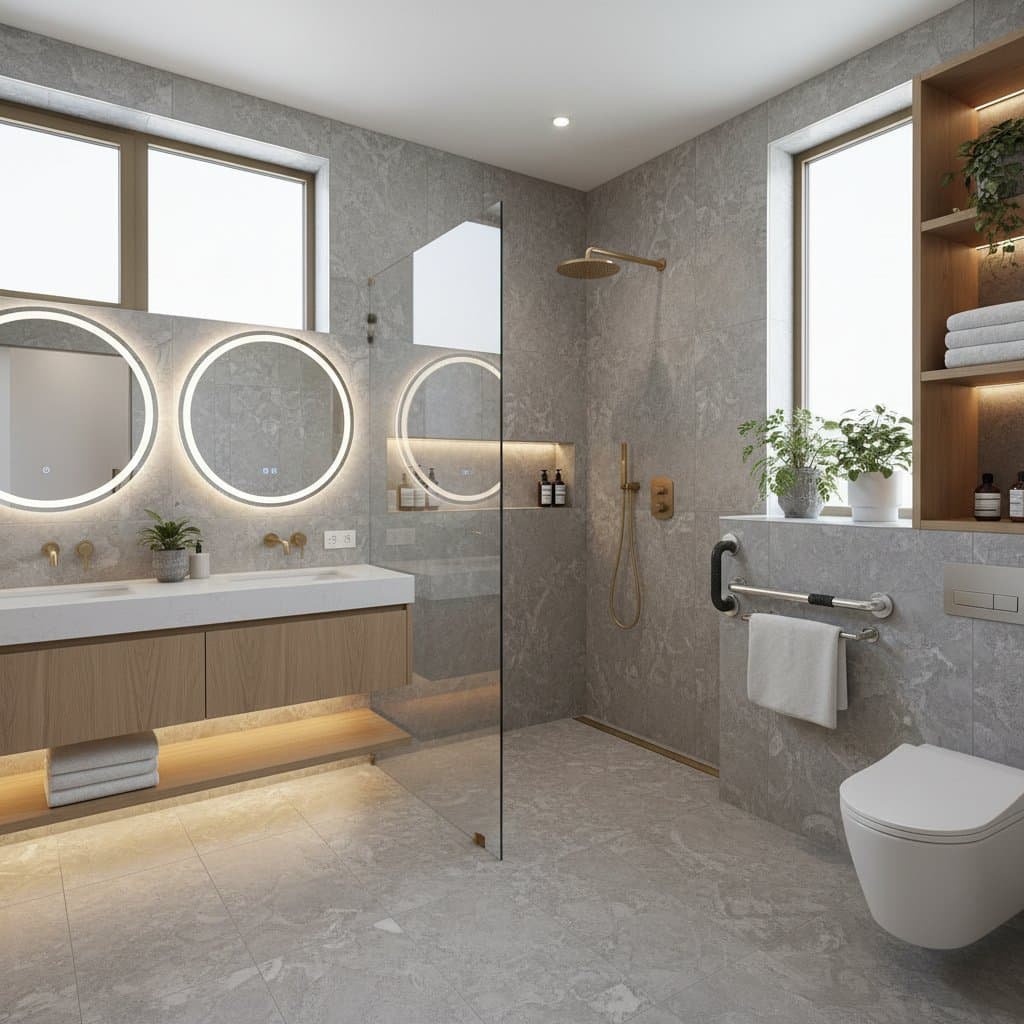
Conceal grab bars within towel bars, robe hooks, or floating shelves using stainless steel or powder-coated finishes that blend with decor. Position them at 33 to 36 inches above the floor for optimal support during transfers, ensuring secure wall anchoring.
Technology Enhancements for Independence
Technological integrations now empower homeowners to maintain autonomy with minimal effort. Focus on solutions that streamline routines and enhance security without overwhelming complexity.
Voice and Motion-Activated Systems
Integrate voice assistants like Amazon Alexa or Google Home to adjust lighting intensity, operate exhaust fans, and regulate shower temperatures via simple commands. Motion sensors on faucets and toilets reduce surface contact, promoting hygiene by limiting germ transmission.
Water Temperature and Leak Prevention
Thermostatic mixing valves deliver steady water temperatures, adjustable from 95 to 120 degrees Fahrenheit for safety. Position battery-operated leak sensors under vanities and behind toilets; these devices notify smartphones instantly upon detecting moisture, averting potential water damage.
Health Monitoring Integrations
Advanced mirrors with embedded sensors track humidity levels and air quality, activating dehumidifiers as needed. Pair smart scales near the vanity with app-connected mats that measure balance and weight, providing data to healthcare providers for proactive wellness management.
Installation Costs: Expect $500 to $3,000 based on selected features, including professional wiring for integrated systems.
Budgeting and Value Assessment
Homeowners often prioritize financial aspects when considering accessibility modifications. Universal design elements not only improve usability but also enhance property appeal and curb ongoing maintenance expenses.
Cost Categories
-
Basic Accessibility Enhancements: $2,000 to $8,000
Includes grab bar installations, LED lighting upgrades, handheld shower additions, and non-slip floor overlays. -
Comprehensive Mid-Level Remodel: $10,000 to $30,000
Encompasses curbless shower conversions, comfort-height toilet replacements, enhanced illumination, and optimized storage solutions. -
High-End Full Renovation: $35,000 to $60,000 or more
Features complete layout adjustments, advanced smart technologies, premium materials, and comprehensive accessibility compliance.
Explore funding options such as community grants for senior modifications, favorable home equity loans, or tax deductions for medical-related improvements. Contact local housing authorities or organizations like AARP for eligibility details.
Return on Investment: These upgrades typically recover up to 60 percent of costs upon resale, while delivering substantial daily benefits in convenience and safety.
Compliance, Safety Measures, and Expert Consultation
Modifications involving plumbing, electrical systems, or structural changes require building permits in most jurisdictions. Local codes dictate accessibility requirements, so verify regulations with your municipal building office prior to commencing work.
Essential Safety Practices
- Equip all outlets in moisture-prone zones with ground-fault circuit interrupter (GFCI) protection.
- Engage certified electricians for any lighting or receptacle modifications.
- Secure grab bars to wall studs or reinforced blocking, avoiding superficial drywall attachments.
- Confirm proper shower pan sloping and membrane waterproofing to eliminate leak risks.
For assurance on code adherence and design efficacy, consult a Certified Aging-in-Place Specialist (CAPS). These experts specialize in harmonizing functionality, visual appeal, and durability in residential adaptations.
Implementing Your Vision
Developing an aging-in-place bathroom preserves personal style and autonomy. Begin with targeted changes like installing slip-resistant mats or ambient task lighting to yield quick improvements.
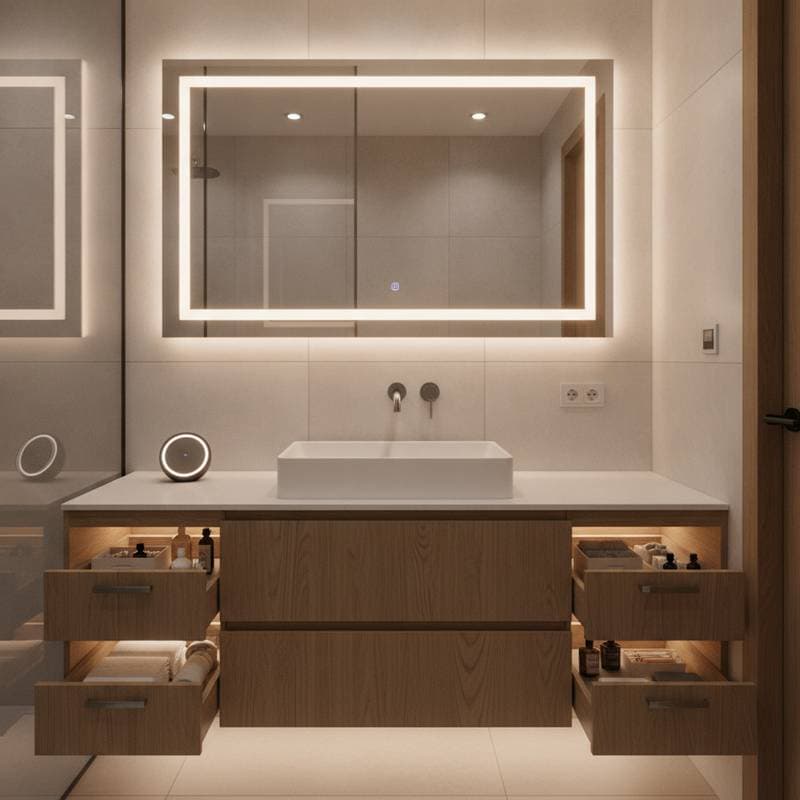
Progress to structural updates, such as reconfiguring for a curbless entry or incorporating automated climate controls. Select durable, easy-clean materials like quartz countertops and antimicrobial grout to simplify upkeep.
This approach yields a sanctuary that supports aging gracefully, accommodates visitors effortlessly, and withstands time. Such a bathroom represents a strategic enhancement to quality of life, fostering security and serenity for the long term.