Install Acoustic Panels to Quiet Your Home Office
Working from home has made many people realize how noisy a typical house can be. Between barking dogs, traffic sounds, and household activity, it can be difficult to stay focused. Acoustic panels offer one of the most practical ways to create a quieter environment. They improve sound quality, reduce distractions, and make a workspace feel more professional.
Why Noise Control Matters
Uncontrolled sound creates more than simple annoyance. Constant background noise leads to fatigue, lost productivity, and frustration. Many clients invest in high end desks and lighting while ignoring the noise that interrupts calls. Installing acoustic panels is a manageable project that delivers immediate results and supports a more peaceful workday.
Common Mistakes Homeowners Make
Before jumping into installation, it helps to understand where people often go wrong.
- Choosing the wrong material. Thin foam panels sold online rarely provide real sound absorption. They may slightly reduce echo, but they do little to block noise.
- Improper placement. Panels installed randomly on walls or ceilings do not perform well. Sound reflects off hard surfaces, so strategic placement matters.
- Skipping wall prep. Dusty or uneven walls prevent adhesive panels from sticking properly. Panels have fallen because the surface was not cleaned first.
- Expecting total silence. Acoustic panels absorb and diffuse sound, but they do not create a recording studio. They reduce noise, not eliminate it.
Avoiding these mistakes keeps a project effective and frustration free.
Step by Step Installation Process
Follow these steps for a solid installation that looks clean and performs well.
- Evaluate the room. Sit in the office during a typical workday and listen. Identify where sound feels harsh or where echoes bounce. Common problem spots include bare walls behind a desk or opposite large windows.
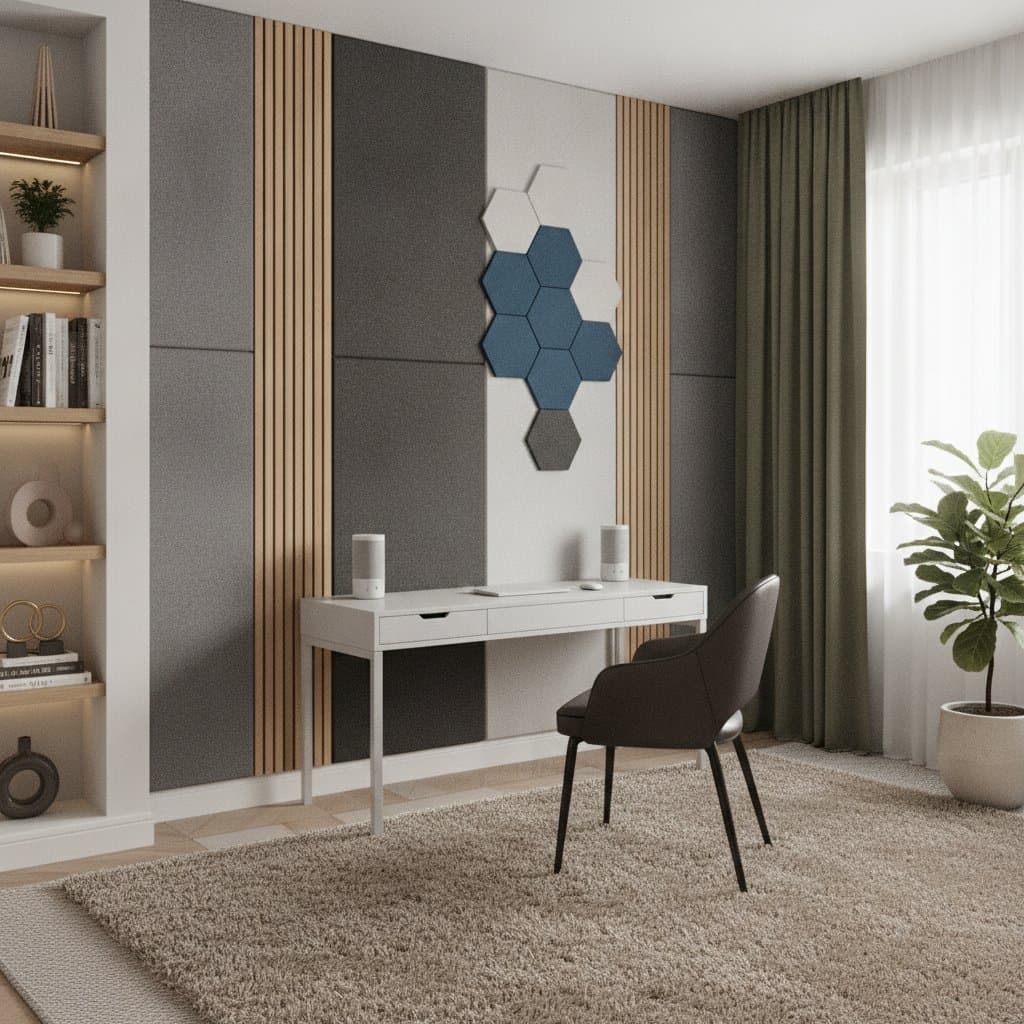
- Measure and plan the layout. Decide how much wall space to dedicate to panels. For most home offices, covering 20 to 30 percent of wall area creates noticeable improvement.
- Select quality panels. Look for dense fiberglass or mineral wool cores wrapped in fabric. Panels at least two inches thick provide better absorption.
- Mark placement lines. Use a level to draw straight reference lines on the wall. Consistent spacing creates a professional appearance.
- Mount securely. Use adhesive strips only for lightweight panels on smooth walls. Heavier panels should be attached using impaling clips or Z clips anchored into studs.
- Seal gaps. Small gaps between panels reduce performance. Align edges tightly for best results.
Professional Tips for Better Results
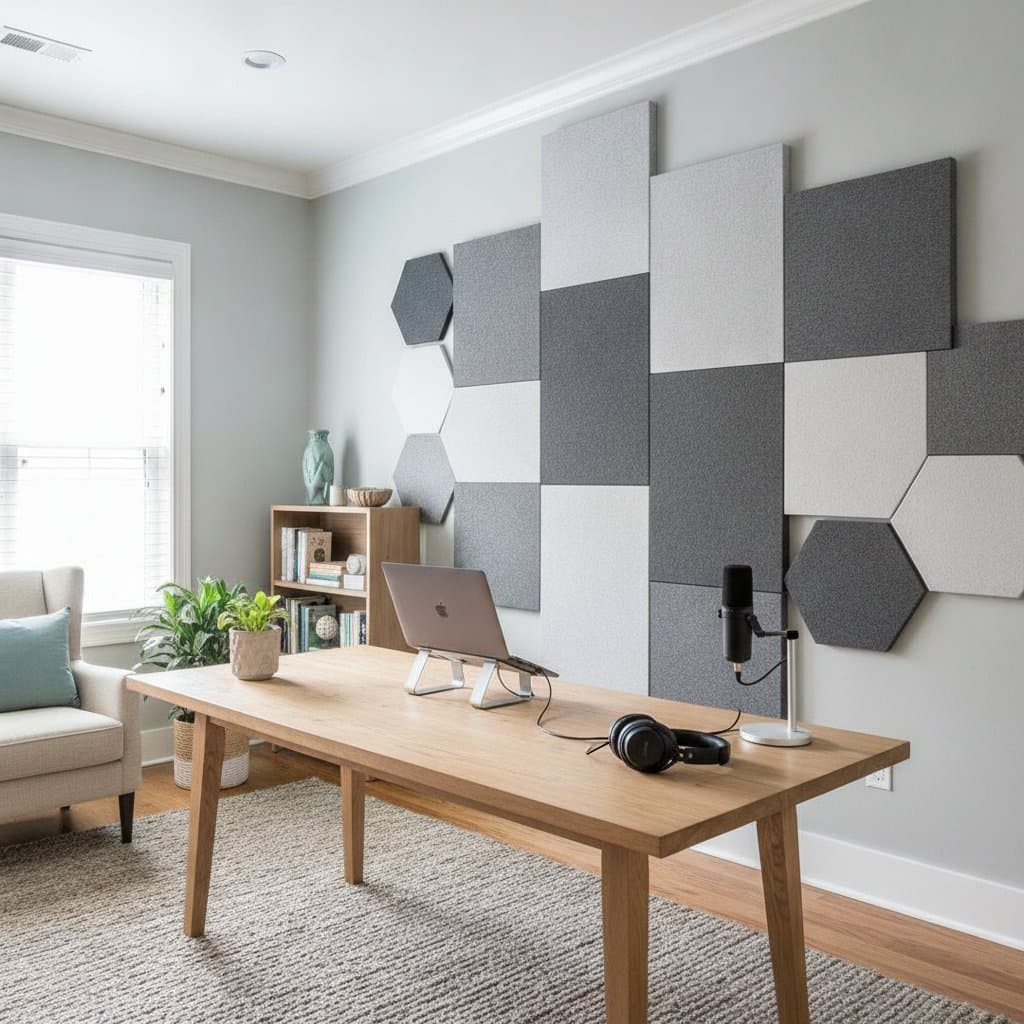
Mix sizes and shapes. A combination of square and rectangular panels helps break up sound waves more effectively. Treat corners. Bass frequencies build in corners. Corner bass traps or thicker panels installed vertically can make a big difference. Mind the ceiling. If the home office has high ceilings, consider hanging panels overhead to control echo. Color coordination. Many panels come in neutral or custom fabrics. Match them with decor to make the room look intentional.
Maintaining Acoustic Panels
Acoustic panels require little maintenance, but treat them like any other surface finish. Lightly vacuum fabric covers to remove dust. If a panel becomes stained, most can be re covered with new fabric without replacing the core material. Avoid spraying cleaners directly on the fabric since moisture can damage the acoustic core.
Experiencing Improved Focus
Once installed, phone calls sound clearer and video meetings feel more professional. Concentration improves as well. Acoustic panels remain one of the most cost effective upgrades for a home office. With proper planning and installation, they deliver lasting comfort.